90+ Powerful Symbols of Life That Reveal Deep Truths and New Perspectives
Powerful symbols of life are images, shapes, and objects that humans have used for thousands of years to express what it means to exist, grow, and endure. They show up in ancient temples, modern tattoos, jewelry, art, and even your morning coffee mug. Yet most people have no idea what these symbols actually mean or why they still feel so relevant today.
Symbols have always been humanity’s shorthand for big ideas. When words fall short, a single image can carry the weight of entire philosophies, religions, and cultures. That’s the quiet power of life symbols. They don’t just represent existence. They reflect it back at us in ways that feel personal, universal, and timeless all at once.
This guide covers more than 90 of the most meaningful life symbols from around the world, breaking down their origins, hidden meanings, and why they still matter in modern life.
What Are Life Symbols?
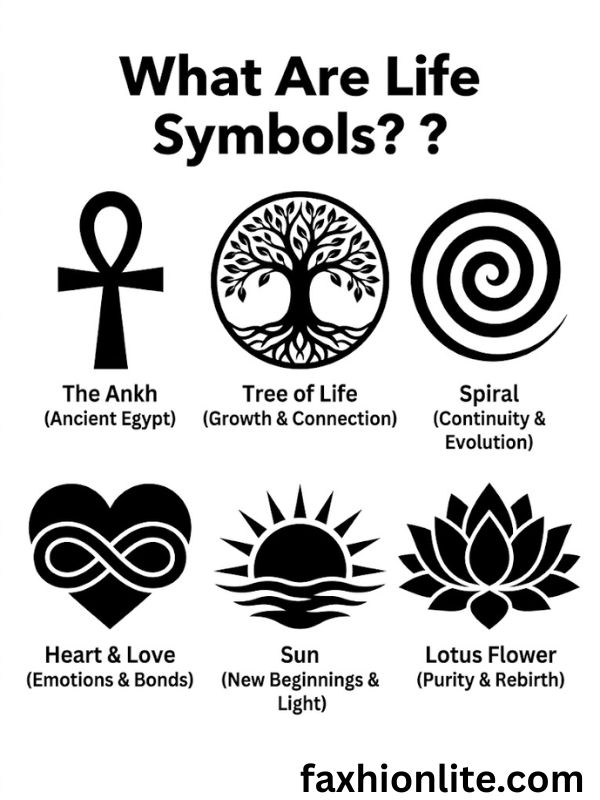
A life symbol is any visual image, shape, or object that a culture or tradition has assigned meaning related to existence, vitality, growth, renewal, or the human journey. They’re not random. Every symbol carries a story behind it, usually built over centuries of shared human experience.
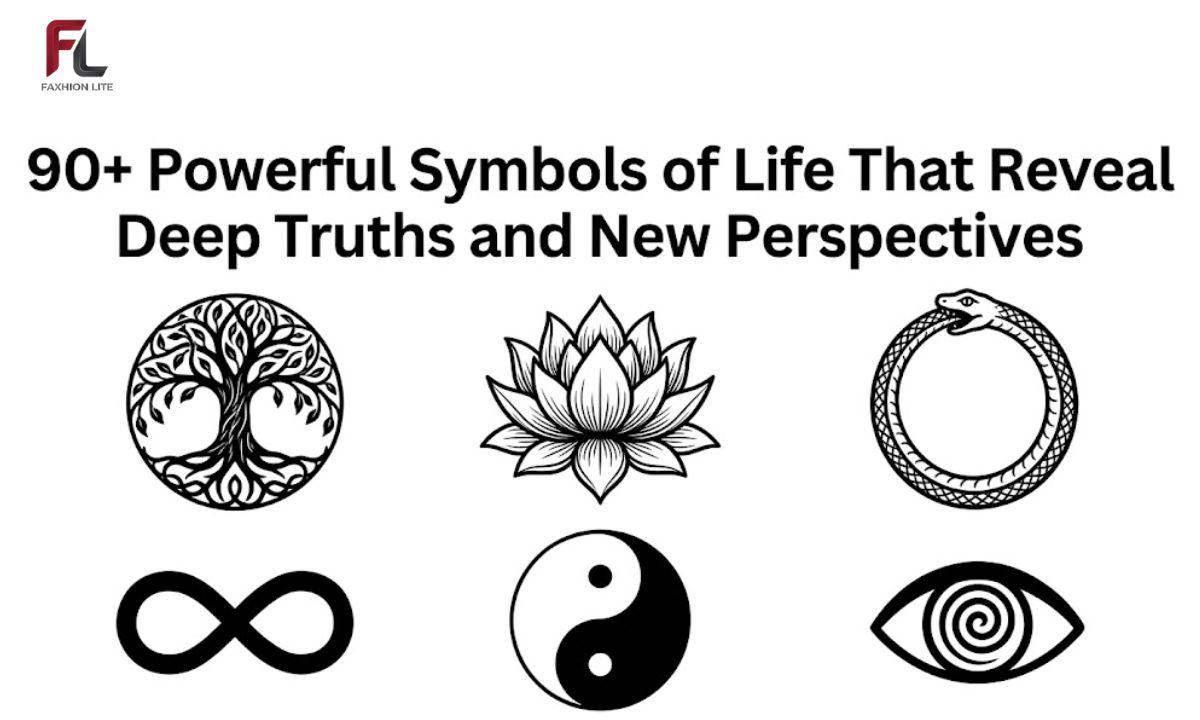
Think about the simple act of planting a seed. Ancient peoples watched seeds die in the ground and come back as plants every spring. That cycle of death and rebirth became one of the earliest and most universal symbols of life. Over time, this concept evolved into elaborate icons like the Tree of Life, the lotus flower, and the ouroboros snake eating its own tail.
What makes these symbols so powerful is that they work across languages and borders. A person in Egypt and a person in Japan might use different images, but both are reaching for the same truth: that life is cyclical, precious, and connected to something much larger than the individual.
Life Symbols and Meanings: A Complete Reference Guide
Understanding life symbols and meanings requires looking at both the image itself and the context it came from. The same symbol can mean very different things depending on the culture, religion, or era it belongs to.
Here’s a quick reference for some of the most recognized life symbols:
| Symbol | Origin | Core Meaning |
| Ankh | Ancient Egypt | Life, immortality |
| Tree of Life | Global | Connection, growth, eternity |
| Lotus Flower | Hindu/Buddhist | Purity, spiritual awakening |
| Phoenix | Greek/Egyptian | Rebirth, transformation |
| Infinity Symbol | Mathematics/Mysticism | Endless existence |
| Spiral | Celtic/Indigenous | Growth, life cycle |
| Ouroboros | Egyptian/Greek | Continuity, eternal life |
| Scarab Beetle | Ancient Egypt | Renewal, protection |
Each of these carries layers of meaning. The lotus isn’t just a pretty flower. It grows from muddy water and blooms clean and pristine above the surface, making it one of the most powerful metaphors for spiritual growth and rising above difficult circumstances.
Tree of Life Symbols and Meanings Across World Traditions
The Tree of Life is probably the most widespread life symbol on Earth. It appears in nearly every major civilization independently, which tells you something important: humans across completely different cultures arrived at the same image to describe the same truth.
In Norse mythology, Yggdrasil is a massive ash tree whose roots and branches connect nine different worlds. It represents the entire structure of existence, holding everything together. In the Jewish mystical tradition of Kabbalah, the Tree of Life maps out the ten attributes through which the infinite connects with the finite world. In Celtic tradition, trees were considered sacred doorways between this world and the next.
What do all these versions share? The idea that life is interconnected. The roots go deep into the past (ancestors, origins). The trunk is the present (stability, strength). The branches reach upward toward the future, toward possibility, toward the divine.
Eternal Life Symbols: Timeless Emblems of Immortality
Eternal life symbols tend to share one visual quality: they have no clear beginning or end. Think of the circle, the spiral, the infinity sign, or the ouroboros. These images communicate what human beings have always hoped and feared: that existence doesn’t simply stop.
The ouroboros, a serpent eating its own tail, first appeared in ancient Egypt and later spread to Greek alchemy, Gnostic texts, and Norse mythology. It represents the eternal cycle of creation and destruction, life feeding on itself to begin again. It’s one of the oldest symbols of immortality ever recorded.
The circle is even simpler. No corners, no start, no finish. Cultures from the Celtic world to the Native American plains used circles in sacred art and ritual to represent eternal existence and the unbroken flow of life. The medicine wheel, mandalas in Tibetan Buddhism, and Celtic knotwork all draw power from this same circular logic.
Spiritual Life Symbols and Meanings That Connect You to Something Greater
Lotus Flower
The lotus is rooted in mud at the bottom of a pond, yet it blooms above the water in perfect beauty. In both Hindu and Buddhist traditions, this makes it the ultimate symbol of spiritual awakening. No matter how murky your origins or circumstances, the lotus says you can rise.
Tree of Life
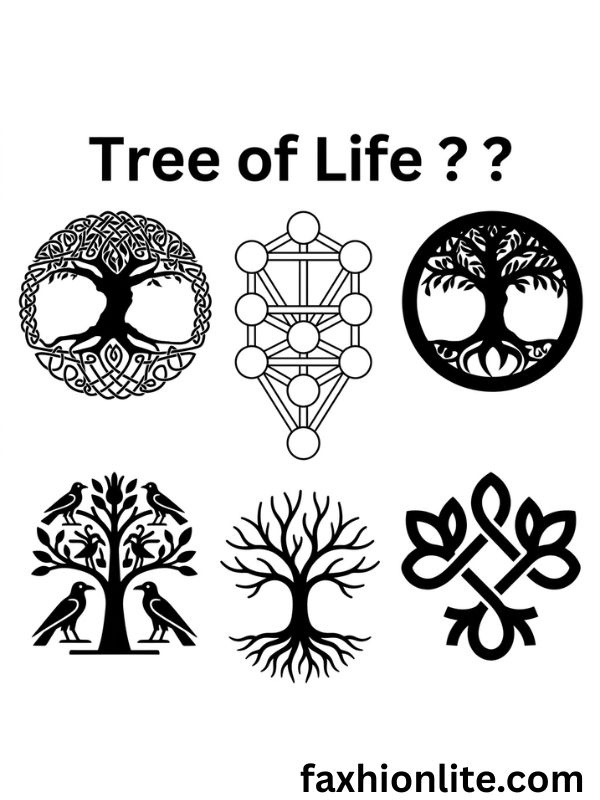
In spiritual contexts, the Tree of Life isn’t just about physical growth. It represents the soul’s journey from earth to heaven, from the material to the divine. It’s used in meditation, prayer, and sacred art across dozens of traditions.
Infinity Symbol
The lemniscate, that horizontal figure-eight we call the infinity symbol, started in mathematics but quickly became a spiritual shorthand for endless possibility. Wear it as jewelry or draw it in a journal. It’s a quiet reminder that life doesn’t have hard edges.
Spiral
Spirals appear in nature everywhere: in seashells, hurricanes, galaxies, and the growth pattern of sunflower seeds. Ancient Celtic stonework at Newgrange in Ireland, built over 5,000 years ago, is covered in spirals. They represent the journey of life itself, always moving forward, always expanding, never returning to exactly the same place twice.
New Life Symbols: Emblems of Rebirth, Fresh Starts, and Bold Beginnings
Butterfly
The butterfly is perhaps the world’s most beloved symbol of personal transformation. The caterpillar doesn’t just change its appearance. It dissolves almost entirely inside its cocoon and reorganizes itself into something completely different. That’s not just change. That’s radical reinvention.
Sunrise
Every sunrise is a daily reminder that life starts again. Many Indigenous cultures treated the east, where the sun rises, as sacred. Morning rituals were acts of honoring the gift of another day. Even today, people seeking hope and renewal instinctively gravitate toward sunrise imagery.
Egg
The egg is one of the oldest and most universal symbols of new life across human history. From the Cosmic Egg of Hindu cosmology to Easter eggs in Christian tradition to the World Egg in Finnish mythology, the egg represents potential, creation, and the moment before life begins.
Phoenix
The phoenix bursts into flame and rises from its own ashes. Found in Egyptian, Greek, Chinese, and Arabian mythology under different names, this legendary bird represents rebirth and renewal in the most dramatic way possible. It doesn’t just survive. It starts over stronger.
Egyptian Life Symbols: Decoding the Hieroglyphs of Immortality
The Ankh
The ankh is arguably the most recognized ancient symbol of life in the world. Shaped like a cross with a loop at the top, it was carried by Egyptian gods and placed in tombs to ensure eternal life. It represented the union of the female and male principles and the divine breath of life. Today it appears in jewelry, tattoos, and art worldwide.
The Scarab Beetle
Ancient Egyptians watched dung beetles roll balls of dung across the ground and saw a metaphor for the sun rolling across the sky. The scarab became a powerful symbol of creation and rebirth, used as an amulet for protection and renewal. Millions of scarab artifacts survive today.
The Djed Pillar
Less famous but deeply significant, the djed pillar represents stability and endurance. Associated with Osiris, the god of the afterlife, it symbolized the backbone of life itself: the quiet strength that keeps everything standing.
The Eye of Horus
Used for protection, healing, and vitality, the Eye of Horus is one of the most powerful symbols of protection in Egyptian tradition. It was placed on amulets, coffins, and ships to guard against harm and ensure safe passage through life and death.
Greek Life Symbols and Meanings
Greek culture gave the world some of the most enduring symbolic representations of life, many of which we still use without realizing their origins.
The Greek Key (or meander pattern) is that repeating geometric border you’ve seen on pottery, architecture, and modern home décor. It represents infinity and the eternal flow of life, referencing the winding path of the Meander River. The olive branch, offered to the goddess Athena, became a symbol of peace, prosperity, and the good life. The owl tied to Athena represents wisdom, the life of the mind, and the pursuit of knowledge.
Flower of Life Symbols: Sacred Geometry and the Blueprint of Existence
The Flower of Life is a geometric pattern of overlapping circles that creates a flower-like design. It appears in temples in Egypt, Israel, China, India, and Spain, suggesting it traveled independently across ancient civilizations or was understood as a fundamental truth about nature.
Sacred geometry enthusiasts consider the Flower of Life the blueprint of all creation. Within its pattern, you can find the Seed of Life, the Egg of Life, and even the structure of Metatron’s Cube, a shape that supposedly contains every geometric form found in physical reality. Whether you see it as spiritual or mathematical, it’s an extraordinary example of sacred geometry connecting human beings to the underlying patterns of existence.
Life Symbols Across Cultures
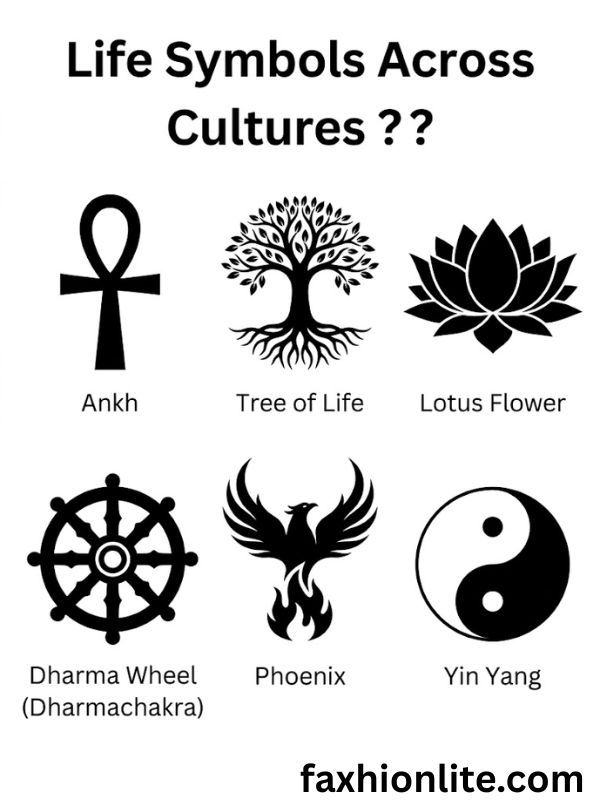
Ancient Egypt
Egyptian life symbolism revolved around the afterlife as much as this life. The ankh, scarab, djed, and Eye of Horus all pointed toward a belief that life didn’t end at death, it simply changed form. Egyptian symbols of life and immortality were carved into tombs not as decorations but as active tools for survival in the next world.
Celtic Culture
Celtic knots have no beginning and no end. That was the whole point. Celtic life symbols emphasized the interconnectedness of all living things and the eternal cycle of seasons, lives, and generations. The triquetra, or Trinity knot, represented the threefold nature of existence: land, sea, and sky or past, present, and future.
Eastern Cultures
The yin-yang from Chinese Taoism is one of the most sophisticated life symbols ever created. It doesn’t just say life and death are opposites. It says each contains a seed of the other. The Dharma Wheel in Buddhism represents the cycle of life, death, and rebirth, and the path toward liberation from that cycle.
Native American Culture
Many Native American traditions used the medicine wheel as a symbol of life’s wholeness. Divided into four directions, four seasons, and four stages of life, it represented balance, harmony, and the idea that human beings are part of a much larger living system.
Deep Symbolic Meaning of Life Symbols
Spiritual Meaning
Spiritually, life symbols serve as anchors. They remind people of truths that are hard to hold onto in daily life: that existence has purpose, that growth is possible, and that even death is part of a larger pattern. Wearing or meditating on a life symbol can deepen spiritual awakening and keep people connected to their values.
Psychological Meaning
Carl Jung believed that certain symbols appear across all human cultures because they tap into what he called the collective unconscious, a shared layer of human psychology that transcends individual experience. Life symbols like the circle, the serpent, and the great tree appear in dreams and art worldwide because they speak directly to this deep psychological layer.
Cultural Meaning
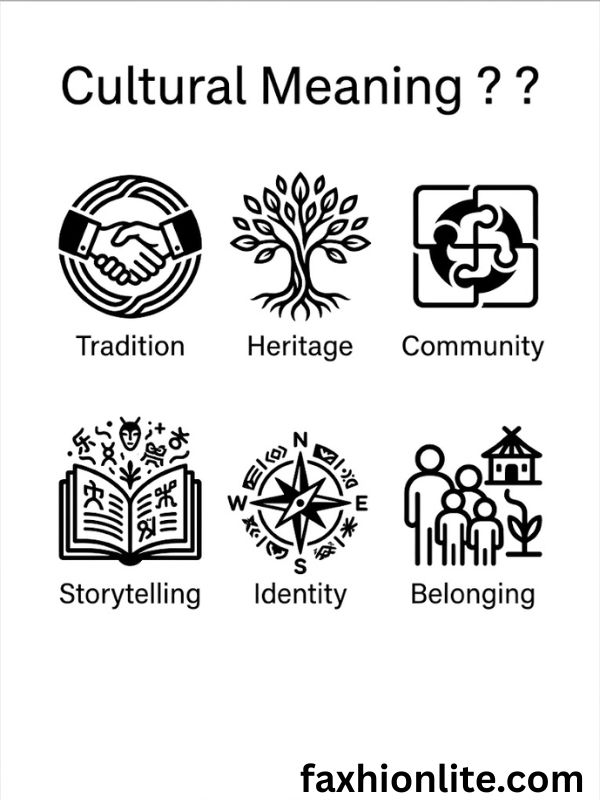
Culturally, life symbols are identity markers. A Celtic knot on your wrist tells a story about ancestry. An ankh around your neck signals an interest in ancient wisdom. Symbolic meaning shifts with context, but the human need to attach meaning to images never changes.
Why Humans Are Attracted to Life Symbols
Human beings are meaning-making creatures. We don’t just experience life. We narrate it, decorate it, and explain it through images and stories. Life symbols give us a way to hold enormous ideas, like mortality, hope, transformation, and connection, in a single image we can carry with us.
Research in cognitive psychology suggests that symbols activate both emotional and rational parts of the brain simultaneously. That’s why seeing an ankh or a lotus doesn’t just inform you. It moves you. These symbols have accumulated centuries of emotional weight, and when you encounter them, you tap into that whole history without realizing it.
There’s also something deeply comforting about knowing that people thousands of years ago looked at the same spirals, trees, and rising suns and felt the same things you feel now. Life symbols bridge the distance between human beings across time.
Frequently Asked Questions
What are the most well-known symbols of life found across different world cultures?
The tree, lotus, sun, spiral, and water are globally recognized symbols representing life and renewal.
Why do ancient symbols of life still hold deep meaning in today’s modern world?
Ancient symbols carry timeless wisdom, connecting modern humans to spiritual roots, universal truths, and cultural heritage.
How can someone use symbols of life to bring positive energy into daily routine?
Wearing, meditating on, or displaying life symbols daily inspires mindfulness, positivity, personal growth, and deeper spiritual awareness.
Are symbols of life only connected to religion or do they have broader significance?
Life symbols transcend religion, appearing in nature, art, philosophy, and science, carrying meaning for all humanity universally.
What makes symbols of life so powerful in helping people find purpose and direction?
They visually represent deep truths about existence, growth, and renewal, guiding people toward clarity, hope, and inner transformation.
Conclusion
Powerful symbols of life are more than art or decoration. They’re evidence of something remarkable: that human beings, no matter where or when they lived, have always looked for meaning in existence and found it in the same basic images.
The tree rooted in earth and reaching toward sky. The circle with no beginning or end. The bird that burns and rises. The flower that blooms from mud. These aren’t just pretty pictures. They’re humanity’s oldest conversations with itself about what it means to be alive, to grow, to lose, to begin again.
The next time you see a life symbol, whether it’s a lotus on a yoga mat, an ankh in a museum, or a spiral carved into a stone wall, take a moment with it. It’s been waiting a long time to be noticed.