HRU Meaning in Text: What It Means and How to Reply
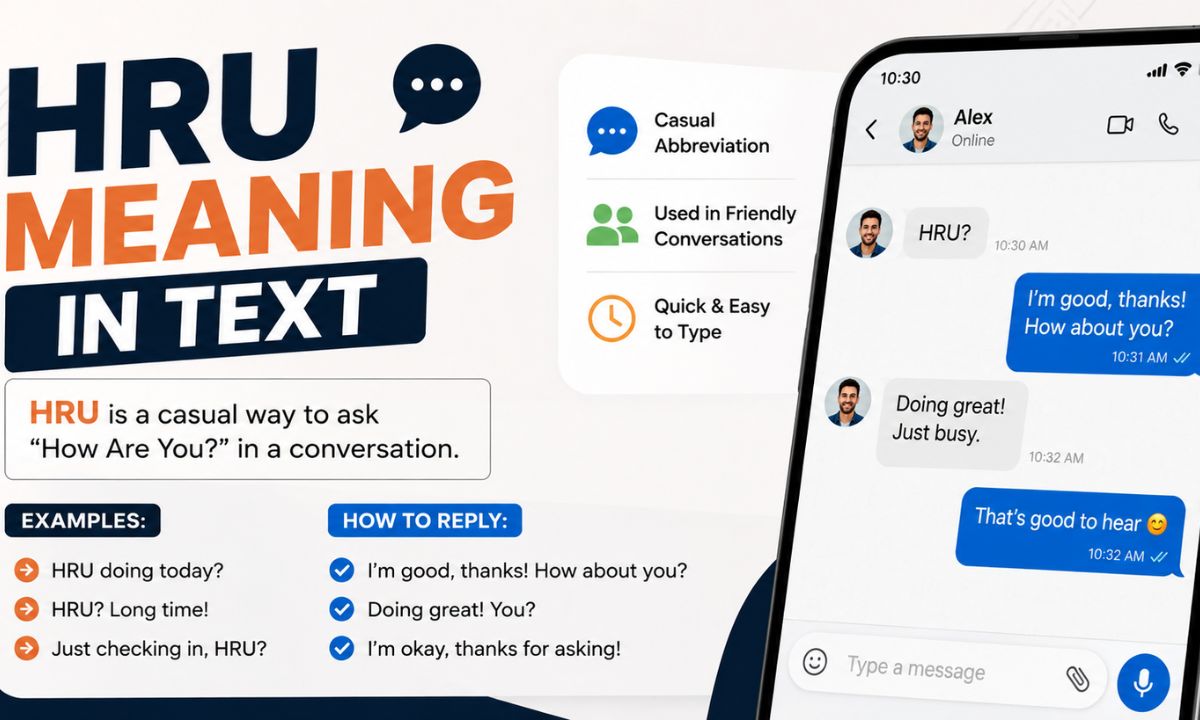
HRU means “How Are You?” It’s a casual texting abbreviation used to check in, start a conversation, or greet someone quickly in a chat.
You’ve probably seen “hru” pop up in a message and wondered if it’s a typo, a code, or just someone being lazy. It’s none of those. HRU is one of the oldest and most widely used shortcuts in texting culture, and once you know it, you’ll spot it everywhere.
This guide breaks down exactly what HRU means in text, where people use it, how to read between the lines, and how to respond like you’ve known this all along.
What Does HRU Mean in Text?
HRU stands for “How Are You?” The letters map out phonetically: H for how, R for are, U for you. It’s the same logic behind classic shortcuts like “u” for you or “r” for are, just strung together into a single three-letter greeting.
You’ll see it typed in lowercase (hru), uppercase (HRU), or with a question mark (hru?). None of these versions means anything different. It’s all the same question, just styled by personal preference.
Why Do People Use HRU Instead of Typing It Out?
Speed is the short answer. Texting culture has always rewarded brevity, and three letters beat thirteen every time when you’re mid-conversation or firing off a quick message.
But there’s a social layer to it too. Using “hru” signals you’re comfortable with the person. It’s informal by design. When someone types the full phrase “How are you?” in a text, it can actually feel more formal or even a little stiff depending on the context. HRU keeps things relaxed.
It also fits naturally into fast-moving platforms where long messages slow things down. Nobody’s writing paragraphs on Snapchat.
Where You’ll See HRU Most Often
HRU shows up across pretty much every messaging platform, but the vibe it carries changes depending on where you are.
Snapchat: A lot of “hru” messages here are streak maintenance. Someone sending it daily isn’t necessarily dying to know how you’re doing. It’s habit-texting. Don’t over-read it.
Instagram DMs: Here it tends to signal more intentional contact, especially if the person has been watching your stories. It’s a soft opener.
WhatsApp: Among friends and family groups, hru is a genuine check-in. In one-on-one chats, it depends entirely on your relationship with the sender.
Dating apps: This is where HRU gets complicated. Sending “hru” as your very first message on Tinder, Hinge, or Bumble is widely seen as low-effort. On platforms where everyone is competing for attention with creative openers, three generic letters can signal that you didn’t try very hard. Know your audience before sending it here.
Discord and gaming chats: Totally normal and usually genuine. Gaming communities have always been shorthand-friendly.
Work messaging tools: Best avoided unless you’re very close with the person. Stick to full words in professional contexts.
HRU in Real Conversations: What It Actually Looks Like
Understanding the abbreviation is one thing. Seeing it in context is another.
Example 1: Casual friend check-in
Alex: hru haven’t talked in a minute
Jamie: honestly tired lol, been swamped. you?
Example 2: Conversation opener from someone you’re into
Sam: hru? 😊
Taylor: pretty good! what are you up to tonight?
Example 3: Gaming chat mid-session
Player1: hru doing out there lol
Player2: terrible, respawning for the fourth time
Each of these uses HRU differently. The first is genuine reconnection. The second is a soft flirt with an open-ended door. The third is banter. Same three letters, completely different function.
Is HRU Flirty?
It can be, but the letters themselves aren’t flirtatious at all. Context does the heavy lifting here.
If someone sends “hru?” late at night, follows it with a suggestive emoji, or has been clearly interested in you, the message carries a different weight. If your friend texts “hru” on a Wednesday afternoon, that’s just a check-in.
Look at the timing, the platform, your existing relationship with the person, and any emojis or follow-up messages. Those details tell you far more than the abbreviation itself ever could.
Is HRU Rude or Polite?
HRU is polite in casual settings and neutral in most others. It isn’t rude.
That said, in specific situations it can read as dismissive. On dating apps, as mentioned above, it signals low investment. In emotional or serious conversations, it can feel too breezy. If someone just went through something hard, “hru” might land as flippant even when that wasn’t the intent.
The fix is simple: match the situation. Casual contexts call for casual language. Heavier moments deserve more care and full words.
HRU vs. Similar Slang: What’s the Difference?
A few abbreviations get mixed up with HRU pretty regularly.
| Abbreviation | Meaning | Key Difference |
| HRU | How Are You | Asks about wellbeing |
| WYD | What You Doing | Asks about current activity |
| SUP | What’s Up | Broader, looser greeting |
| HBU or WBU | How About You / What About You | A response to HRU, not an opener |
| WDYD | What Did You Do | Past-focused, implies catching up |
HRU is more personal than WYD or SUP. It’s specifically about how someone feels or is doing, not just what they’re up to at that moment. That makes it slightly warmer, even in shorthand form.
HRU vs. HBU confusion: These two look similar but work differently. HRU starts the conversation. HBU bounces the question back. You’d almost never open with HBU on its own.
How to Reply to HRU (By Situation)
Your reply should match the tone of whoever sent it and the relationship you have with them.
From a close friend:
Keep it real and quick. Reciprocate with your own question.
- “honestly good, kinda tired. you?”
- “surviving lol what’s up with you”
From someone you’re interested in:
Show some personality. Don’t just mirror with “good u?”
- “doing well! was actually just thinking about messaging you”
- “better now that you texted 😄 what are you up to?”
From a dating app match who opened with it:
Take control of the conversation and steer it somewhere interesting.
- “doing well! so what made you swipe right?”
- “good thanks! tell me something interesting about yourself”
When you don’t really want to engage:
A short, final-sounding reply works fine. You don’t owe anyone a long response.
- “all good, thanks”
- “busy lately but doing okay”
When the person is going through something:
Drop the shorthand and show up properly.
- “hey, I’ve actually been thinking about you. how are you really doing?”
When NOT to Use HRU
There are situations where HRU just doesn’t fit, even if the person knows what it means.
- Job applications, work emails, or messages to a boss
- First contact with someone’s parent or older relative
- Checking in after a death, illness, or serious crisis
- Any conversation where you need to come across as professional or sincere
The shorthand signals ease and informality. When the moment calls for effort or gravity, write it out. It takes two extra seconds and makes a real difference.
Common Mistakes People Make with HRU
Using it as a conversation ender. Sending “hru” and then going silent when someone responds is worse than not sending it at all. It’s a question, which means it invites an answer, which means you’re now in a conversation. Follow through.
Assuming it’s always shallow. Sometimes “hru” is how a person expresses real concern in the only language they use online. Don’t dismiss it based on format.
Opening with it on dating apps. If you want a response, give someone something to respond to. HRU as a first message rarely gets replies because it requires the other person to do all the conversational work.
Frequently Asked Questions
What does HRU mean in chat?
HRU means “How Are You?” It’s an informal shorthand used in casual text messages, DMs, and online chats to check in with someone quickly.
Is HRU still used in 2026?
Yes. It’s one of the most recognized texting abbreviations around and continues to appear across every major platform. Its simplicity is what keeps it alive.
Can I use HRU with strangers?
Technically yes, but read the context first. In casual online communities like gaming or fan groups, it fits fine. In more formal or professional introductions, it can come across as too casual.
Is HRU American slang?
It originated in American internet culture but has spread globally. You’ll find it used the same way in the UK, Australia, South Asia, and beyond.
Does HRU have any other meanings?
Outside of texting, HRU is also the name of a computer security model, an airport code, and a term used in natural gas processing.
Conclusion
HRU meaning in text is simple on the surface: it’s “How Are You?” typed fast. But what it communicates shifts depending on who sent it, when they sent it, and where the conversation is happening. A message that’s a genuine check-in from one person might be a flirty opener from another, or a hollow habit from a third.
Now that you know the difference, you’ll never have to second-guess it. Read the context, match the energy, and reply with intention. Three letters, handled well.