25+ Hidden Symbols of Rebirth You See Every Day but Never Notice
Symbols of rebirth are visual representations of transformation, renewal, and the cycle of life, death, and new beginnings that humans have used for thousands of years across every culture on earth. You pass these symbols every day, on tattoos, logos, jewelry, and in nature, often without realizing you’re looking at one of humanity’s oldest and most universal ideas.
Whether you’re drawn to their spiritual depth, their psychological power, or simply their beauty, these symbols carry meaning that runs deeper than most people ever stop to notice.
What Are Symbols of Rebirth?
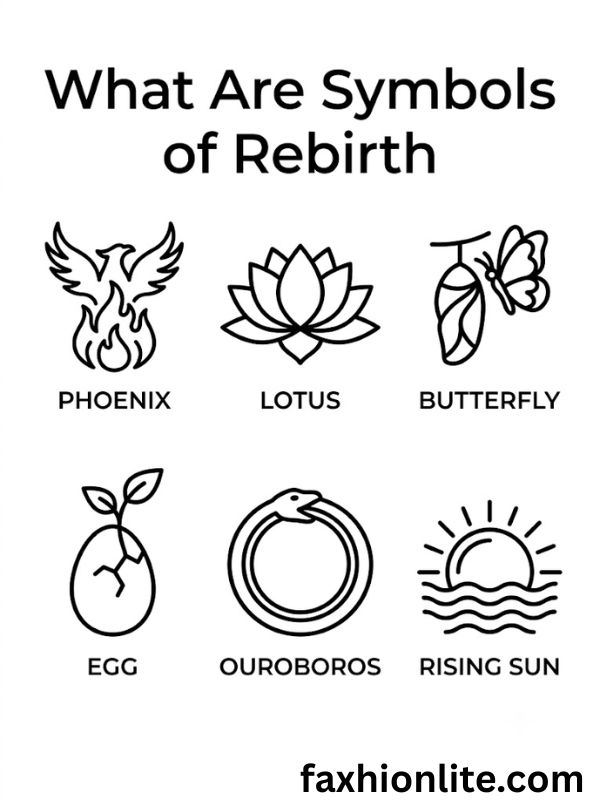
At their core, symbols of rebirth represent the idea that endings don’t have to be permanent. They capture the belief that something can die, transform, or disappear and then return in a new, often better form. Across thousands of years and dozens of civilizations, people kept coming back to the same images: fire, butterflies, water, serpents, seeds, and the rising sun.
What makes these symbols so powerful is that they’re not just artistic choices. They’re encoded responses to one of the deepest human anxieties: the fear that loss is final. When you see a phoenix tattoo on someone’s arm or notice a lotus carved into a temple wall, you’re looking at a human being’s answer to that fear. You’re looking at hope, given a shape.
It’s worth knowing that rebirth symbolism is slightly different from resurrection symbolism, though the two overlap. Resurrection implies coming back exactly as you were. Rebirth suggests something new emerges from what was lost. The seed doesn’t become the seed again. It becomes a tree. That distinction is small but meaningful, and it’s why rebirth symbols tend to feel more emotionally honest to people who’ve been through real transformation.
Powerful Symbols of Rebirth and New Beginnings
Some symbols have survived for centuries because they speak to something universal. They don’t require translation. You feel them before you understand them. That’s the signature of a truly powerful rebirth symbol: it connects with something in you that’s older than language.
Symbols of Rebirth Tattoos
Few tattoo themes are more consistently requested than rebirth tattoo symbols, and it’s easy to understand why. A tattoo is permanent, which makes it a fitting container for experiences that permanently change you. People get rebirth tattoos after surviving addiction, illness, the end of a long relationship, or any season of life that felt like it might break them for good.
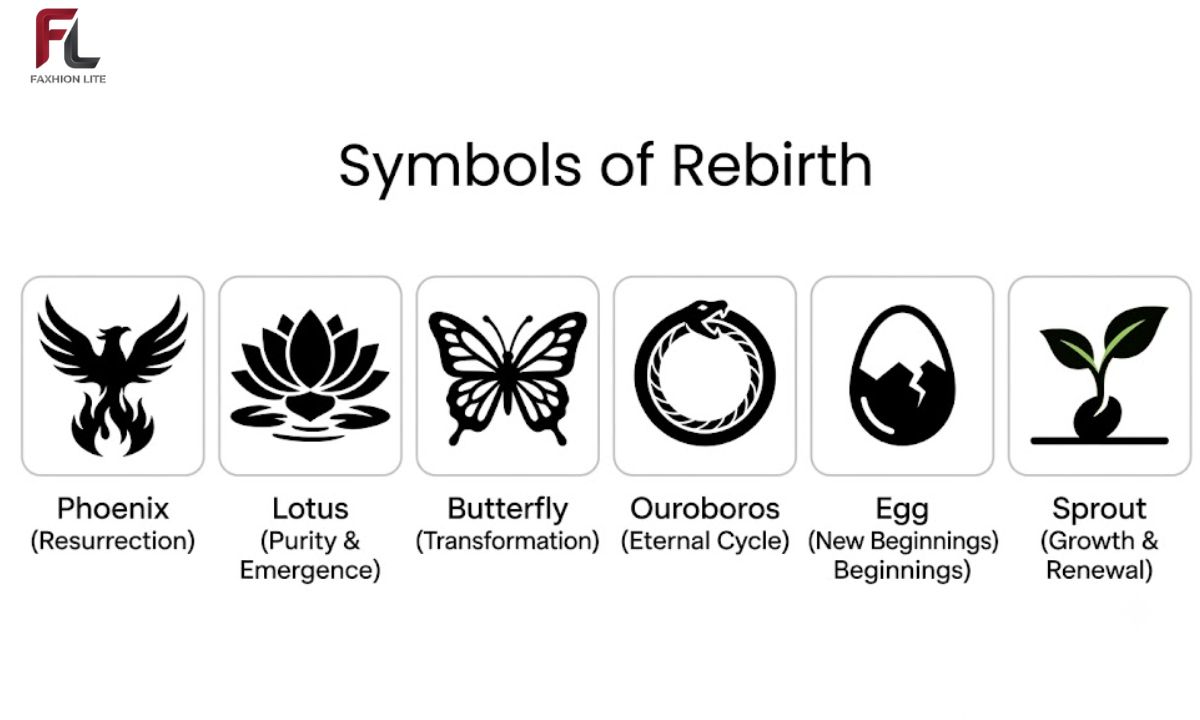
The most popular rebirth tattoos in the USA include the phoenix, lotus flower, butterfly, ouroboros (the snake eating its own tail), and the koi fish. Each carries a specific flavor of meaning. The phoenix says, “I was destroyed and came back stronger.” The lotus says, “I grew beautiful in the mud.” The butterfly says, “I became something entirely new.” Choosing the right symbol for your tattoo is really a question of which story you’re trying to tell about yourself.
Placement and style matter too. A rebirth and renewal tattoo in delicate fine-line work has a different emotional register than the same symbol in bold blackwork. Many people choose the inside of the wrist or the collarbone, places close to the heart that they can see easily. Others choose the back or shoulder blade, as if the symbol is literally carrying them forward.
Symbols of Rebirth Tattoo
If you’re looking for one definitive tattoo symbol for rebirth, the honest answer is that it depends on what resonates personally. But if you want the most universally recognized, emotionally resonant single image, the phoenix wins almost every time. It’s the clearest visual story of complete destruction followed by triumphant return.
A close second is the lotus, especially for people drawn to Buddhist or Hindu spiritual traditions, or anyone whose transformation has been quiet and internal rather than dramatic. Where the phoenix burns and rises visibly, the lotus just keeps growing upward through murky water until it blooms above the surface. Both are honest. They just describe different kinds of rebirth.
The key is that your tattoo should feel like it belongs to your story specifically. A symbol that’s meaningful to you will carry more power than the most popular design in the world chosen arbitrarily.
Symbols of Rebirth and Renewal Tattoo
While rebirth and renewal are related, they’re not identical. Renewal symbols suggest an ongoing cycle rather than a single dramatic reset. They’re more about returning to life rhythmically, the way the moon disappears and comes back, or the way trees lose their leaves each autumn and bud again in spring.
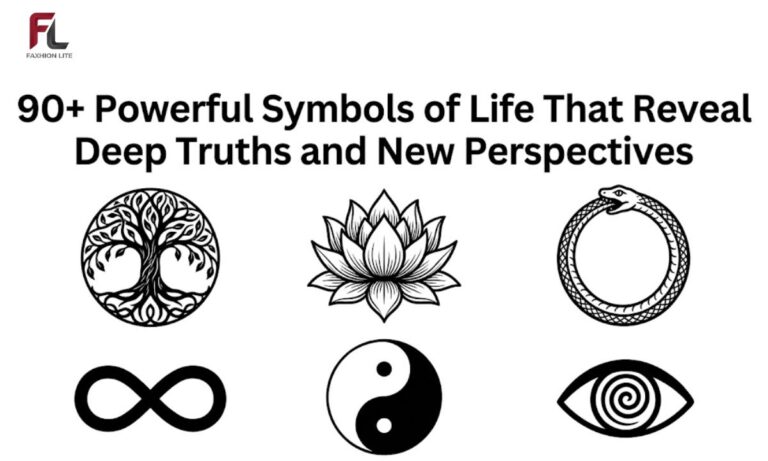
The ouroboros, the ancient image of a snake eating its own tail, is perhaps the most mathematically precise rebirth and renewal tattoo symbol. It has no beginning and no end. It represents the eternal cycle of death and regeneration as a single unbroken motion. The spiral, the crescent moon, and the tree of life also belong to this category. They’re less about a one-time transformation and more about trusting the cycle.
After the pandemic, searches for meaningful rebirth and renewal tattoos rose significantly in the USA. Tattoo artists across the country reported more clients coming in with a clear sense of purpose, people who had survived something and wanted to mark it permanently.
Symbol for New Beginning and Strength
Not everyone who searches for a symbol of new beginning just wants to mark a fresh start. They want to communicate something about who they came out the other side as. They want the symbol to carry both meanings: “I started over” and “I’m stronger for it.”
The phoenix covers both naturally. But lesser-known options deserve attention too. The Hamsa hand, found across Middle Eastern and North African spiritual traditions, represents protection, strength, and the power to ward off harm while moving forward. The Celtic triquetra (triple knot) represents the interlocking of past, present, and future, and carries connotations of unbreakable strength.
For American veterans, first responders, and cancer survivors especially, this dual meaning matters. A symbol of new beginning alone can feel incomplete. It needs to honor what was survived, not just what came after.
Spiritual Rebirth Symbol
Spiritual rebirth shows up in virtually every religious and philosophical tradition in human history, and each one has developed visual symbols to represent it. In Christianity, the cross holds both death and resurrection simultaneously. In Buddhism, the lotus represents the soul’s awakening. In Hinduism, the sacred flame called the agni represents the burning away of ego to reveal the divine self beneath.
The dove and water together represent spiritual awakening in Christian baptism, the literal ritual of dying to the old self and being born again. The ankh, an Egyptian cross with a loop at the top, represents the key to eternal life. The spiral appears in Celtic sacred sites like Newgrange, where it’s aligned to catch the first light of the winter solstice sunrise, a reminder that even the darkest night gives birth to returning light.
What makes spiritual rebirth symbols particularly powerful is that they don’t just represent hope in the abstract. They encode an entire worldview: the belief that the universe itself is structured toward renewal, and that human suffering exists within a larger pattern of return.
Reborn Symbols and Rebirth Signs
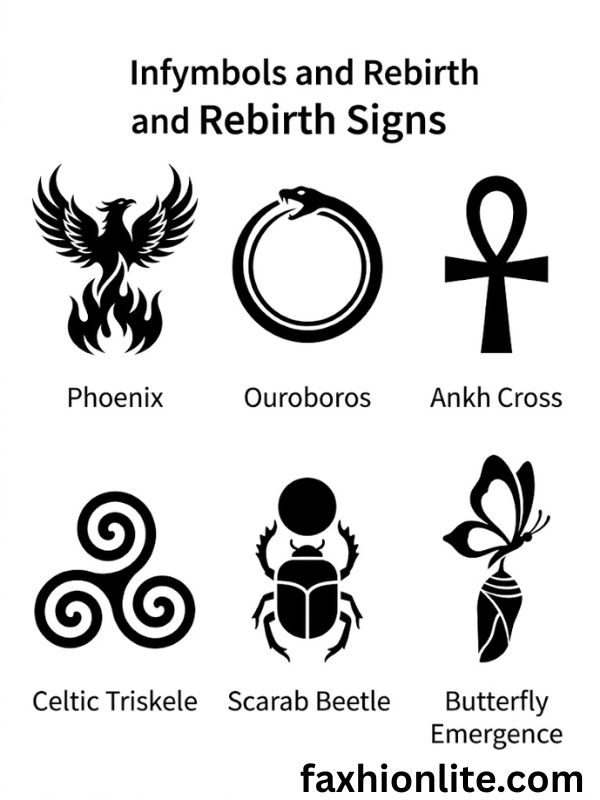
The word “reborn” carries a slightly different emotional charge than “rebirth.” To be reborn suggests a more complete transformation. Something is not just renewed but fundamentally different from what it was. The cocoon is the perfect image for this. Inside a chrysalis, the caterpillar doesn’t just change. It dissolves into biological soup and reconstructs itself from scratch. That’s a different kind of change than simply healing or growing.
Signs of rebirth appear everywhere in the natural world once you start looking. A shoot pushing through cracked asphalt. Rain falling after a long drought. A bird singing before sunrise when the sky is still dark. These are all rebirth signs encoded in the world around us, which is partly why humans across cultures developed the same symbolic vocabulary independently. We were all watching the same sky.
Ancient and Cultural Symbols of Rebirth
Long before tattoo parlors and social media, ancient civilizations were already grappling with the same questions we ask today. What comes after the end? Is loss permanent? What does transformation look like from the outside?
Ancient Symbols of Rebirth
The scarab beetle is one of the oldest rebirth symbols on earth. Ancient Egyptians watched dung beetles roll their balls of dung across the desert, bury them, and then watched new beetles emerge from the ground. They saw the sun do the same: roll across the sky, disappear below the horizon, and rise again. The scarab became the visual symbol of that solar rebirth, appearing on amulets, tomb paintings, and royal jewelry for thousands of years.
The ouroboros appears independently in ancient Egypt, ancient Greece, and several Mesoamerican cultures, which tells you something important: this symbol wasn’t borrowed. It was discovered. Something about the image of a snake completing its own circle triggered the same recognition in people who had never met. Infinity. Cycle. No death without return.
The spiral, one of humanity’s oldest carved symbols found on cave walls from Ireland to Peru, represents the unfolding of life from a central point, an outward journey that circles back. Ancient rebirth symbols like these didn’t just decorate. They structured how people understood their world.
Symbols Meaning Rebirth: A Quick Reference
| Symbol | Origin | Core Meaning |
| Scarab Beetle | Ancient Egypt | Solar rebirth, regeneration |
| Ouroboros | Egypt/Greece | Eternal cycle, no end without a beginning |
| Lotus | Buddhism/Hinduism | Purity rising from difficulty |
| Phoenix | Greece/Arabia | Destruction followed by triumphant return |
| Butterfly | Global | Complete transformation, new identity |
| Ankh | Ancient Egypt | Eternal life, key to rebirth |
| Spiral | Celtic/Global | Journey of the soul, cyclical renewal |
| Tree of Life | Global | Rootedness through all life cycles |
| Crescent Moon | Global | Renewal, cyclical return of light |
| Koi Fish | Japan/China | Perseverance, transformation against current |
Symbols of Rebirth and Transformation
Transformation symbols occupy a slightly different space than pure rebirth symbols. Where rebirth is about returning, transformation is about becoming. The butterfly is the clearest example because it shows you the entire process visually. It doesn’t skip any steps. You see the egg, the caterpillar, the chrysalis, and finally the butterfly. Every stage matters. None of them are comfortable. And the final form couldn’t exist without everything that came before.
In the context of personal transformation, this is deeply important. Americans especially are drawn to transformation narratives, the “glow-up,” the comeback arc, the comeback season. These aren’t shallow cultural moments. They’re expressions of a deeply held belief in the possibility of becoming someone new.
Rebirth symbolism and transformation symbolism together explain why these images dominate so much of our visual culture, from brand logos to motivational posters. We aren’t just decorating. We’re reminding ourselves of something we need to believe.
Symbols of Reincarnation
Reincarnation symbols are a specific subset of rebirth symbolism. Where most rebirth symbols represent transformation within a single life, reincarnation symbols represent the soul’s journey across multiple lives.
The wheel of dharma in Buddhism is the most recognized of these. It represents the cycle of samsara, the endless rounds of birth, death, and rebirth that the soul moves through until it achieves liberation. In some Hindu traditions, the sacred river Ganges is itself a reincarnation symbol, representing the soul’s continuous purification across lifetimes.
The spiral labyrinth found in Celtic sacred sites also functions as a reincarnation symbol, representing the soul’s complex journey through multiple existences before returning to the source.
Mythological and Religious Symbols of Rebirth
Every great mythology carries a rebirth story at its center. It’s not a coincidence. These stories exist because humans have always needed them.
Spiritual Symbols of Rebirth
The world’s major spiritual traditions share more than they differ on this topic. Water cleanses and renews. Fire destroys what’s unnecessary to reveal what’s essential. Light returns after darkness. Seeds contain life within apparent death. These patterns repeat across spiritual rebirth symbols in every culture because they reflect observable truths about the natural world, truths that ancient people understood were also truths about the inner life.
Symbols of Rebirth in the Bible
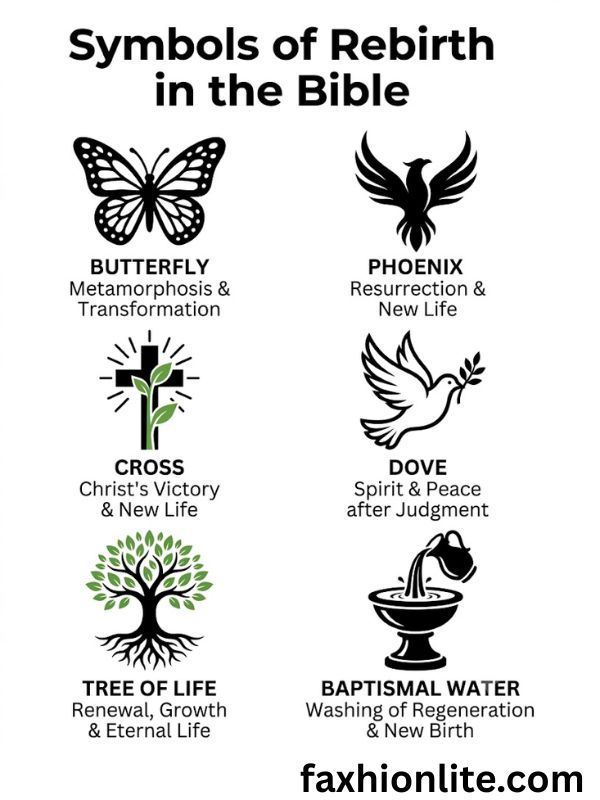
Biblical rebirth symbolism is rich and specific. The cross holds death and resurrection in a single image. The dove that returned to Noah’s ark with an olive branch marked the end of destruction and the beginning of a new covenant. Water in baptism represents literal death to the old self and emergence as a new creation.
The story of Jonah, three days in darkness inside the whale before emerging into new life, became an early Christian symbol for death and resurrection. The grain of wheat that “falls to the earth and dies” in order to produce fruit is one of the most quietly powerful symbols of renewal in the entire text. It doesn’t soften the cost of transformation. It simply insists that the cost is worth it.
Celtic Symbols of Rebirth
The Celtic triquetra, three interlocking arcs with no beginning or end, is one of the most visually striking rebirth symbols from the ancient world. It represents the triple nature of life, death, and rebirth as inseparable, each one containing the other two.
The triskelion, three spirals radiating from a center point, appears at Newgrange in Ireland, a tomb built over 5,000 years ago, aligned so that the winter solstice sunrise illuminates its inner chamber. It’s one of the earliest known architectural expressions of rebirth symbolism: even in a tomb, there is light returning.
Celtic rebirth symbols are particularly popular among Irish-American communities, where they carry not just spiritual but ancestral weight. They represent a connection to something ancient that survived conquest, diaspora, and generational loss.
Symbols of Rebirth in Ancient Egypt
Ancient Egyptian civilization was arguably the most elaborate and systematic in its engagement with rebirth symbolism. The entire religious structure was built around the premise that death was a transition, not an end.
The god Osiris was killed, dismembered, and then reassembled by his wife Isis before being resurrected as ruler of the underworld. His story wasn’t just mythology. It was the template through which every Egyptian understood their own death and hoped for their own rebirth.
Egyptian symbols of rebirth include the ankh (life), the djed pillar (the backbone of Osiris, representing stability and resurrection), the eye of Horus (restoration after destruction), and the Bennu bird (the Egyptian prototype of the phoenix). The sun god Ra was believed to die each evening and travel through the underworld before being reborn at dawn, making every sunrise a daily rebirth event witnessed by the entire civilization.
For NYT Crossword fans, common answers related to Egyptian rebirth symbols include ANKH, SCARAB, and OSIRIS.
Famous Rebirth Symbols in Nature and Myth
Phoenix
The phoenix is almost certainly the most recognized symbol of rebirth in Western culture. Its core narrative is simple and devastating in equal measure: the phoenix burns completely and then rises from its own ashes more magnificent than before.
What makes the phoenix so enduring is that it doesn’t minimize the fire. The burning is the point. There’s no version of the phoenix story where the bird avoids destruction. The destruction is what makes the return meaningful. That’s why the phoenix resonates so deeply with people who have survived something that felt unsurvivable. It doesn’t say, “It wasn’t that bad.” It says, “You burned. And you came back anyway.”
The city of Phoenix, Arizona was named with this symbolism explicitly in mind. The X-Men character Jean Grey, the mythological figure Fawkes in Harry Potter, the symbol on countless military veteran tattoos. Phoenix symbolism is woven through American culture because the American narrative itself is a phoenix story: something new built on something that had to end.
Tree of Life
The Tree of Life is perhaps the most globally shared renewal symbol in human history. It appears in Norse mythology as Yggdrasil, the world tree connecting the nine realms. In Kabbalah, it’s the diagram of divine emanations. In Celtic tradition, it represents the connection between the earthly and spiritual worlds. In indigenous traditions across five continents, the tree serves as a symbol of the life force itself.
Its connection to rebirth is built into its biology. Trees shed their leaves and appear dead in winter, only to bud and bloom again in spring. Their roots reach into the dark earth, the symbolic domain of death and ancestors, while their branches stretch toward light and sky. The tree of life rebirth meaning is therefore not just symbolic. It’s observational. Ancient people watched trees do it every year and recognized something true about the way life works.
Deep Symbolic Meaning of Rebirth
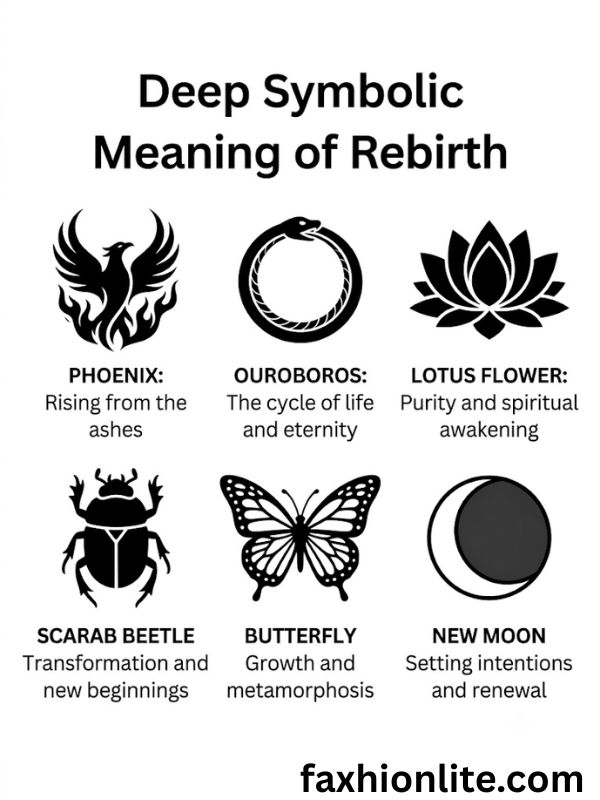
Spiritual Meaning
In spiritual terms, rebirth meaning almost always involves some form of ego dissolution. Whether it’s the Buddhist concept of anatta (no-self), the Christian concept of dying to sin, or the Sufi concept of fana (annihilation of the ego in God), the spiritual traditions agree that true rebirth requires releasing the old identity rather than just renovating it.
Soul awakening is the language many modern American spiritual seekers use for this experience. It’s the moment when the self you thought you were reveals itself as a construction, and something more essential underneath begins to emerge. The symbols of rebirth are the visual vocabulary for this interior experience.
Psychological Meaning
Carl Jung identified the death-rebirth archetype as one of the most universal patterns in the human psyche. Across cultures and centuries, human beings tell the same story: a hero descends into darkness, faces the ultimate threat, and returns transformed. Joseph Campbell called this the monomyth, the single story that underlies thousands of narratives.
What’s significant about this from a psychological perspective is that it’s not just a story pattern. It describes an actual process of psychological growth. Therapists working with trauma, grief, and major life transitions frequently observe what they call “post-traumatic growth”: people who emerge from devastating experiences not just recovered but genuinely transformed. Emotional healing symbols often help people organize and give meaning to this process.
Cultural Meaning
In American culture specifically, rebirth symbolism carries particular weight because the national founding narrative is itself a rebirth story. A new world, a fresh start, freedom from the old. That foundational story creates a cultural predisposition toward believing in second chances, comeback stories, and personal reinvention.
This shows up in everything from religious culture (the born-again experience is one of the most distinctly American religious phenomena) to business culture (the “pivot,” the brand relaunch, the comeback tour) to political rhetoric (“morning in America”). Americans don’t just like rebirth stories. They tell them about themselves constantly.
Symbols of Rebirth in Art, Movies & Pop Culture
You don’t have to look far to find rebirth symbolism in American popular culture. The Lion King is essentially an Osiris myth. The Matrix gives you a literal death and resurrection in cinematic slow motion. The Dark Knight Rises uses the pit prison as an explicit death-and-rebirth chamber.
In music, “Rise Up” by Andra Day became an unofficial anthem for American resilience. Florence + the Machine built an entire catalog around phoenix imagery and dark transformation. Beyoncé’s Lemonade is perhaps the most commercially successful symbolic rebirth narrative in recent music history.
Even product branding leans heavily on these symbols. The Roc Nation logo is a phoenix. Luxury brands use phoenix and lotus imagery in seasonal collections. “Spring collections” are rebirth rituals dressed in fashion language.
Spiritual & Dream Meaning of Symbols of Rebirth
When rebirth symbols appear in dreams, most psychological and spiritual traditions treat them as significant messages from the unconscious mind. A dream about a phoenix typically indicates that you’re in the middle of a major transformation, even if you haven’t fully recognized it yet. A dream about a butterfly emerging from a chrysalis often signals that a period of internal change is about to become visible in your outer life.
Water dreams, especially immersion in water, are among the most universal spiritual awakening dream symbols across cultures. They often indicate emotional cleansing, the release of something that’s been held too long, and the beginning of something new.
If you’re experiencing recurring dreams involving rebirth signs, whether sunrises, eggs cracking open, flames, or emerging from underground, it may be worth paying attention. Your dreaming mind may be processing a transformation your waking mind hasn’t caught up to yet.
Positive vs Negative Meanings of Rebirth Symbols
Positive Meanings
The vast majority of rebirth symbolism carries deeply affirming meanings:
- Hope after loss: the belief that what’s been lost can return in a new form
- Personal growth: the recognition that struggle produces strength
- Spiritual renewal: the possibility of becoming more aligned with your deepest values
- Fresh start: freedom from past mistakes and old identities that no longer fit
- Life renewal: the cyclical assurance that winter always gives way to spring
Negative Meanings
What most articles on this topic don’t tell you is that rebirth symbolism also carries genuine shadow meanings.
In Buddhist philosophy, reincarnation symbols like the wheel of samsara represent suffering, not joy. The wheel of rebirth is something you’re trying to escape, not celebrate. Endless cycles of birth, death, and rebirth are viewed as the problem that enlightenment solves.
The phoenix burns completely. If you’re drawn to phoenix symbolism, it’s worth sitting with the fact that the fire is not optional. The destruction is part of the process. Rebirth after hardship is genuinely powerful, but it requires going through the hardship, not around it. That’s not a flaw in the symbol. It’s the truth the symbol is trying to tell you.
Why Humans Are Drawn to Symbols of Rebirth
We’re drawn to symbols of rebirth because we live in a world structured by cycles, and we need visual anchors to remember that during the difficult parts of any cycle. The sun rises and sets. Seasons turn. Hearts beat. Lungs fill and empty. We are cyclical creatures surrounded by cyclical systems, and rebirth symbols are the landmarks we leave ourselves to stay oriented.
There’s also something deeper at work. Every human life includes experiences that feel like they might be permanent endings: the end of a relationship, the loss of a parent, the collapse of a career, a health diagnosis. In those moments, we instinctively reach for reassurance that endings aren’t final. That’s not wishful thinking. It’s pattern recognition. It’s us looking at the world and noticing that the things that seem most dead, the winter tree, the dark sky at 3 a.m., the bare ground in February, are the exact things that most reliably come back to life.
Symbols of rebirth carry this pattern in visual form. They don’t promise that your specific pain will disappear on a schedule. But they remind you that return is written into the structure of the world. And sometimes that’s enough to keep going.
Frequently Asked Questions
What is the most powerful symbol of rebirth?
The phoenix is widely considered the most powerful symbol of rebirth, representing complete destruction followed by triumphant return.
What flower symbolizes rebirth and new beginnings?
The lotus flower symbolizes rebirth and new beginnings, growing pure and beautiful from muddy, dark water below.
What are the best rebirth tattoo symbols for strength?
The phoenix, Celtic triquetra, and lotus flower are the best rebirth tattoo symbols that also represent personal strength.
What do symbols of rebirth mean in dreams?
Rebirth symbols in dreams often signal your subconscious is processing a major transformation happening within your life.
Which Celtic symbol represents rebirth and renewal?
The Celtic triquetra and triskelion both represent rebirth and renewal, symbolizing the unbreakable cycle of life and death.
Conclusion
From the scarab beetle carved into ancient Egyptian tomb walls to the phoenix tattooed on a cancer survivor’s forearm, symbols of rebirth have followed humans through every chapter of history because they speak to something no culture has ever been able to outgrow: the need to believe that endings aren’t the last word.
You see these symbols every single day. The butterfly on the greeting card. The sunrise in the phone wallpaper. The snake on the medical logo. The lotus in the yoga studio. Now you know what they’re saying. They’re participating in a conversation that’s been going on for thousands of years, the oldest conversation humans have, about loss and return, death and renewal, the fire and what rises from it.