48+ Puerto Rican Symbols and Meanings That Reveal the Island’s True Soul
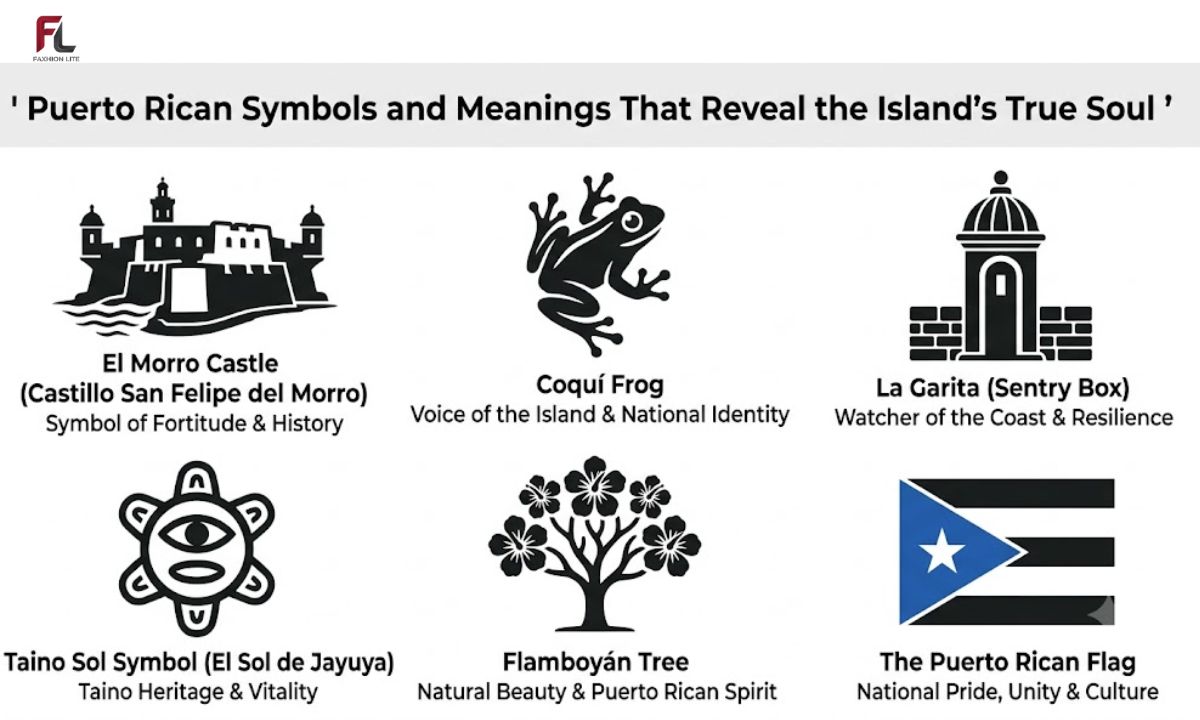
Puerto Rican symbols tell the story of a culture that never gave up. Each symbol carries centuries of history, pride, and identity. They come from three powerful roots: Taíno, Spanish, and African traditions.
You’ll find them on tattoos, flags, murals, and jewelry across America. For millions of Puerto Ricans living far from the island, these symbols mean home. Let’s explore 48+ Puerto Rican symbols and the deep meanings behind them.
What Are Puerto Rican Symbols?
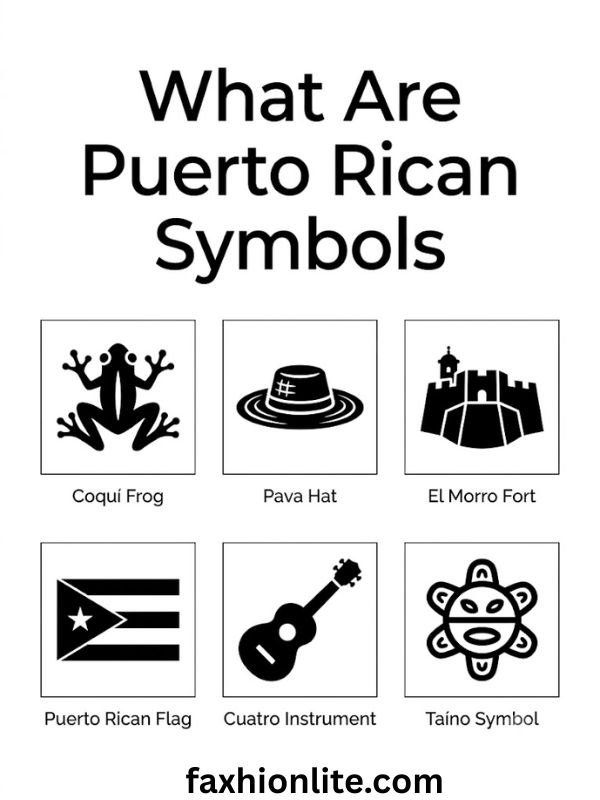
Puerto Rican symbols are the visual and spiritual language of one of the most culturally rich islands in the Caribbean. They include everything from official national emblems like the flag and coat of arms to deeply personal cultural icons like the coquí frog and the Taíno sun.
What makes these symbols unique is how layered they are. You can’t fully understand a Puerto Rican symbol without knowing a little Taíno history, a little Spanish colonial history, and a little about the African traditions that arrived through the transatlantic slave trade. All three of those worlds collided on this small island, and the symbols that survived tell that whole complicated, beautiful story.
For the more than 5 million Puerto Ricans living on the U.S. mainland today, these symbols serve an extra purpose. They’re anchors. When you’re far from the island, a coquí tattoo or a flag on your porch becomes your way of saying, “This is where I come from and I haven’t forgotten.”
Puerto Rican Symbols And Their Cultural Meanings
The cultural meaning behind Puerto Rican symbols runs deeper than most people realize at first glance. Each one sits at the intersection of nature, history, and spiritual belief. You can’t separate the symbol from the story.
The Taíno people, who called the island Borikén, were its first inhabitants. They carved their worldview into stone, wood, and cave walls. The Spanish arrived in 1493 and tried to erase much of that, but it didn’t work entirely. Taíno symbols survived in oral tradition, in DNA, in place names, and in the artistic patterns that still appear in Puerto Rican art today.
African enslaved people brought their own rich symbolic traditions, which blended with Taíno and Spanish Catholic elements to form unique spiritual practices like Espiritismo and Santería. These traditions added another layer of symbolic meaning to colors, animals, and natural objects that Puerto Ricans still reference today.
Puerto Rican Symbols And Meanings
Here’s a quick reference for some of the most recognized symbols and what they stand for:
| Symbol | Meaning |
| Coquí Frog | Home, belonging, connection to the land |
| Taíno Sun | Life, divine power, cyclical energy |
| Puerto Rican Flag | Resistance, pride, freedom |
| Maga Flower | Natural beauty, island uniqueness |
| Ceiba Tree | Strength, spiritual center, ancestral connection |
| Puerto Rican Parrot | Rarity, resilience, native identity |
| Taíno Spiral | Life cycles, water, the soul’s journey |
| Azabache Bracelet | Protection, especially for newborns |
| Flamboyán Tree | Passion, vibrancy, Puerto Rican summer |
| Coat of Arms | National identity dating back to 1511 |
These symbols show up everywhere: in jewelry, murals, tattoos, and on the doors of bodegas in New York City. They follow Puerto Ricans wherever they go.
Puerto Rican Symbols Tattoos
Tattoos are one of the most personal ways Puerto Ricans carry their heritage on their bodies. The most popular designs include the coquí, the Taíno sun, the Puerto Rican flag, and the ceiba tree. Many people also get the outline of the island itself or the word “Boricua” in script.
What’s interesting is that tattoo choices often reflect generational identity. Older generations might get the flag or a coquí in a realistic style. Younger Puerto Ricans, especially those born on the mainland, often lean into Taíno-inspired geometric designs as a way of reconnecting with pre-colonial roots their grandparents may not have openly discussed.
Getting a Taíno symbol tattooed is a serious decision in many Puerto Rican families. It’s not just art. It’s a commitment to honoring ancestors who didn’t always have the freedom to display their identity openly.
Taino Symbols And Meanings
The Taíno people left behind an extraordinary visual legacy. Their symbols, called petroglyphs, were carved into rock faces, cave walls, and ceremonial objects called zemís. These weren’t just decorations. They were prayers, records, and spiritual communication tools.
Key Taíno symbols include the sun face (connected to the goddess Atabey), the spiral (representing water and life cycles), the frog (linked to fertility and rain), the bat (a guide between the living world and the spirit world), and the turtle (a symbol of the earth itself). Each one played a specific role in Taíno cosmology.
One of the best places to see original Taíno carvings today is the Caguana Indigenous Ceremonial Center in Utuado, Puerto Rico. The monolithic stones there feature some of the most detailed Taíno petroglyphs in the entire Caribbean.
Puerto Rican Symbols Copy And Paste
Many people search for digital versions of Puerto Rican symbols to use in social media bios, texts, and posts. Here are some commonly used ones:
🇵🇷 Puerto Rican flag emoji ☀️ Sun (representing the Taíno sun) 🐸 Frog (standing in for the coquí) 🌺 Hibiscus flower ⭐ The lone star from the flag
It’s worth noting that authentic Taíno symbols don’t have Unicode representations. If you want to use traditional Taíno imagery digitally, look for custom SVG files or fonts created by Puerto Rican artists who specialize in indigenous design work.
Famous Symbols That Represent Puerto Rico
Puerto Rico Symbol Frog
The coquí frog is probably the most beloved symbol in all of Puerto Rican culture. This tiny tree frog, barely the size of a thumbnail, produces a nighttime call so distinctive that Puerto Ricans across the world recognize it immediately. The name coquí literally comes from its song: “ko-kee.”
There are 17 species of coquí native to Puerto Rico, and here’s something fascinating that most people don’t know: when researchers tried to introduce coquís to Hawaii, they couldn’t survive. The coquí is biologically inseparable from Puerto Rico’s specific climate and ecosystem. That’s why it became such a perfect symbol of home. It literally cannot exist anywhere else.
In Taíno tradition, the coquí’s song was believed to bridge the human world and the spiritual world. Some elders passed down the belief that the souls of ancestors returned as coquís and sang through the night to protect the living. That’s the kind of meaning that makes a symbol last for centuries.
Puerto Rican Protection Symbols
Protective symbols are woven into everyday Puerto Rican life in ways that outsiders often miss. The azabache, a small black jet stone bracelet, is placed on newborns to protect them from the “evil eye” (mal de ojo). It’s one of the most enduring protective traditions on the island.
The figa, a carved hand gesture amulet, is another protection symbol with roots in both West African and Spanish traditions. Specific Taíno zemí carvings were also used to ward off Juracán, the Taíno hurricane deity whose name literally gave us the English word “hurricane.”
What’s beautiful about Puerto Rican protection symbols is how they blend three spiritual traditions seamlessly. A Puerto Rican grandmother might hang a Catholic saint’s image next to a Taíno zemí carving and an African-inspired protective charm without seeing any contradiction. That’s cultural resilience in its most honest form.
Taino Sun Symbol Meaning
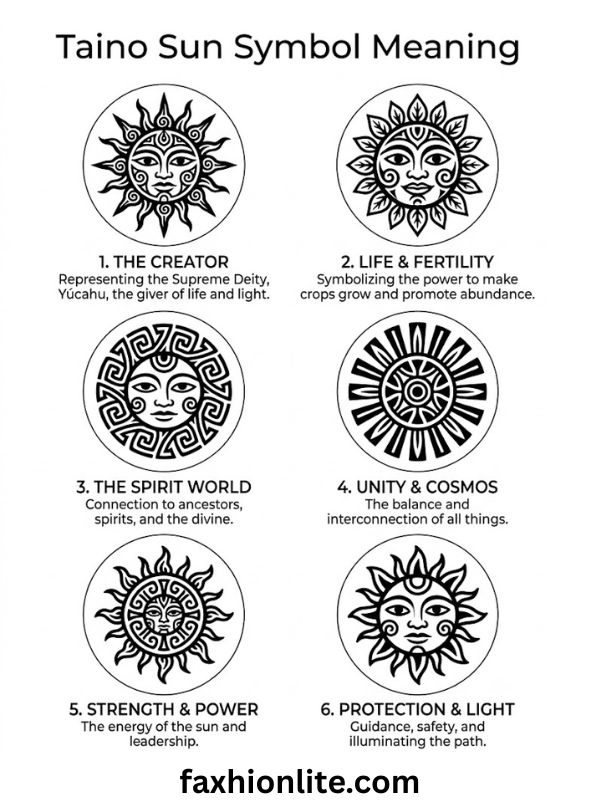
The Taíno sun is one of the most widely recognized symbols in Puerto Rican art today. It typically appears as a circular face with radiating rays, often with human-like features carved into the center. This wasn’t just a depiction of the sky. It was a representation of divine power, agricultural cycles, and the life force that made the island fertile.
In Taíno cosmology, the sun was closely connected to Atabey, the mother goddess of fresh water and human fertility. The sun’s rays represented her reach over all living things. When you see this symbol on a mural in Old San Juan or as a pendant in a jewelry shop, you’re looking at thousands of years of spiritual thought compressed into a single image.
Traditional Puerto Rico Symbols And National Identity
Puerto Rico National Symbols
Puerto Rico has several officially designated national symbols that reflect both its indigenous past and its complex history:
- National Bird: The Puerto Rican Parrot (Iguaca), critically endangered and found only in El Yunque rainforest
- National Flower: The Maga (Thespesia grandiflora), a red-pink hibiscus found nowhere else on earth
- National Tree: The Ceiba (silk-cotton tree), sacred to both Taíno and African spiritual traditions
- National Anthem: “La Borinqueña,” written in the 19th century and named after the island’s original Taíno name
- Coat of Arms: Granted in 1511, making it one of the oldest coats of arms in the entire Western Hemisphere
What’s striking is that the Puerto Rican parrot is both a national symbol and one of the most endangered birds in the world. At one point, fewer than 13 wild individuals remained. Conservation efforts have brought that number up, but the parrot’s fragile existence adds a layer of urgency to what it represents: something irreplaceable that must be protected.
Puerto Rico Symbol
If you had to pick one symbol that captures the essence of Puerto Rico, most people would land on either the coquí or the flag. The flag wins on recognition worldwide. The coquí wins on emotional depth for people who grew up on the island or in Puerto Rican households.
But the real answer is that Puerto Rican identity can’t be reduced to one image. It’s the combination of the coquí’s song, the flag’s colors, the Taíno sun’s warmth, and the flamboyán tree’s brilliant red bloom that together tell the full story of Borikén.
Types and Variations of Puerto Rican Symbols
The Puerto Rican Flag
The Puerto Rican flag was designed in 1895 by Puerto Rican revolutionaries meeting in New York City. The design intentionally mirrored the Cuban flag to show solidarity between Caribbean independence movements. Its elements carry specific meaning:
- Three red stripes: The blood of patriots who fought for freedom
- Two white stripes: Peace and victory
- Blue equilateral triangle: Liberty, equality, and fraternity (inspired by Republican ideals)
- Lone white star: Puerto Rico itself, standing alone but strong
What most people don’t know is that displaying this flag was actually illegal in Puerto Rico from 1948 to 1957 under a U.S.-imposed law known as the Gag Law (Law 53). Puerto Ricans could be imprisoned for owning the flag. That history transformed the flag from a political symbol into something far more powerful: an act of defiance and survival.
The Taíno Spiral
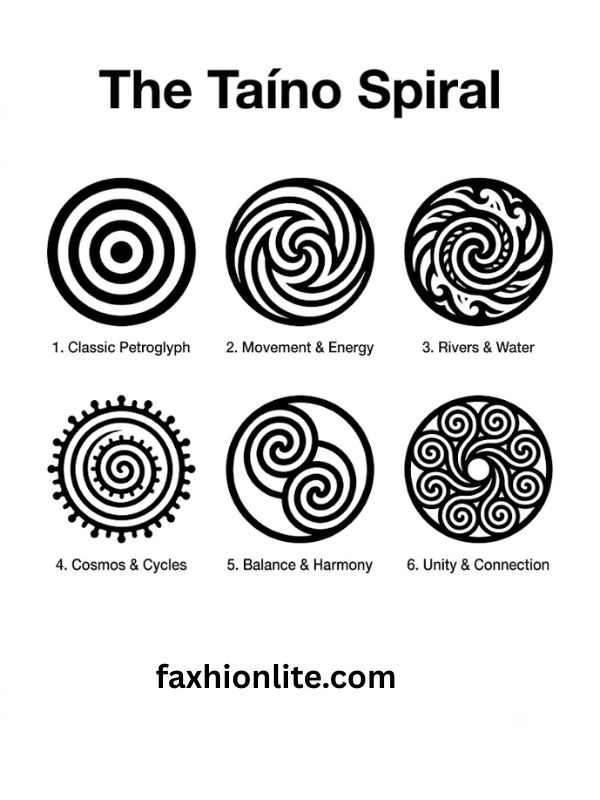
The spiral is one of the most recurring motifs in Taíno petroglyphs found across Puerto Rico. It represented the movement of water, the cycles of seasons, and the spiral path the soul takes between life and death. Similar spiral symbols appear in indigenous cultures on nearly every continent, suggesting it taps into something deeply universal in human experience.
Today, you’ll see the Taíno spiral on Puerto Rican jewelry, tattoos, and street art. Modern artists often combine it with the coquí or the sun to create hybrid designs that feel both ancient and contemporary at the same time.
Spiritual and Dream Meaning of Puerto Rican Symbols
In Puerto Rican spiritual traditions, symbols are never just visual. They’re believed to carry energy. In Espiritismo, a spiritual practice widely observed in Puerto Rico, natural objects and images are thought to hold the vibrational energy of the spirits or ancestors they represent.
If you dream about a coquí, many Espiritistas would interpret that as a message from an ancestor, particularly one tied to your homeland or family roots. Dreaming of the ceiba tree is often seen as a sign of ancestral protection. The Taíno sun appearing in a dream might signal spiritual awakening or a call to reconnect with your indigenous heritage.
These interpretations aren’t random. They come from centuries of oral tradition passed through families, curanderos (healers), and community elders who kept this knowledge alive even when colonial authorities tried to suppress it.
Why Humans Are Attracted to Puerto Rican Symbols
There’s a psychological reason why symbols stick to us. They compress complex emotions into a single image that the brain processes almost instantly. You don’t need to read a history book when you see the Puerto Rican flag. You feel it.
For Puerto Ricans in the diaspora, these symbols serve as identity anchors in a world that doesn’t always see or recognize their culture. A coquí on a keychain isn’t just decoration. It’s a daily reminder of belonging. Research in cultural psychology consistently shows that people who feel connected to their cultural heritage report higher levels of self-esteem and emotional resilience.
Non-Puerto Ricans are drawn to these symbols too, often because of their visual richness and the obvious depth of story behind them. That attraction is healthy when it comes with curiosity and respect. It crosses a line when symbols are adopted without any acknowledgment of what they mean or where they come from.
Frequently Asked Questions
What is the most famous Puerto Rican symbol?
The coquí frog is Puerto Rico’s most beloved symbol representing home, belonging, and island identity.
What does the Puerto Rican flag symbolize?
It represents freedom, patriot sacrifice, peace, and Puerto Rico’s long history of resistance and pride.
What are Taíno symbols in Puerto Rican culture?
Taíno symbols are ancient indigenous carvings representing spiritual beliefs, nature, protection, and ancestral wisdom.
What is the meaning of the Taíno sun symbol?
The Taíno sun represents divine power, life force, and the mother goddess Atabey in indigenous cosmology.
Why do Puerto Ricans use protection symbols?
Puerto Ricans use protection symbols like azabache to guard against evil eye and negative spiritual energy.
Conclusion
Puerto Rican symbols are far more than design elements or cultural accessories. They’re survival stories compressed into images. From the coquí’s song echoing through the mountains of Borikén to the Taíno sun carved into cave walls thousands of years ago, every symbol in Puerto Rican culture carries the weight of people who refused to let their identity disappear.
Understanding these symbols means understanding a people who were colonized, displaced, and repeatedly told their culture didn’t matter. And yet here we are, with these symbols more alive and more visible than ever, painted on walls, inked on skin, and waving from windows in cities across America.