50+ Legendary Leadership Symbols From History That Still Guide Leaders Today
Leadership symbols are visual representations of authority, power, and guidance that humans have used for thousands of years to communicate who leads, why they lead, and what kind of leader they are. From the golden crowns of medieval kings to the eagle on the American presidential seal, these symbols speak a universal language that cuts across cultures, centuries, and continents.
What’s fascinating is that many of these symbols aren’t just historical relics. They’re alive in boardrooms, military uniforms, school crests, tattoo parlors, and brand logos right now. Understanding leadership symbolism gives you a richer appreciation of how authority gets communicated without a single word being spoken.
What Are Leadership Symbols?
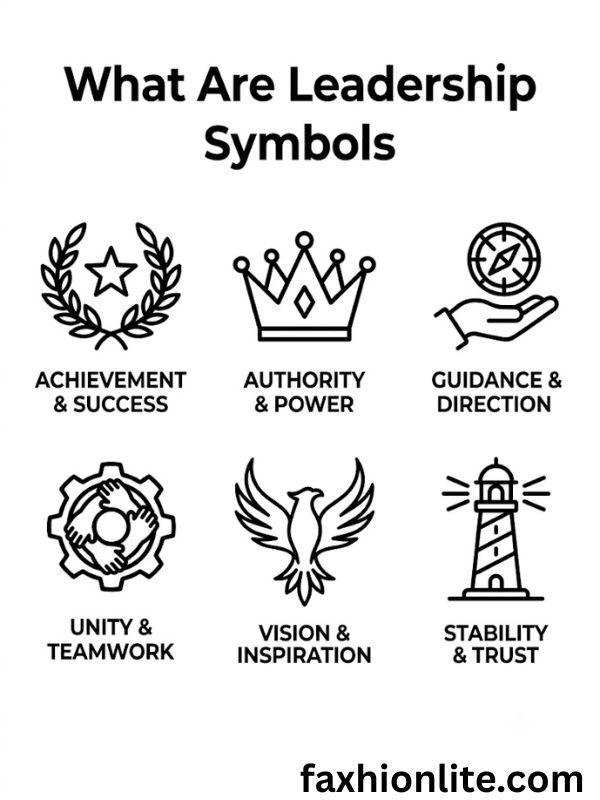
A leadership symbol is any image, object, animal, or design that represents the qualities of a leader, including courage, wisdom, authority, vision, and responsibility. These symbols work because the human brain is wired to respond to visual cues faster than words. When you see a crown, you don’t need a caption to understand it stands for royalty and power.
Historically, symbols of leadership served a practical purpose. Most people couldn’t read, so leaders needed a visual shorthand for their authority. A pharaoh’s double crown told every Egyptian exactly who held divine power. A Roman general’s eagle standard told soldiers who to follow into battle. The symbol made the leader’s status undeniable and immediate.
Today, leadership symbols and meanings have evolved but haven’t disappeared. A CEO’s corner office, a general’s stars, a university’s seal on a diploma, all of these are modern versions of the same ancient human instinct: use a symbol to show who leads.
Leadership Symbols And Meanings Across Cultures And History
Every civilization in human history developed its own set of symbols for leadership, and what’s remarkable is how much overlap exists. The lion, the eagle, the crown, and the staff appear repeatedly across cultures that had zero contact with each other. That tells you something profound: these symbols tap into something deeply human about how we understand authority.
Symbols Of Leadership With Meaning
Here’s a quick-reference breakdown of the most powerful symbols of leadership and what they actually mean:
| Symbol | Core Meaning | Cultural Origin |
| Crown | Sovereignty, divine right | Global |
| Eagle | Vision, freedom, power | Americas, Rome |
| Lion | Courage, strength, pride | Africa, Europe |
| Scepter | Delegated divine authority | Egypt, Europe |
| Laurel Wreath | Achievement, honor | Ancient Greece |
| Dragon | Imperial wisdom, cosmic power | China |
| Throne | Permanence, seated authority | Global |
| Torch | Guidance, enlightenment | Greece, USA |
| Anchor | Stability, groundedness | Navy, Christianity |
| Compass | Direction, vision | Freemasonry, exploration |
Each of these leadership symbols and meanings carries centuries of cultural weight. The laurel wreath, for example, started as a Greek symbol for athletic victory. Romans adopted it for military triumph. Today it appears on university seals because it communicates achieved excellence through effort.
Symbols Of Leadership In Education
Schools and universities have their own rich tradition of leadership symbols in education. Think about the graduation cap (authority earned through learning), the school crest (institutional identity and values), the valedictorian medal (excellence recognized publicly), and honor society pins (exclusive membership in academic leadership).
The owl deserves special mention here. Borrowed from Athena, the Greek goddess of wisdom, the owl became one of the most widely used educational leadership symbols in the Western world. It shows up on university shields, library logos, and academic organization badges because it communicates that wisdom and vision are the foundations of true leadership.
Student council elections, honor rolls, class president titles, these are all systems built around symbolic leadership in educational environments. They teach young people that leadership is something you earn and something that comes with visible recognition.
Symbols Of Leadership
The broadest and most universal leadership symbols cross every cultural and generational boundary. The olive branch (peaceful leadership), the scales of justice (fair authority), the lighthouse (guiding others through darkness), and the shepherd’s staff (caring for those in your charge) all speak to leadership as guidance and influence rather than dominance.
What makes a symbol powerful is that it compresses complex ideas into a single image. A lighthouse doesn’t just mean “building near water.” It means “there is someone watching, someone guiding, someone making sure you don’t crash.” That’s a complete philosophy of leadership in one simple silhouette.
Visual And Creative Leadership Symbol Designs
Symbol Of Leadership Images
When choosing leadership symbols images for professional use, the most effective ones share three qualities: simplicity, immediate recognizability, and emotional resonance. A cluttered image might look impressive, but a clean eagle or a bold crown communicates leadership in half a second.
Color matters enormously in leadership imagery. Gold communicates royalty and earned success. Deep blue suggests trustworthiness and stability. Red projects energy, power, and urgency. Black carries authority, sophistication, and strength. Designers use these color-symbol combinations deliberately to reinforce the symbolic meaning of leadership in visual branding.
Leadership Symbols Black And White
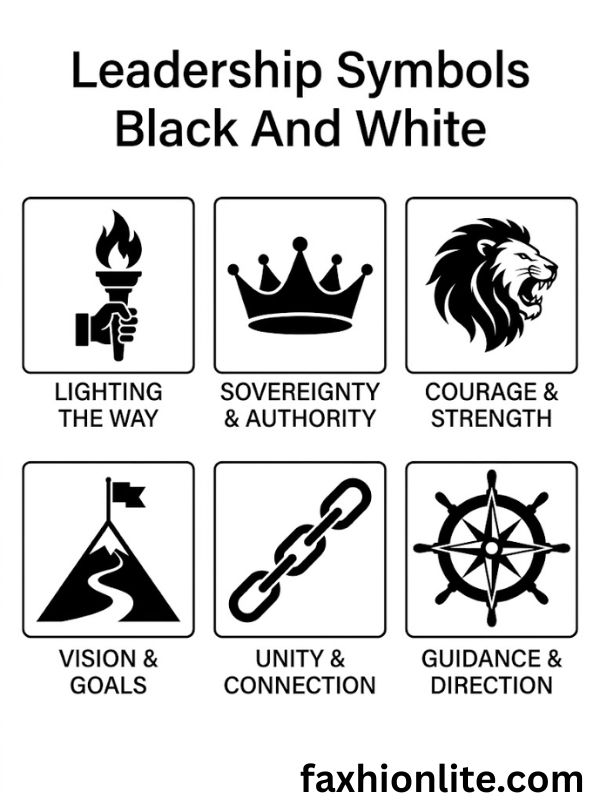
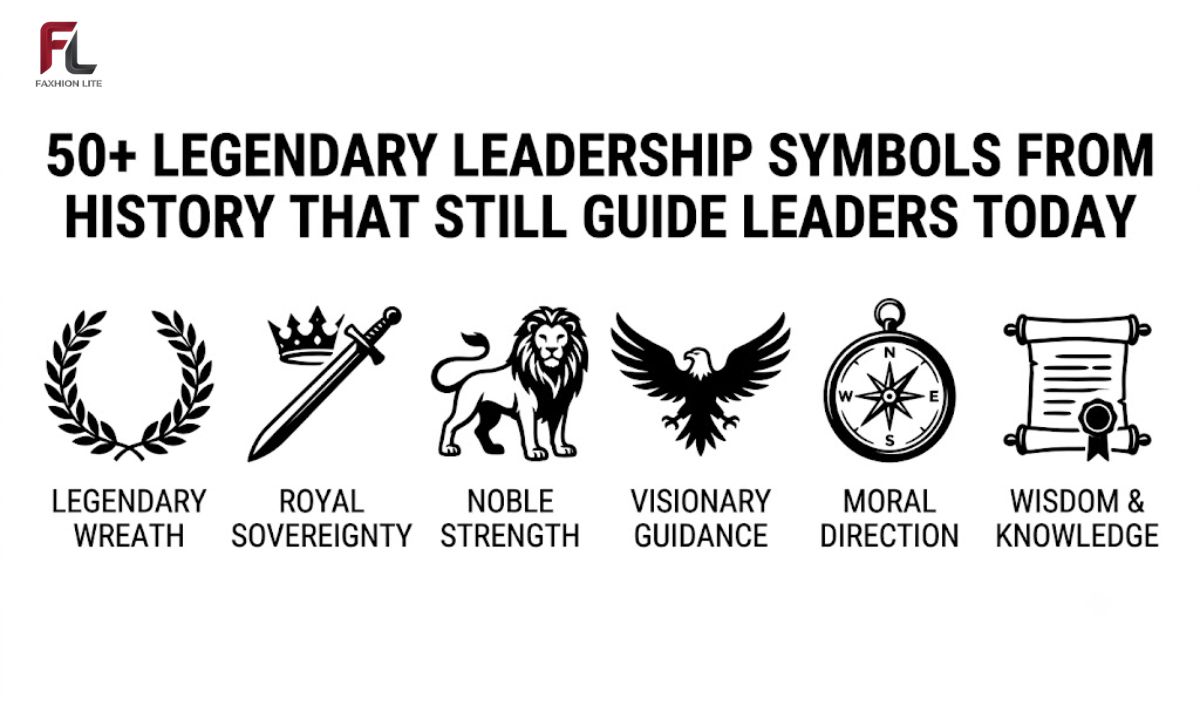
Black and white leadership symbols strip away color and force the symbol to carry all the meaning on its own. This is why the most iconic leadership logos, military insignia, and tattoo designs work beautifully in monochrome. The American bald eagle, the British lion, the Roman fasces, all remain instantly recognizable without color.
Minimalism in leadership visuals is actually a sign of confidence. If a symbol needs embellishment to make its point, it’s a weaker symbol. The strongest leader symbols are bold, clean, and unmistakable even at small sizes.
Leadership Symbol Designs In Art And Personal Expression
Leadership Symbol Tattoo
Leadership symbol tattoos are among the most personal ways people carry their values and identity. The most popular choices for leadership tattoo ideas include:
- Eagle tattoos: representing vision, freedom, and rising above obstacles
- Lion tattoos: symbolizing courage, family protection, and authority
- Crown tattoos: communicating personal sovereignty and self-mastery
- Compass tattoos: representing direction, purpose, and staying true to your path
- Anchor tattoos: standing for stability and groundedness under pressure
What’s interesting about leadership symbol tattoo choices is that most people choose symbols that represent the leader they want to become, not just the leader they already are. It’s an aspirational act of personal branding.
Logo Leadership Symbols
The world’s most recognized leadership logo symbols are deeply intentional. FedEx uses an arrow hidden between letters to suggest forward momentum. Harvard’s seal features three open books symbolizing truth and knowledge. The United States presidential seal centers on the bald eagle holding both arrows (strength) and an olive branch (peace leadership).
When businesses choose leadership symbols for logos, they’re making a statement about their values and authority. The goal is to find a leadership symbol meaning that aligns with what the organization actually stands for, not just what looks impressive.
Historical And Cultural Leadership Symbols
Ancient Symbols Of Leadership
The richest library of ancient leadership symbols comes from civilizations that lasted thousands of years. Egypt alone gives us the crook and flail (governance and agriculture), the double crown (unified Upper and Lower Egypt), the ankh (divine life force), and the cartouche (royal name protected by divine power).
Rome contributed the eagle standard (military leadership authority), the laurel wreath (civic achievement), the toga praetexta (magistrate’s robe), and the fasces (a bundle of rods symbolizing collective strength under one leader). These historical leadership symbols were so powerful that many democracies, including the United States, borrowed them directly.
Ancient Leadership Symbols
Lesser-known ancient leadership symbols from other cultures are equally fascinating. Norse tradition gave us Mjolnir (Thor’s hammer) as a symbol of protective, powerful leadership. Celtic cultures used the triquetra to represent the balance of mind, body, and spirit in leadership. Aztec rulers carried the xiuhuitzolli (turquoise crown) as their primary symbol of a leader.
Coat Of Arms Leadership Symbols
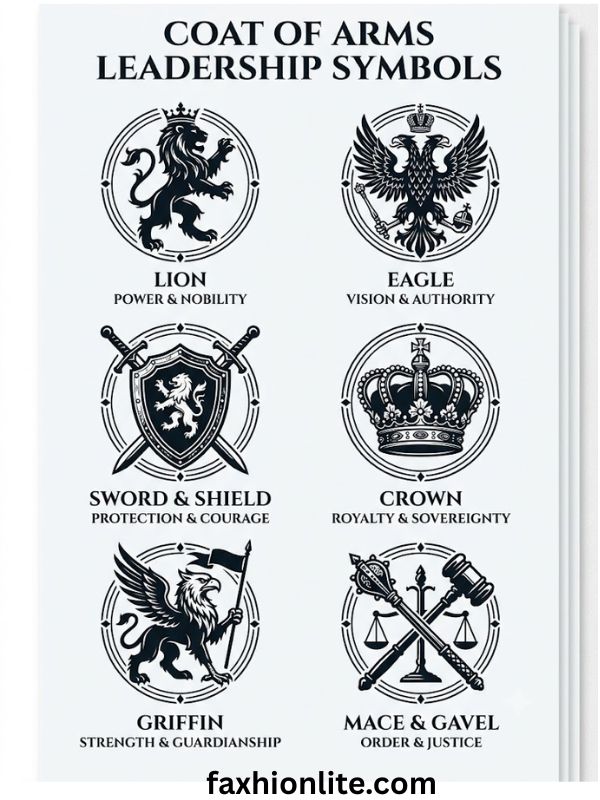
Coat of arms symbolism is one of the most structured systems of leadership symbols ever created. Every element has a specific meaning: the lion rampant means bold courage, the eagle displayed means authority and protection, the cross means faith and moral leadership, the color red (gules) means strength and bravery.
Many American universities, cities, and organizations still use heraldic symbols on their official seals because coat of arms leadership symbols communicate long-standing institutional authority. When you see a lion on a university seal, you’re looking at a direct line back to medieval Europe’s understanding of what leadership requires.
Objects And Things That Represent Leadership
Objects That Represent Leadership
The most powerful objects that represent leadership across history include:
- The throne: physical seat of permanent, legitimate authority
- The crown: wearable mark of sovereign power
- The scepter: tool of delegated divine governance
- The sword: military authority and the willingness to protect
- The ring: sealed authority (signet rings once made laws official)
- The key: access, responsibility, and gatekeeping
Each of these items that represent leadership does something clever: they make the abstract idea of authority into something physical you can see, touch, and hold. That’s why investiture ceremonies (where new leaders receive these objects) remain so emotionally powerful even today.
Objects That Represent Leadership Styles
Different objects that represent leadership styles reveal a lot about how different leaders see their role:
A round table represents democratic leadership because it has no head seat. King Arthur’s Round Table was specifically designed to make every knight equal. A shepherd’s staff represents servant leadership, guiding and protecting rather than commanding. An iron fist (sometimes literally a gauntlet) represents autocratic leadership. A torch represents transformational leadership, the idea of passing your light to others.
Things That Symbolize Leadership
Some of the most poetic things that symbolize leadership come from nature. A lighthouse stands alone in the dark doing the most important job: making sure others don’t get lost. A compass doesn’t know where you are, but it always tells you which direction you’re heading. A mountain requires effort to climb, offers perspective from the top, and stands firm regardless of weather.
These natural metaphors for leadership and vision resonate because they describe leadership through action and function rather than status and rank.
Leadership Symbols In Power, Strength, And Control
Leadership Symbolism
Leadership symbolism as a concept goes deeper than any single symbol. It’s about the relationship between a visual image and the human values it represents. Carl Jung called these recurring images archetypes, universal patterns that appear across cultures because they reflect something fundamental about human psychology.
The king archetype, represented by the crown and throne, stands for order, responsibility, and legitimate authority. The warrior archetype, represented by the sword, shield, and eagle, stands for courage, protection, and decisive action. The sage archetype, represented by the book, owl, and lantern, stands for wisdom, guidance, and teaching. Understanding these leadership archetypes helps explain why certain symbols for leadership feel immediately right to us even when we encounter them for the first time.
Military Leadership Symbols
Military leadership symbols are among the most precisely defined in human culture. Every star on a general’s uniform, every stripe on a sergeant’s sleeve, every ribbon on a veteran’s chest carries an exact meaning. These leadership emblems communicate rank, unit, achievement, and authority in a system where ambiguity can cost lives.
The most powerful military leadership symbols include:
- Stars on rank insignia (more stars, more authority)
- The eagle on U.S. military seals and insignia
- Crossed swords representing combat leadership
- The anchor for naval command authority
- Unit flags and colors representing collective identity and pride
Servant Leadership Symbols
Servant leadership symbols deserve more attention than they typically get. The most historically significant is the basin and towel, referencing the act of washing feet as a symbol of leading through service rather than status. The open hand (offering help rather than taking control), the candle (giving light to others while burning itself), and the bridge (carrying others across what they can’t cross alone) all represent this philosophy of leadership and responsibility.
Deep Symbolic Meaning of Leadership Symbols
Spiritual Meaning
In virtually every major spiritual tradition, leadership symbols carry divine significance. The Egyptian pharaoh’s double crown literally represented the gods’ authority flowing through a human vessel. The Christian bishop’s crozier (a shepherd’s staff) communicates that a religious leader is a servant of their flock, not its ruler.
Spiritual leadership meaning in symbols consistently returns to one idea: great leaders carry their authority as a sacred trust, not a personal possession. The symbol doesn’t belong to the leader; the leader belongs to the symbol’s responsibility.
Psychological Meaning
Psychologically, leadership symbols work because they shortcut our evaluation process. Research on visual cognition shows that humans assess authority cues within milliseconds. A uniform, a podium, a gavel, we respond to these symbols before our conscious mind has time to analyze them.
This is why symbolic leadership is so powerful and, frankly, so dangerous. Symbols can manufacture perceived authority as easily as they can represent genuine earned leadership. The psychological impact of leadership icons is real whether the leader behind the symbol deserves it or not.
Cultural Meaning
The same symbol can mean radically different things across cultures, and this is where cultural leadership symbols get complicated. The dragon is the ultimate symbol of imperial wisdom and cosmic power in Chinese culture. In medieval European culture, the same creature was a symbol of chaos and evil to be defeated by a hero.
This divergence is a reminder that leadership symbols across cultures are never neutral. They carry the full weight of the cultural history behind them.
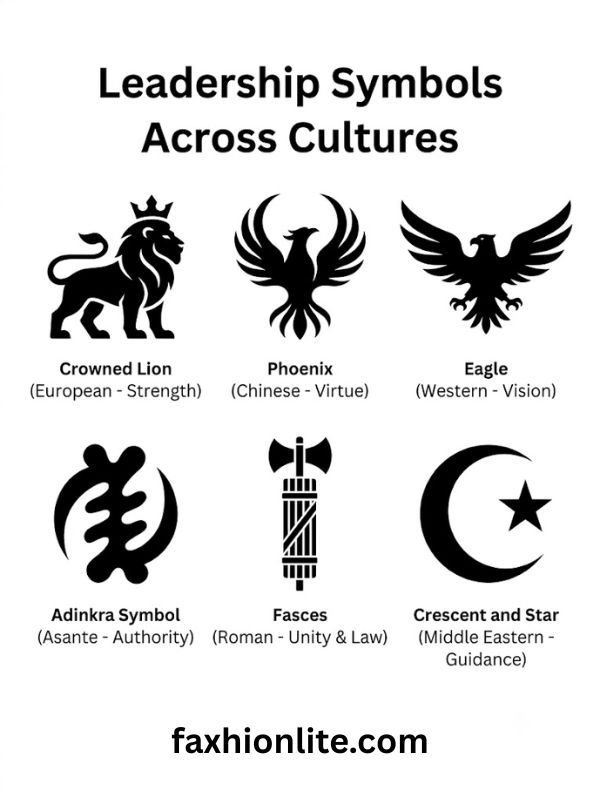
Leadership Symbols Across Cultures
Ancient Egypt
Egyptian leadership symbols merged political and religious authority into one. The double crown (combining the white crown of Upper Egypt and the red crown of Lower Egypt) visually announced unified power. The crook and flail held crossed over the chest told every Egyptian: this ruler feeds you and keeps order. The Eye of Horus communicated divine protection over all the pharaoh governed.
Ancient Greece
Greek authority symbols reflected a culture grappling with the tension between democracy and hierarchy. The laurel wreath honored achievement rather than birth. The olive branch represented Athena’s gift of wisdom and peaceful prosperity. The Athenian owl said that wisdom, not strength alone, was the highest leadership quality.
China
Chinese symbols of power and authority operated within the concept of the Mandate of Heaven: the idea that rulers governed legitimately only as long as they served their people well. The dragon didn’t just mean power; it meant cosmic responsibility. The jade seal made imperial decrees official. The nine-dragon throne placed the emperor at the center of both earthly and spiritual authority.
Medieval Europe
Medieval leadership symbolism was inseparable from Christianity and feudal hierarchy. The coat of arms made every noble house instantly identifiable. The sword of state at coronations symbolized the ruler’s duty to protect the realm. The orb (a golden sphere with a cross on top) communicated that the monarch governed the world under God’s authority.
Modern Society
Modern leadership symbols have become more democratic and less ceremonial, but they haven’t disappeared. The verified checkmark on social media is today’s version of a seal of authority. A CEO’s corner office with floor-to-ceiling windows communicates the same thing a throne room did in the 14th century: this person has reached the top, and everyone can see it.
Tech culture even created an interesting anti-leadership symbol: the hoodie. When Mark Zuckerberg appeared in hoodies for Wall Street meetings, he was deliberately rejecting traditional symbols of authority while simultaneously building a new one.
Leadership Symbols in Art, Movies and Pop Culture
Pop culture has given us some of the most resonant modern leadership symbols in history. The One Ring in The Lord of the Rings is a masterclass in how a single object can represent the full complexity of power and leadership and responsibility. Frodo’s burden isn’t just carrying a ring; it’s carrying the weight of authority that corrupts those who want it most.
The Mockingjay pin in The Hunger Games shows how symbolic leadership can emerge from below rather than above. Katniss didn’t choose her symbol; it chose her. That’s actually how the most powerful leadership symbols work in history too: they emerge from what leaders actually do rather than what they claim.
The lightsaber in Star Wars functions as the ultimate strength leadership symbol, but the color tells you everything. Blue means protection, red means corruption, green means wisdom. The weapon is the same; the symbolism shifts completely based on who carries it and why.
Spiritual and Dream Meaning of Leadership Symbols
Dreams involving leadership symbols are consistently interpreted across cultures as signals about your relationship with personal authority. Dreaming of wearing a crown often represents a desire for recognition or a sense of growing personal power. Dreaming of carrying a heavy scepter can suggest feeling the weight of responsibility. An eagle appearing in dreams is frequently interpreted as a call to elevate your perspective and take a broader view of your situation.
Spiritually, leadership symbols in dreams invite you to examine your relationship with authority and control, both the authority you hold and the authority you accept from others. Many spiritual traditions treat these dreams as prompts for self-examination: are you leading with wisdom and service, or with ego and fear?
Positive vs Negative Meaning of Leadership Symbols
Positive Meaning:
The most positive leadership symbols share a common thread: they represent authority in service of others. The torch guides. The shepherd’s staff protects. The olive branch makes peace. The lighthouse warns. These symbols say leadership is guidance and influence rather than dominance.
Negative Meaning:
The same symbols that inspire can oppress when misused. The iron fist represents leadership that crushes rather than guides. Chains and walls represent authority that limits rather than protects. Even the crown can represent tyranny when worn by someone who treats subjects as property rather than people they serve.
The lesson here is that leadership symbols aren’t inherently positive or negative. Their meaning depends entirely on what the leader holding them actually does.
Why Humans Are Drawn to Leadership Symbols
Humans are drawn to leadership symbols for the same reason we’re drawn to stories: they make complexity manageable. A single image can communicate a complete philosophy of leadership and vision in a moment. That’s enormously valuable in a world full of noise.
There’s also an evolutionary argument. For most of human history, quickly identifying the leader of a group meant survival. Symbols made that identification instant. The person wearing the eagle feathers, the crown, the distinctive armor, that’s who you follow when danger comes.
Today, leadership and motivation still flow through symbols. A team wearing the same jersey, a company rallying around its logo, an army marching under its flag: these moments of symbolic unity tap into something ancient and powerful in human social psychology.
Great leaders throughout history understood this intuitively. They didn’t just hold power; they held the symbols of power because they knew that symbolic leadership shapes how people feel, act, and commit.
Frequently Asked Questions
What are the most common leadership symbols used throughout history?
Crowns, eagles, lions, scepters, and thrones are the most universally recognized leadership symbols across cultures.
What animals are used as leadership symbols and what do they represent?
Lions represent courage, eagles symbolize vision, wolves show loyalty, and owls communicate wisdom in leadership.
What objects best represent servant leadership specifically?
The basin, towel, open hands, shepherd’s staff, and candle best represent humble, service-focused servant leadership values.
Can leadership symbols appear in dreams and what do they mean spiritually?
Yes, dreaming of crowns or eagles often signals growing personal authority, responsibility, or a spiritual leadership calling.
How are leadership symbols used in modern organizations and businesses today?
Companies use eagles, lions, and crowns in logos to instantly communicate authority, strength, and trustworthy organizational leadership.
Conclusion
Leadership symbols are one of the oldest and most universal human inventions. From the pharaoh’s double crown to the CEO’s corner office, from the eagle on the presidential seal to the lion on a university crest, these symbols speak a language that bypasses logic and speaks directly to human emotion and instinct.
What makes them timeless is that the best symbols of leadership aren’t really about the leader at all. They’re about the values the leader is committing to uphold: courage and strength, wisdom and vision, guidance and influence, power and responsibility. The symbol holds the promise. The leader has to fulfill it.