57+ Birth Month Symbols That Reveal Your True Personality And Destiny
Birth month symbols are the birthstones, flowers, colors, trees, and zodiac markers tied to the month you were born in, and each one is believed to reflect something about your personality, emotions, and life path. People have used these symbols for centuries to feel more connected to who they are.
Whether you were born in the frost of January or the warmth of July, there’s a whole system of meaning behind your birth date. If you’ve ever looked up your birthstone out of curiosity, or wondered why your birth flower shows up on jewelry and cards, you’ve already brushed up against this tradition.
This guide covers birth month meanings, symbolism, tattoos, trees, cultural variations, and the psychology behind why these symbols feel so personal. It’s a tradition that blends ancient belief systems with modern self-expression. And it still resonates strongly with people today.
What Are Birth Month Symbols?
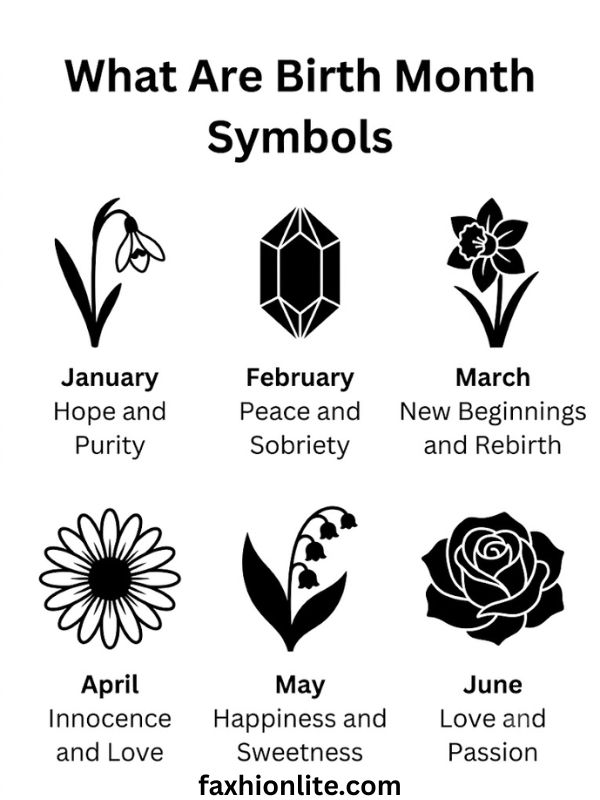
Birth month symbols are a collection of natural and astrological markers, gemstones, flowers, trees, colors, and animals, that are assigned to each month of the year and believed to carry symbolic meaning for people born during that time.
The tradition didn’t start as a single, organized system. It grew out of several separate practices that eventually merged. Ancient cultures assigned gemstones to the twelve tribes of Israel and to zodiac signs, believing each stone held protective or healing power.
Flower symbolism, meanwhile, developed separately through Victorian England’s obsession with “the language of flowers,” where every bloom carried a coded emotional meaning. Over time, Western culture blended these threads into the birth month charts we recognize today.
People search for birth month symbols for a few clear reasons. Some want a meaningful gift idea, like a necklace with a friend’s birthstone. Others are drawn to self-expression through tattoos or home decor.
And a growing number of people are simply curious about personal identity, wanting a fun, low-stakes way to reflect on their traits and tendencies. None of this requires believing in astrology as fact. It’s more about using symbols as a mirror for self-reflection.
In this guide, we’re covering more than 57 individual symbols across birthstones, flowers, trees, colors, and zodiac ties, making this one of the most complete birth month symbol resources you’ll find in one place.
Birth Month Symbols And Their Meanings
Every birth month carries multiple layers of symbolism, and understanding how they connect gives you a fuller picture than looking at just a birthstone alone.
Think of it like this: your birthstone represents strength and protection, your birth flower represents emotional temperament, and your birth tree (if your month has one) represents your instincts and how you handle challenges. Together, these three symbols create a more rounded picture of birth month personality traits than any single icon could offer on its own.
Here’s a quick reference table before we go deeper into each category.
| Month | Birthstone | Birth Flower | Symbolic Color |
| January | Garnet | Carnation | Deep red |
| February | Amethyst | Violet | Purple |
| March | Aquamarine | Daffodil | Sea green |
| April | Diamond | Daisy | Clear white |
| May | Emerald | Lily of the Valley | Green |
| June | Pearl | Rose | Soft pink |
| July | Ruby | Larkspur | Red |
| August | Peridot | Gladiolus | Olive green |
| September | Sapphire | Aster | Blue |
| October | Opal | Marigold | Orange |
| November | Topaz | Chrysanthemum | Gold |
| December | Turquoise | Narcissus | Blue-green |
Birth Month Symbols Tattoos
Birth month tattoos have become one of the most popular ways people express identity through self-expression and permanent art. A birthstone gem, a delicate flower outline, or a small zodiac glyph placed on the wrist or forearm are among the most requested designs at tattoo studios across the country.
What makes these tattoos meaningful isn’t just the visual, it’s the story behind them. A person getting a chrysanthemum tattoo for their November birth month might be honoring resilience, since chrysanthemums bloom late into the cold season when most other flowers have already faded. That kind of symbolism gives a tattoo emotional weight beyond decoration.
Minimalist line art has become the dominant style for this trend, especially among people getting their first tattoo. Fine-line birth flowers behind the ear, a tiny garnet or ruby gem on the ankle, or a birth month constellation on the collarbone are common choices seen across tattoo portfolios and social platforms today. These small designs let people carry their personal identity with them without a large commitment.
Birth Month Trees
Birth month trees come from Celtic tree astrology, a system that assigns tree species to specific date ranges based on ancient Druidic beliefs about nature’s influence on human character.
Unlike the standard twelve month birthstone list, Celtic tree astrology often breaks the calendar into date ranges rather than clean months, which can confuse people expecting a simple one tree per month structure. Trees like Birch, Rowan, Ash, Willow, Oak, Holly, Hazel, Vine, Ivy, Reed, and Elder each represent a different set of instincts, from the Oak’s steady strength to the Willow’s intuitive flexibility.
This tree based system offers a different lens than gemstones or flowers because it focuses heavily on nature symbols and grounded, earthy traits rather than glamour or elegance. People drawn to tree symbolism often say it feels more grounded and less commercial than birthstone jewelry marketing, since trees represent endurance and growth rather than luxury.
Chinese Birth Month Symbols
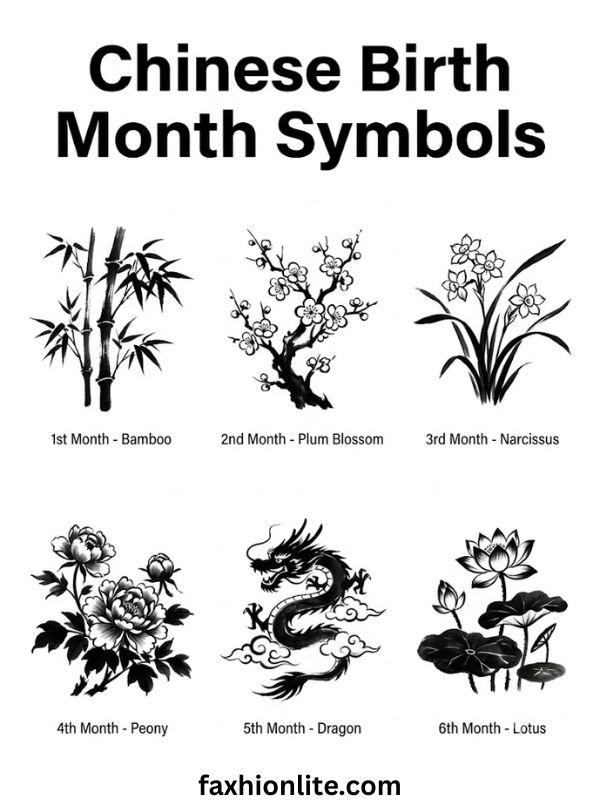
Chinese birth month symbols are a completely separate tradition from Western birthstones, and it’s a common point of confusion online. The Chinese zodiac assigns an animal to your birth year, not your birth month, based on a twelve year lunar cycle.
However, traditional Chinese culture does pair certain flowers and plants with each lunar month, similar in spirit to Western birth flowers but rooted in different symbolism. The plum blossom, for example, is associated with resilience and hope during the cold early months of the lunar year, since it blooms even in snow.
It’s worth respecting the distinction here rather than blending the two systems together. Western astrology and Chinese astrology developed independently, with different calendars, different symbolic logic, and different cultural roots, even though both aim to connect timing of birth with personality and fate.
Capricorn Sign Symbol
The Capricorn sign symbol is the sea goat, a mythological creature with the body of a goat and the tail of a fish, representing the blend of ambition and emotional depth associated with this earth sign.
Capricorn season runs from December 22 through January 19, meaning it overlaps two birth months rather than sitting neatly inside one. People born in this window often find their birth month symbols (turquoise or garnet, depending on the exact date) blending with Capricorn traits like discipline, patience, and long term thinking.
This overlap is a good reminder that zodiac signs and birth month symbols aren’t identical systems, even though they’re closely related. Your zodiac sign is determined by the sun’s position relative to constellations, while your birth month symbol is simply tied to the calendar month itself.
Birthday Month Symbols
Birthday month symbols is simply another common way people phrase this search, and it points to the exact same set of birthstones, flowers, and colors covered throughout this guide.
Quick answer: your birthday month symbol includes your birthstone, birth flower, symbolic color, and (for most months) an overlapping zodiac sign or two. There isn’t a meaningful difference between “birth month symbol” and “birthday month symbol,” they’re used interchangeably across search engines and jewelry retailers alike.
Knowing this helps when you’re shopping for gifts too. A birthday card, a piece of jewelry, or even a candle scent marketed around “birthday month symbols” is drawing from this same well established tradition.
Symbols Of Birth Months And Signs
Birth month symbols and zodiac signs overlap but aren’t the same thing, because each calendar month typically spans the tail end of one zodiac sign and the beginning of another.
This is one of the most misunderstood parts of the whole topic. Someone born on November 25th and someone born on November 5th technically fall under different zodiac signs (Sagittarius and Scorpio), even though they share the same birthstone and birth flower. That’s why birth month symbolism and astrology should be treated as complementary systems rather than one replacing the other.
Understanding this overlap actually makes the whole subject richer. You get to explore both your fixed monthly symbols and your more specific zodiac traits, giving you two layers of self-reflection instead of just one.
Birth Month Symbols November
November’s birthstone is topaz (or citrine, its more affordable alternative), and its birth flower is the chrysanthemum, a flower long associated with joy, longevity, and honesty in Victorian flower language.
People born in November typically fall under Scorpio or Sagittarius, and the combination of these zodiac traits with topaz’s warm golden energy tends to produce people known for honesty, independence, and a strong sense of personal direction. Topaz has historically been linked to clarity of thought, which lines up with the straightforward, no-nonsense reputation November-born people often carry.
The chrysanthemum’s resilience (blooming through the first frosts of the season) mirrors this personality profile well, reinforcing themes of strength and staying power even as conditions get harder.
What Does Each Month Symbolize?
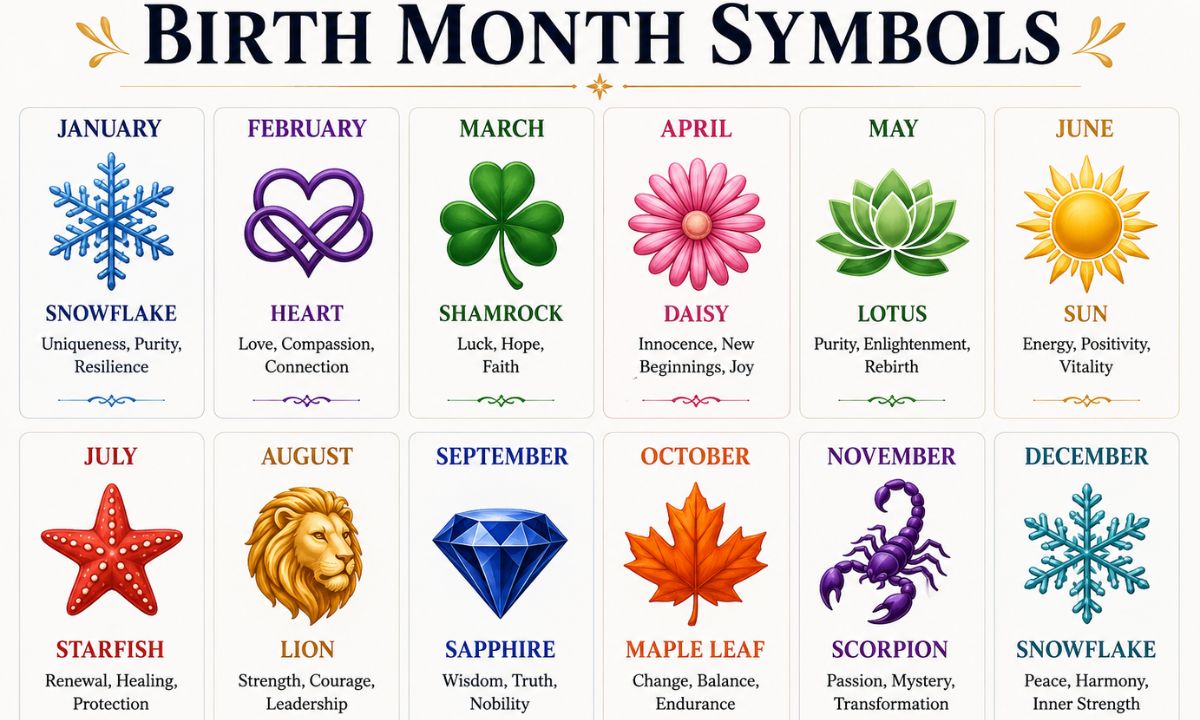
Quick answer: each month symbolizes a different core theme, from January’s fresh starts to December’s warmth and closure. Here’s a one-line summary of month symbolism for all twelve months.
- January: new beginnings and quiet strength
- February: emotional depth and intuition
- March: adaptability and courage
- April: clarity and confidence
- May: growth and nurturing energy
- June: warmth and connection
- July: passion and protection
- August: boldness and generosity
- September: wisdom and loyalty
- October: charm and transformation
- November: honesty and independence
- December: hope and celebration
Birth Month Symbolism
Birth month symbolism goes beyond just gemstones and flowers, it also ties into numerology and seasonal cycles that ancient civilizations paid close attention to.
Many early cultures didn’t separate the calendar from spirituality the way modern life does. The Babylonians, for instance, tracked lunar months closely and believed the timing of birth affected a person’s fate, which is part of why astrology and birth symbolism developed together rather than as two separate ideas.
Seasonal symbolism plays a role too. Spring-born people are often associated with renewal and growth, summer-born people with vitality and warmth, autumn-born people with transformation, and winter-born people with resilience and introspection. This seasonal layer adds emotional context that a birthstone chart alone can’t fully capture.
Birth Month Meanings And Symbols
Combining birth month meanings with their symbols gives you a fuller emotional profile than looking at either one in isolation.
For example, April’s meaning centers on clarity and new starts, and its symbol (the diamond) reinforces that theme through its own reputation for purity and strength. May’s meaning of growth pairs naturally with the emerald, a stone historically linked to renewal and fertility across Roman and Egyptian cultures alike.
This meaning-plus-symbol pairing is also why birth month gifts feel more thoughtful than generic presents. Giving someone jewelry that matches both their birthstone and their flower shows a level of intention that a plain gift card simply can’t match.
Birth Month Symbols January
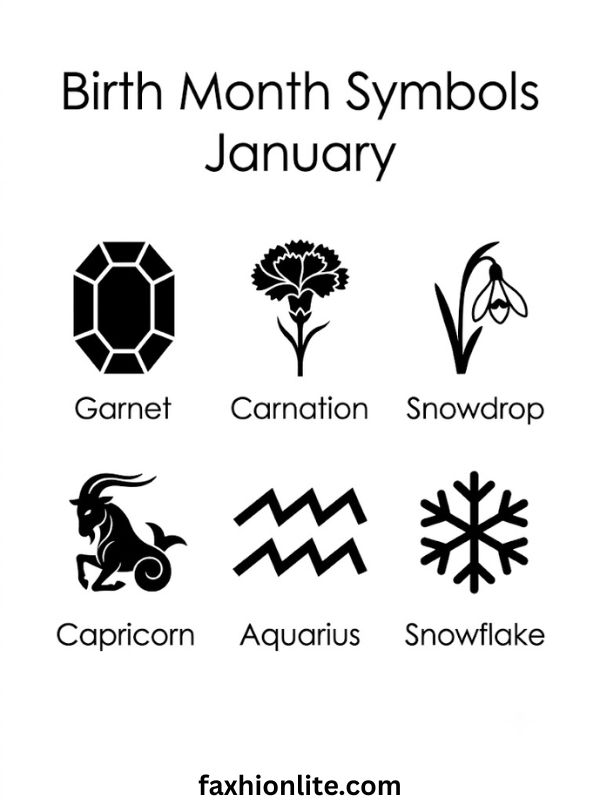
January’s birthstone is garnet, a deep red stone historically believed to protect travelers, and its birth flower is the carnation, a bloom symbolizing love, fascination, and distinction.
People born in January are often described as ambitious, loyal, and quietly determined. Garnet’s association with protection lines up well with this, since January-born individuals are frequently described by friends and family as dependable people who show up when it matters.
The carnation adds an emotional layer too, representing deep affection expressed in practical rather than flashy ways, which mirrors how January-born people often show love through actions instead of grand gestures.
Symbols For Birth Months In Modern Culture
Modern culture has taken ancient birth month traditions and turned them into everything from crossword puzzle clues to TikTok aesthetic trends, keeping this centuries-old system alive in new formats.
Jewelry brands played a huge role in popularizing birthstones throughout the 20th century, turning what was once a niche astrological practice into a mainstream gift-giving tradition. Today, that same energy has moved online, where birth month content performs extremely well on social platforms because it’s personal, shareable, and easy to relate to.
This section covers how the topic shows up in everyday modern contexts, from puzzles to pop culture references.
Birth Month Symbols Crossword Clue
If you’ve landed here searching for a birth month symbols crossword clue, the answer is almost always a specific gemstone name. Common crossword answers include Garnet, Opal, Pearl, Ruby, and Topaz, since these short, vowel-friendly words fit well into puzzle grids.
Crossword constructors love birthstones because they’re widely known but not overly common words, giving puzzles just the right level of difficulty. If your clue specifies a month (like “September birthstone”), the answer is almost certainly Sapphire, a nine-letter word that also shows up frequently in longer puzzle grids.
Puzzle solvers often keep a mental list of birthstones handy for exactly this reason, since the same dozen gemstone names cycle through crosswords regularly.
Birth Month Symbols And Signs
Recapping the connection between symbols and signs: your birth month gives you a fixed set of symbols (stone, flower, color), while your exact birth date determines your zodiac sign, which adds another layer of personality insight on top.
This dual system means two people can share a birthstone but have completely different zodiac-driven traits, or share a zodiac sign but have different birthstones because their birthdays fall in different months. It’s a detail many general astrology articles skip over.
December Birth Month Symbols
December’s birthstone options include turquoise, tanzanite, and zircon, while its birth flower is the narcissus, a flower symbolizing hope and renewal even in the depth of winter.
People born in December are often described as warm, generous, and naturally festive, which makes sense given the month’s cultural association with holidays and celebration. Turquoise, one of the oldest gemstones used by humans, has long been tied to protection and communication, traits that pair well with December’s reputation for bringing people together.
The narcissus flower’s ability to bloom in winter reinforces this sense of resilience and hope, themes that run consistently through December’s entire symbolic profile.
Symbol Of Month
Whether you search “symbol of month” or “symbols of the month,” you’re looking for the same core information, this is simply a common variation in how people phrase the search.
Search engines treat these phrasings similarly because the underlying intent is identical: understanding what stone, flower, or color represents a given month. This kind of natural language variation is exactly why comprehensive guides like this one aim to cover multiple phrasings rather than just one exact keyword.
Symbols For Birth Months
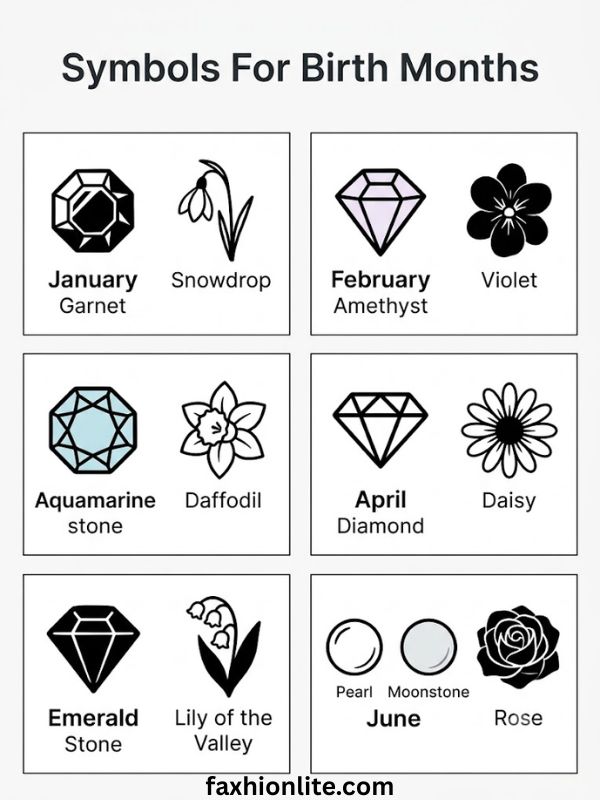
To bring it all together, symbols for birth months include birthstones, birth flowers, symbolic colors, birth trees, and overlapping zodiac signs, forming a layered system that’s been refined across centuries of cultural exchange.
If you’re just getting started exploring your own birth month symbols, the birthstone and flower combination is the easiest entry point, since it’s the most widely documented and most consistent across different sources.
Deep Symbolic Meaning
Birth month symbols carry meaning on three different levels: spiritual, psychological, and cultural, and understanding all three gives you the most complete picture of why this topic resonates with so many people.
Spiritual Meaning
The spiritual meaning behind birth month symbols often ties into energy and alignment, ideas borrowed from practices like crystal healing and aromatherapy that treat gemstones and flowers as carriers of specific energy types.
Some spiritual practitioners associate birthstones with chakra points on the body, believing that wearing your birthstone helps balance spiritual energy tied to that region. Amethyst, for instance, is commonly linked to the crown chakra and used in meditation practices for clarity and calm.
Others view birth month symbols as a form of guidance for their life path, using them as a reminder or anchor point during moments of decision making or personal growth. This isn’t about proving a scientific link, it’s about the emotional and reflective value people find in the practice.
Psychological Meaning
The psychological meaning behind why birth month symbols feel accurate has a lot to do with a well-documented cognitive pattern called the Barnum effect, where people rate vague, generally positive personality descriptions as highly accurate to themselves specifically.
Humans are pattern-seeking by nature. When we read that our birth month means we’re “loyal and determined,” we tend to remember the moments that confirm this and overlook the moments that don’t, reinforcing the feeling that the description fits us personally. This doesn’t make the exercise meaningless though, it just explains why it feels so convincing.
There’s also a genuine psychological benefit tied to self-awareness. Reflecting on personality traits, even through a symbolic lens like birth month meanings, can prompt real introspection and personal growth, especially when people use these traits as a starting point for deeper reflection rather than a fixed label.
Cultural Meaning
Cultural meaning varies significantly depending on where you look. Western traditions lean heavily on gemstones and flowers, Chinese traditions focus on lunar year animals and seasonal plants, and Hindu Vedic astrology uses a nine gemstone system called Navratna tied to planetary influence rather than calendar months.
Gift-giving customs built around birthstones became especially popular in the United States in the early 20th century, largely thanks to jewelry industry marketing that standardized the modern birthstone list in 1912. That standardization is part of why the same twelve stones show up so consistently across American culture today.
Indigenous and African traditions often take a different approach entirely, tying symbolic meaning to season and natural cycles rather than a fixed monthly calendar, which shows just how diverse this concept becomes once you look beyond Western frameworks.
Types And Variations Of Birth Month Symbols
Here’s the complete month by month breakdown, covering birthstone, flower, tree, color, and core personality traits for each one.
January
Garnet, Carnation, Rowan tree, deep red tones. Traits: driven, protective, and quietly loyal.
February
Amethyst, Violet or Primrose, Ash tree, purple tones. Traits: intuitive, creative, and emotionally perceptive.
March
Aquamarine or Bloodstone, Daffodil, Alder tree, sea green tones. Traits: adaptable, courageous, and quick thinking.
April
Diamond, Daisy, Willow tree, clear white tones. Traits: confident, resilient, and straightforward.
May
Emerald, Lily of the Valley, Hawthorn tree, green tones. Traits: nurturing, practical, and growth focused.
June
Pearl or Alexandrite, Rose, Oak tree, soft pink tones. Traits: warm, sociable, and dependable.
July
Ruby, Larkspur, Holly tree, red tones. Traits: passionate, protective, and bold.
August
Peridot or Spinel, Gladiolus, Hazel tree, olive green tones. Traits: generous, confident, and strong willed.
September
Sapphire, Aster, Vine plant, blue tones. Traits: wise, loyal, and thoughtful.
October
Opal or Tourmaline, Marigold, Ivy plant, orange tones. Traits: charming, expressive, and transformative.
November
Topaz or Citrine, Chrysanthemum, Reed plant, golden tones. Traits: honest, independent, and resilient.
December
Turquoise or Zircon, Narcissus, Elder tree, blue green tones. Traits: optimistic, generous, and festive.
Birth Month Symbols Across Cultures
Birth month symbolism looks completely different depending on which cultural tradition you’re examining, and comparing them side by side reveals just how universal humanity’s desire to connect birth timing with identity really is.
Western astrology, largely shaped by ancient Babylonian and Greek traditions, organizes symbolism around the twelve month solar calendar most Americans use today. Chinese astrology instead organizes around a twelve year lunar cycle, meaning your Chinese birth month symbols are far less emphasized than your birth year animal, which is the opposite of how Western culture prioritizes things.
Hindu Vedic astrology takes yet another approach, focusing on nine gemstones tied to planetary positions at the exact moment of birth rather than a fixed calendar month. This system, known as Navratna, requires a birth chart calculation rather than just knowing your birthday, making it more precise but also more complex than Western birthstone charts.
These cultural traditions aren’t competing with each other, they’re parallel systems that developed independently across different parts of the world, each reflecting the values and natural resources available in that region. Turquoise, for example, held major spiritual significance in Native American and Persian cultures long before it became a standardized December birthstone in Western jewelry charts.
Birth Month Symbols In Art, Movies And Pop Culture
Birth month symbols show up more often in art, film, and marketing than most people realize, often working as subtle character details or subtle visual shorthand.
Costume designers occasionally use birthstone colors to reinforce a character’s personality on screen, choosing a wardrobe palette that quietly echoes their birth month’s symbolic color without ever mentioning it directly. This kind of visual storytelling rewards close viewers without distracting casual ones.
Jewelry brands have leaned into birth month marketing especially hard over the last decade, releasing monthly collections tied to birthstones and flowers that perform well precisely because they tap into personal identity. This is part of a broader trend of personalization in retail, where products tied to something specific about you (your name, your birth month, your zodiac sign) tend to outsell generic alternatives.
On social media, the “birth month aesthetic” trend has taken off particularly well on Pinterest and TikTok, where users create mood boards or short videos built entirely around their birthstone color, flower, and symbolic traits. It’s a modern, visual extension of a tradition that’s existed in various forms for centuries.
Spiritual And Dream Meaning Of Birth Month Symbols
Seeing your birth month symbol in a dream is often interpreted as a message related to identity, timing, or an upcoming life transition, depending on which specific symbol appears.
Dream interpretation isn’t an exact science, but certain patterns show up consistently in dream analysis literature. A gemstone appearing in a dream is often associated with clarity or a hidden strength the dreamer hasn’t fully recognized yet. A flower, meanwhile, is more commonly linked to emotional themes, like new relationships, healing, or the closing of an emotional chapter.
Some people use their birth month symbols intentionally in journaling and manifestation practices, treating the symbol as a kind of personal touchstone during moments of reflection or goal setting. This isn’t about predicting the future, it’s about using a familiar, personally meaningful symbol to anchor thoughts during introspective moments, which can genuinely support emotional healing and clarity over time.
Positive Vs Negative Meaning
Every birth month symbol carries both a positive and a shadow side, and understanding both gives you a more honest, balanced view of what these symbols actually represent.
Garnet’s protective energy, for example, can tip into stubbornness or an unwillingness to compromise when overused. Amethyst’s intuitive calm can shift into overthinking or emotional withdrawal under stress. Recognizing this duality is important because it keeps birth month symbolism from becoming an oversimplified, purely flattering exercise.
The most useful way to approach this is as a reflection tool rather than a fixed personality test. If a trait resonates, it can be a helpful prompt for self-awareness. If it doesn’t, that’s fine too, symbols are meant to spark reflection, not dictate identity.
Why Humans Are Attracted To This Symbol
People are drawn to birth month symbols because humans are naturally wired to seek patterns, identity markers, and meaning in the world around them, and birth timing is one of the few identity traits everyone shares.
Unlike many personality frameworks that require a quiz or a deep personal disclosure, your birth month is a fixed, effortless fact about you. That accessibility makes birth month symbolism one of the easiest entry points into self-reflection, which partly explains why it remains popular across generations, from grandmothers who wear birthstone rings to teenagers getting birth flower tattoos.
There’s also a strong emotional connection element at play. Gifting someone a piece of jewelry tied to their birth month signals that you know something specific and personal about them, strengthening the relationship in a small but meaningful way. This blend of accessibility, personalization, and emotional resonance is exactly why birth month symbols have stayed culturally relevant for well over a century.
Frequently Asked Questions
What is my birth month symbol?
Your birth month symbol includes your birthstone, birth flower, and symbolic color tied to your birth month.
What are the 12 birth month symbols?
The twelve birthstones are Garnet, Amethyst, Aquamarine, Diamond, Emerald, Pearl, Ruby, Peridot, Sapphire, Opal, Topaz, and Turquoise.
What flower represents my birth month?
Each month has its own designated birth flower, ranging from January’s carnation to December’s fragrant narcissus bloom.
Do birth month symbols mean anything scientifically?
There’s no scientific evidence linking birth month to personality traits, though the tradition holds deep cultural meaning.
Are birth month symbols the same worldwide?
No, Western, Chinese, and Hindu Vedic traditions each use different systems, so symbolism varies greatly across cultures.
Conclusion
Birth month symbols offer a simple, accessible way to explore your personal identity, whether you’re drawn to the gemstone, the flower, the tree, or the deeper spiritual and psychological layers behind them. From January’s steady garnet to December’s hopeful narcissus, each month tells its own story, one shaped by centuries of overlapping traditions across Western, Chinese, and Vedic cultures.
None of this requires you to believe in destiny or fate. What it offers instead is a meaningful lens for reflection, a fun way to connect with others, and a genuinely rich piece of cultural history that spans continents and centuries. Take a moment to look up your own birth month symbol set, you might just find a trait or two that fits better than you expected.