
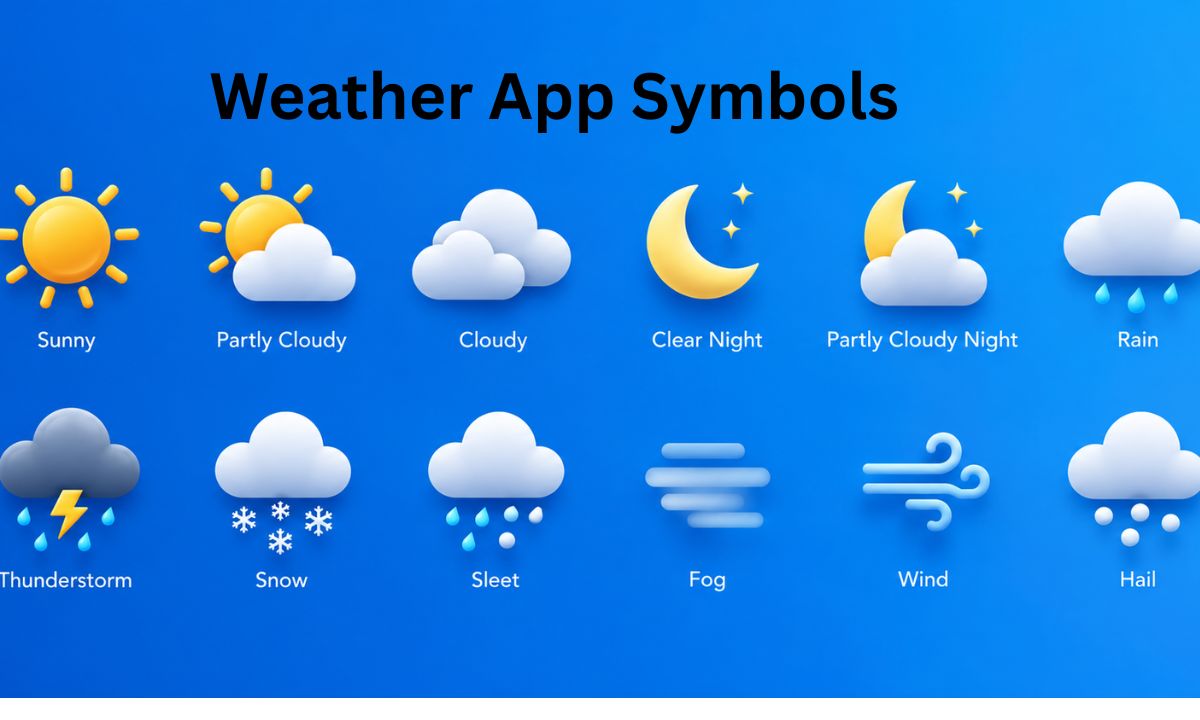
37+ Weather App Symbols | Decode Hidden Meanings Behind Every Forecast Icon
A weather app symbol is a small icon, like a sun, cloud, or lightning bolt, that shows you the current or forecasted weather condition without a single word of text. You glance at your phone, spot a tiny yellow sun or a gray cloud, and instantly know whether to grab sunglasses or an umbrella. That’s the entire purpose behind these icons: fast, wordless communication you can read in half a second.
But here’s what most people never stop to consider. You check your weather app several times a day, yet you probably can’t explain what half those symbols actually mean. Is that a rain cloud or a full-blown storm cloud? Does the sun with lines mean heat, or does it point to high UV instead? This guide breaks down every major weather app symbol so you can finally read your forecast like someone who actually knows what they’re looking at.
What Are Weather App Symbols?

Weather app symbols are simplified visual icons designed to represent atmospheric conditions like sunshine, clouds, precipitation, and storms in a format your brain can process in under a second. Instead of reading “partly cloudy with a chance of scattered thunderstorms,” you just look at a small icon and understand the gist immediately.
The reason apps rely on symbols instead of text comes down to screen space and speed. A smartphone screen is small, and most people check the weather while multitasking, grabbing coffee, walking to the car, or half asleep.
Text takes time to read and process. A symbol gets scanned almost instinctively. This is actually rooted in basic visual cognition research: humans process images faster than words because pictures skip the step of decoding language.
There’s also a difference worth clarifying between a “weather icon” and a “weather symbol,” even though most people use the terms interchangeably. A weather icon usually refers to the graphic itself, the little picture you see on your screen.
A weather symbol is a broader concept that includes icons, but also includes things like color coding, motion lines, and even audio alerts used in some weather warning symbols systems. Understanding this distinction helps when you’re troubleshooting why your app shows something unfamiliar.
Weather App Symbols Meaning Guide
This section works as your cheat sheet. Whether you’re looking at your iPhone, an Android widget, or a browser tab, the core meanings behind each weather app symbol stay remarkably consistent across platforms.
Weather App Symbols Meaning
The general rule for reading any weather symbol is to look at three things: the shape, the color, and any extra lines or marks around it. A plain yellow circle almost always means sun or clear skies. A gray or white puffy shape means clouds. Blue lines underneath a cloud mean rain, while jagged yellow lines mean lightning.
Wavy lines are one of the most misunderstood details in weather app design. When you see wavy or straight lines radiating from a sun icon, that usually signals heat, sometimes indicating a heat advisory rather than just “it’s sunny.” This small detail trips up a lot of users because it looks decorative, but it’s actually functional information.
Color intensity also matters more than people realize. A pale yellow sun typically represents mild, comfortable warmth, while a deep orange or red sun icon on apps like AccuWeather often signals extreme heat or a heat warning. Learning to read these subtle shifts in shade is part of true weather symbols meaning literacy.
Weather App Symbols iPhone
Apple’s Weather app uses one of the most recognizable icon sets in the world, mostly because of how many iPhones are in circulation. The weather app symbols iPhone users see include a plain sun for clear days, a sun partially hidden behind a cloud for partly cloudy conditions, and a solid gray cloud for overcast skies.
Apple also color codes its icons consistently. Yellow represents sun and heat, gray represents clouds and overcast conditions, and blue represents any form of precipitation, rain, sleet, or snow. This consistency is intentional. Apple’s Human Interface Guidelines emphasize instantly recognizable, minimal design, which is why their icons look so clean compared to some competitors.
One detail iPhone users often miss is that Apple’s icons change slightly based on the actual time of day. If it’s clear and nighttime, the sun icon becomes a crescent moon instead. This small touch makes Apple’s system one of the more contextually aware icon sets on the market today.
Weather Symbols With Names
Sometimes the fastest way to learn is a simple labeled list. Here are common weather symbols with names you’ll recognize across almost every major app:
- Solid yellow circle: Clear or Sunny
- Gray cloud: Overcast or Cloudy
- Sun behind cloud: Partly Cloudy
- Cloud with blue lines: Rain
- Cloud with lightning bolt: Thunderstorm
- Cloud with white dots or flakes: Snow
- Horizontal wavy lines: Fog or Haze
- Flag or diagonal lines: Windy
Matching the shape to the name becomes automatic after a week or two of paying attention. Most people already know these instinctively; they just never connected the visual to the exact terminology.
Weather Icons Meaning
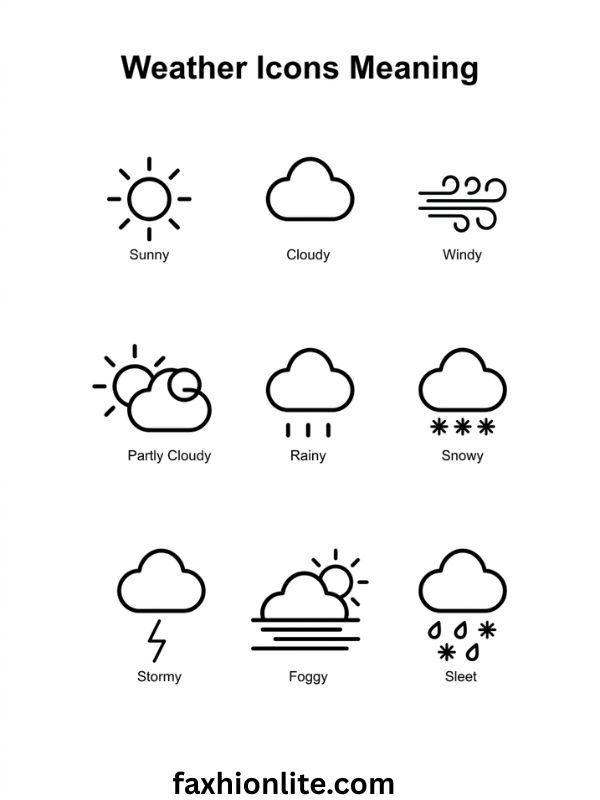
Comparing icon sets across platforms reveals just how much design philosophy varies. Google Weather tends toward flat, rounded, cartoonish icons with soft pastel colors. Apple leans minimal and monochromatic within each icon. The Weather Channel and AccuWeather use more detailed, almost 3D-style graphics that show shading and texture.
Despite these stylistic differences, the underlying weather icons meaning remains nearly identical. A cloud is a cloud, and lightning is lightning, no matter which app draws it. This universality is by design. Meteorological standards published by organizations like the World Meteorological Organization influence how commercial apps build their icon libraries, even if casual users never realize it.
That said, small inconsistencies do exist. Some apps distinguish between “light rain” and “rain” with subtly different raindrop counts, while others use the same icon for both and rely on the text label to fill in the gap. Paying attention to these tiny differences helps you avoid misjudging the forecast.
Weather Symbols Chart
A weather symbols chart organizes icons, their names, and their practical meaning into one easy reference table. Here’s a simplified version covering the most searched symbols:
| Symbol | Name | Meaning |
| Yellow sun | Clear/Sunny | No cloud cover, full sunshine |
| Sun behind cloud | Partly Cloudy | Mix of sun and cloud cover |
| Gray cloud | Cloudy/Overcast | Sky mostly or fully covered |
| Cloud with rain lines | Rain | Active precipitation |
| Cloud with lightning | Thunderstorm | Rain plus electrical activity |
| Cloud with snowflakes | Snow | Frozen precipitation |
| Wavy horizontal lines | Fog | Reduced visibility |
| Flag or swirl lines | Wind | High wind speeds |
Keeping a chart like this bookmarked is genuinely useful, especially for people who travel often and switch between unfamiliar apps in different regions.
Free Weather App Symbols
If you’re a designer, teacher, or hobbyist who wants to use weather icons for a personal project, several free weather app symbols resources exist online, including open source icon libraries built specifically around meteorological themes. These libraries typically offer scalable vector versions so the icons stay crisp at any size.
It’s worth noting that while many of these icon packs are free for personal use, commercial use often requires attribution or a paid license. Reading the licensing terms before publishing anything, especially for a business app or client project, will save you legal headaches later.
Beyond dedicated icon libraries, some meteorological organizations release standardized symbol sets intended for public and educational use, which can be a great starting point if authenticity matters more than flashy design.
Weather App Symbols Download
Downloading weather icons for offline design work, presentations, or app development usually means grabbing an icon font or an SVG package. These formats scale cleanly without pixelation, which matters if you’re building anything from a school project to a full weather dashboard.
Before downloading, check whether the icon set matches the visual style you actually want. A flat, minimal icon pack will look out of place next to a photorealistic weather background, and vice versa. Matching visual consistency across your whole project makes a huge difference in how professional the final result looks.
Always verify the file format compatibility with your intended use. Vector formats work best for web and app design, while raster formats like PNG are usually fine for print materials or simple presentations.
Snow Symbol Weather iPhone
The snow symbol weather iPhone users see isn’t just one single icon. Apple actually varies the snowflake graphic depending on intensity. Light snow shows a cloud with a couple of small flakes, while heavy snow or a blizzard warning shows a denser cluster of flakes, sometimes paired with wind lines to indicate blowing snow.
This distinction matters practically. A light snow icon might mean a light dusting that barely affects your commute, while a heavy snow icon combined with wind lines often signals dangerous travel conditions. Apple’s design team built this visual hierarchy specifically so users can gauge severity at a glance, without needing to tap into the full forecast details.
Apple also uses a distinct icon for “flurries,” which represents brief, light snow that isn’t expected to accumulate. This is one of the more commonly misunderstood weather app icon meanings, since flurries and light snow look almost identical but carry slightly different practical implications for your day.
Weather Symbols On An iPhone
Beyond the basics, iPhones display several lesser known icons people search for individually. These include a hazy sun icon representing dust or particulate matter in the air, a specific tornado funnel icon reserved for severe weather alerts, and a moon phase icon that appears in the extended forecast view rather than the current conditions screen.
The weather symbols on an iPhone also include a UV index gauge, usually shown as a colored arc, which tells you how strong the sun’s ultraviolet radiation is that day. This isn’t technically a weather condition icon, but it’s bundled into the same interface because sun exposure planning matters just as much as knowing if it’ll rain.
Apple periodically updates its icon set with iOS releases, so an icon you saw last year might look slightly different today. Staying familiar with the general shape language, rather than memorizing exact pixel details, is the more durable way to stay fluent in reading these symbols long term.
Symbols On The Weather App
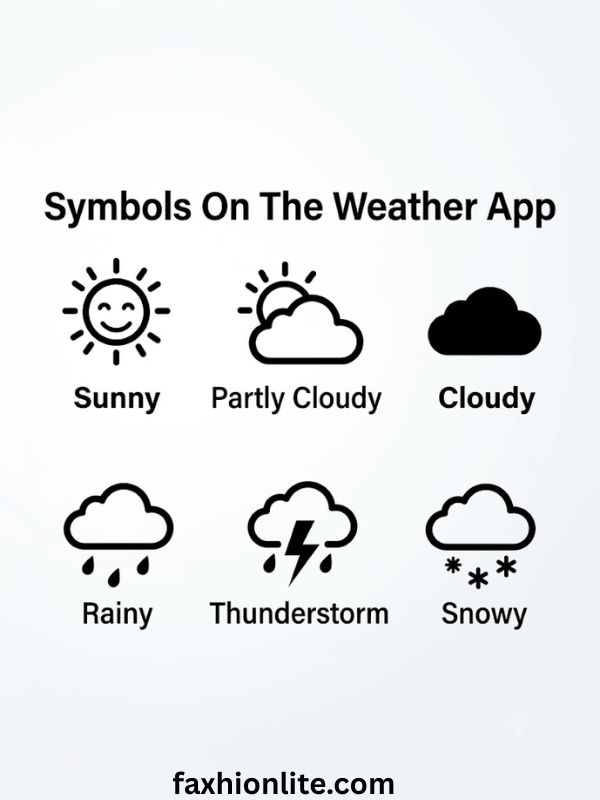
Rounding out the lesser known icons, most weather apps also include symbols for humidity percentage, wind direction arrows, and barometric pressure trends. These symbols on the weather app don’t always get the attention that sun and rain icons do, but they’re genuinely useful for anyone sensitive to weather changes, including people with joint pain or migraines that flare with pressure shifts.
Weather Icon Meanings And Usage
Weather icons exist to translate complex atmospheric data into something you can understand in a split second glance. Every icon on your screen represents a simplified summary of much more detailed meteorological data running behind the scenes.
Weather Icon Meanings
When you understand the core weather icon meanings, you start using your forecast more proactively instead of reactively. Seeing a thunderstorm icon before your commute isn’t just trivia, it’s a signal to leave earlier, check for road closures, or reconsider outdoor plans altogether.
Icons also carry urgency levels that aren’t always obvious at first glance. A single lightning bolt icon usually indicates isolated storms, while multiple bolts or a darker cloud color often signals widespread or severe thunderstorm activity. Recognizing these subtle escalations can genuinely help you plan your day more safely.
Symbols Used On Weather Channel App
The Weather Channel app takes a slightly more detailed visual approach compared to Apple or Google. Their symbols used on weather channel app often include shading and gradient effects that show cloud density more realistically, rather than using flat, simplified shapes.
This app also tends to separate rain intensity into more visual tiers than competitors, showing distinctly different icons for drizzle, moderate rain, and heavy downpour. For users who want granular detail without digging into hourly percentages, this extra visual nuance is genuinely helpful.
Weather App Meaning
At its core, a weather app is a software tool that pulls atmospheric data from satellites, radar systems, and ground stations, then translates that raw data into forecasts you can actually use. The weather app meaning behind the icons is simply the visual layer sitting on top of all that complex data collection.
Most consumer weather apps source their raw data from national meteorological agencies and private forecasting companies, then apply their own icon design on top. This is why two apps can show slightly different forecasts for the same location; they may be pulling from different data models entirely.
Weather App Signs Meaning
Alert style icons carry some of the most important weather app signs meaning you’ll ever encounter. A watch icon typically means conditions are favorable for severe weather to develop, while a warning icon means severe weather is either happening or imminent.
Understanding this watch versus warning distinction is genuinely a matter of safety. A tornado watch means stay alert. A tornado warning means take shelter immediately. Confusing the two, which happens more often than people admit, can lead to dangerously delayed reactions.
Weather App Icon Meanings
Different platforms sometimes use unique icons for niche conditions like volcanic ash, smoke from wildfires, or blowing dust. These weather app icon meanings have become increasingly relevant in recent years as wildfire smoke has affected air quality across much of the United States, prompting several apps to add dedicated smoke and haze icons that didn’t exist a decade ago.
Weather Symbols Definition
A clear weather symbols definition is this: a standardized graphic representation of a specific atmospheric condition, designed for instant visual recognition rather than detailed explanation. This definition applies whether you’re looking at a smartphone app, a printed newspaper forecast, or a television broadcast graphic.
Weather App Symbol Meanings
If you only remember ten weather app symbol meanings, focus on these: sun equals clear, cloud equals overcast, sun and cloud together equals partly cloudy, blue lines under a cloud equals rain, a lightning bolt equals thunderstorm, white dots equal snow, horizontal wavy lines equal fog, a flag or swirl equals wind, a crescent moon equals clear night, and a colored arc equals UV index.
Weather Symbols And Meanings
Pairing symbols with their meanings side by side, as shown in the chart earlier, remains the fastest way to build long term fluency. Once you’ve cross referenced the chart a few times, you’ll stop needing to look it up altogether.
Understanding Weather Symbolism And Details
Weather symbols carry more history and design logic than most casual users ever consider, and understanding that background makes the icons far easier to remember.
Symbolism Of Weather
The symbolism of weather in modern apps traces back to nineteenth century telegraphy and newspaper weather maps, where forecasters used simplified symbols to communicate conditions across regions before radio or television existed.
Those original symbols, simple suns, clouds, and rain marks, form the direct ancestors of the icons on your phone today.
Meaning Of Weather Icons
The meaning of weather icons is deeply tied to color psychology and shape recognition. Blue almost universally represents water and cold in weather design, yellow represents warmth and light, and gray represents neutrality or overcast conditions. This isn’t accidental; it’s rooted in how human brains associate color with temperature and mood.
Weather Signs Meaning
Beyond app icons, natural weather signs meaning has existed for centuries. Sailors and farmers relied on physical signs like a red sky at sunset, a halo around the moon, or animal behavior changes to predict incoming weather long before satellite technology existed. Some of these folk observations, like “red sky at night, sailor’s delight,” actually hold up reasonably well under modern meteorological scrutiny because they reflect real atmospheric optics.
Weather Symbols Meanings
Lesser covered weather symbols meanings include hail, which usually appears as a cloud with small circular dots rather than lines, and sleet or mixed precipitation, which often combines rain lines with small ice pellet marks. These mixed condition icons trip up a lot of users because they blend visual elements from two different symbol families.
Weather Symbol For Lightning
The standard weather symbol for lightning is a jagged yellow or white bolt, usually shown emerging from a dark gray or black cloud. The number of bolts, the darkness of the cloud, and sometimes an added color shift toward orange or red all indicate increasing storm severity.
What Does Sun With Lines Mean On Weather App?
This is one of the most searched questions in the entire topic. What does sun with lines mean on weather app interfaces? In most cases, straight or wavy lines radiating from a sun icon indicate intense heat, sometimes specifically flagging a heat advisory or excessive heat warning rather than simply “it’s sunny outside.” Always tap the icon or check the text label to confirm whether it’s a general heat indicator or an official advisory.
Simple Symbol Raingrip Weather Comfort
Comfort focused icons, sometimes called “feels like” indicators, combine temperature, humidity, and wind into a single comfort score rather than a strict weather condition. These icons help answer a more personal question than “is it raining,” namely “will this weather actually feel comfortable to be outside in.”
Weather Symbols On Weather App
Pulling everything together, the full icon library on any given weather app typically includes twenty to forty distinct symbols once you count every variation of intensity, time of day, and severity level. That’s exactly why this guide covers 37 plus symbols instead of just the basic eight or nine everyone already recognizes.
Deep Symbolic Meaning
Weather symbols don’t just carry meteorological information. They tap into something older and more psychological in how humans relate to the sky.
Spiritual Level
Across many belief systems, weather phenomena like sun, storm, and rainbow carry spiritual weight far beyond their literal meaning. A sunrise often symbolizes renewal, a storm often represents upheaval or emotional turmoil, and a rainbow frequently symbolizes hope or divine reassurance. These associations run so deep that even secular weather apps unintentionally trigger emotional responses through their icon choices.
Psychological Level
Color psychology plays a measurable role here too. Gray, cloudy icons can subtly affect mood before you even step outside, a phenomenon supported by research into seasonal affective patterns. A bright yellow sun icon, by contrast, tends to trigger a small mood lift, which is part of why app designers lean so heavily on cheerful yellow tones for clear weather.
Cultural Level
Cultural background shapes how people interpret the same weather symbol differently. In some cultures, rain symbolizes blessing and abundance, tied to agricultural traditions, while in others it’s more commonly associated with sadness or delay. This cultural layer explains why global apps sometimes adjust icon tone or color slightly for regional markets.
Types / Variations of Weather App Symbols
Sunny
The sunny icon, a solid yellow or orange circle, sometimes with radiating lines, represents clear skies with no significant cloud cover. It’s the most universally recognized weather icon across every platform and culture.
Partly Cloudy
This icon combines a sun and a cloud, typically with the sun peeking out from behind. It represents a mix of sun and cloud cover, generally meaning more sunshine than clouds throughout the day.
Cloudy
A solid gray or white cloud with no sun visible represents overcast conditions, where cloud cover dominates the sky for most or all of the day.
Rain
A cloud with blue diagonal or vertical lines beneath it represents active rainfall, with line density sometimes indicating intensity from light drizzle to heavy downpour.
Thunderstorm
A dark cloud paired with a lightning bolt, sometimes alongside rain lines, represents thunderstorm activity, indicating both precipitation and electrical activity in the atmosphere.
Snow
A cloud with white dots or snowflake shapes represents frozen precipitation, with variations in flake density signaling light snow versus heavy snowfall or blizzard conditions.
Wind
Represented by flowing lines, a flag, or swirling arrows, this icon indicates elevated wind speeds that may affect outdoor activities, driving, or flight schedules.
Fog
Horizontal wavy lines, often layered, represent reduced visibility conditions caused by fog, haze, mist, or in some regions, smoke.
Weather App Symbols Across Cultures
Western Countries
In the United States, UK, and much of Europe, weather icon design leans toward minimalism, influenced heavily by Apple’s and Google’s design standards, which have become the de facto visual language for most Western consumer apps.
East Asian Design
Countries like Japan, China, and South Korea sometimes blend traditional characters with modern icons in their national weather services, occasionally showing kanji or hanzi characters alongside standard symbols for added regional clarity.
Middle Eastern Regions
Given the prevalence of desert climates, apps used across the Middle East often include specialized sandstorm and dust icons that rarely appear in Western apps, reflecting genuinely different regional weather priorities.
Indigenous Perspectives
Long before app icons existed, many Indigenous communities across North America and Australia developed sophisticated sky watching traditions, using cloud formations, animal behavior, and wind shifts to predict weather with impressive accuracy, a tradition largely absent from mainstream discussions of weather symbolism today.
Modern Global Apps
Apps like Google Weather aim for a single standardized icon set usable worldwide, smoothing over most cultural differences in favor of universal recognizability, though subtle regional tweaks still occur behind the scenes.
Weather App Symbols in Art, Movies & Pop Culture
Weather symbols show up constantly in visual storytelling outside of actual forecasting apps. News broadcasts use dramatic storm graphics to convey urgency, movie posters often use dark storm clouds to signal tension or conflict, and emoji keyboards have popularized simplified weather icons as a form of everyday digital communication.
Even viral social media memes frequently repurpose familiar weather app icons, like the sun with lines, as humor around extreme heat days, showing just how deeply these symbols have embedded themselves into everyday visual culture.
Spiritual & Dream Meaning of Weather App Symbols
Dreaming about specific weather symbols often carries symbolic weight in popular dream interpretation traditions. Dreaming of rain frequently gets associated with emotional release or cleansing, dreaming of sun often symbolizes clarity or optimism returning to one’s life, and dreaming of storms is commonly linked to unresolved internal conflict.
While these interpretations aren’t scientifically validated, they remain a popular lens through which people process recurring weather imagery in dreams, connecting directly back to the spiritual associations discussed earlier in this guide.
Positive vs Negative Meaning
Certain weather symbols carry an almost automatic emotional charge. Sunny and clear sky icons are broadly associated with good news, productivity, and positive mood, while storm and heavy rain icons tend to carry more cautionary or negative associations, often prompting people to cancel plans or brace for disruption.
This isn’t just cultural bias either; studies on weather and mood consistently show measurable shifts in reported happiness levels tied to sunny versus overcast conditions, reinforcing why app designers lean into these emotional cues so deliberately.
Why Humans Are Attracted to Weather App Symbols
Humans are drawn to weather symbols because they satisfy a deep, evolutionary need to predict and prepare for environmental conditions. Long before smartphones, survival depended on reading the sky accurately.
That instinct hasn’t disappeared, it’s just been outsourced to a small icon on a glowing screen. There’s also a nostalgia factor at play. Many people grew up watching televised weather forecasts with recognizable graphics, and modern app icons trigger a similar sense of familiarity and trust.
Add to that the simple psychological comfort of certainty, knowing what’s coming reduces anxiety, and it becomes clear why checking the weather app remains one of the most repeated habits in modern digital life.
Frequently Asked Questions
What does the sun with lines mean on a weather app?
Sun with lines usually signals intense heat or a heat advisory, warning you about unusually strong daytime temperatures.
What is the weather symbol for lightning?
A jagged yellow or white bolt emerging from a dark cloud represents lightning, indicating active thunderstorm activity.
Why do weather app symbols look different on iPhone versus Android?
Apple and Google use different design teams, creating distinct icon styles despite representing the same weather conditions.
What does a cloud with a moon icon mean?
A cloud with a moon icon means partly cloudy conditions are expected overnight instead of daytime hours.
Where can I download free weather app icons?
Several open source icon libraries offer free weather symbols online, though commercial projects often require proper licensing.
Conclusion
Understanding every weather app symbol turns your phone from a passive notification screen into a genuinely useful daily tool. From the basic sun and cloud icons to more nuanced details like sun with lines, snowflake density, and severe weather alert signs, each symbol carries specific, decodable meaning once you know what to look for.
Next time you check your forecast, take an extra second to really look at the icon rather than glancing past it. You might notice details you’ve been missing for years, and that small habit could genuinely help you plan your day, your commute, or even your weekend a little bit better.