
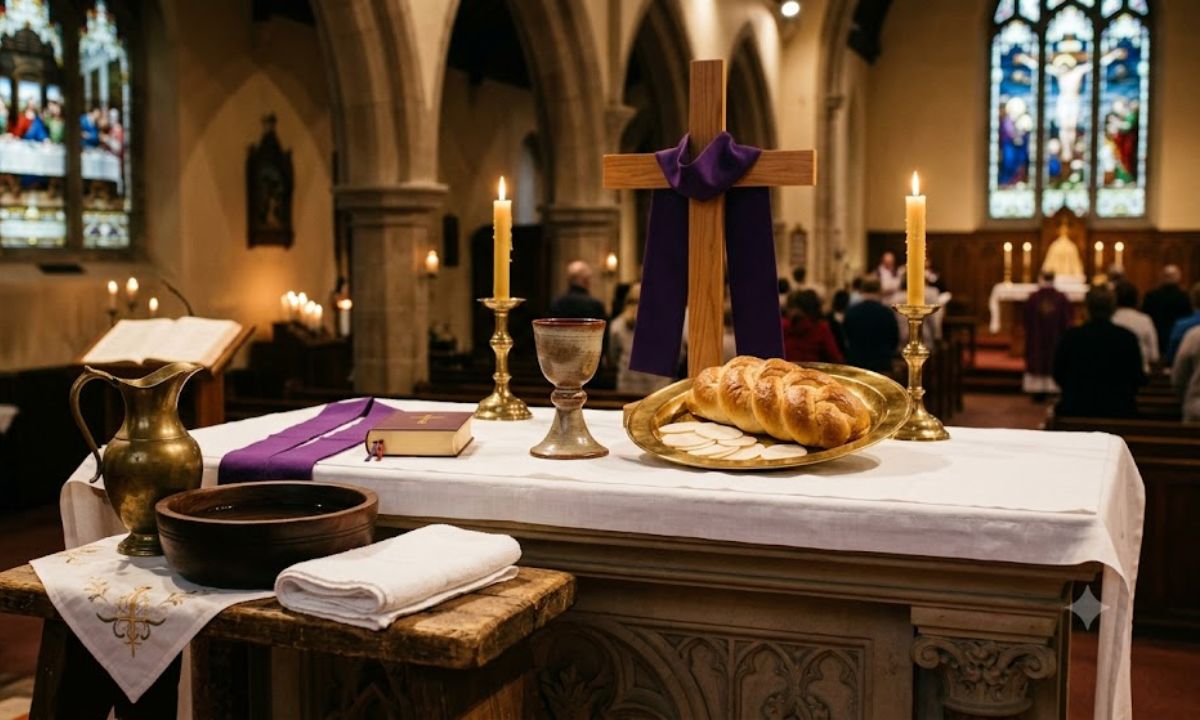
105+ Powerful Holy Thursday Symbols That Reveal the True Meaning of the Last Supper (2026)
Holy Thursday symbols are the sacred images and rituals, including the bread and wine, the washing of feet, the chalice, and the stripped altar, that represent Jesus Christ’s Last Supper and his final acts of love and service before his crucifixion. If you’ve ever wondered why these traditions still carry so much weight almost two thousand years later, you’re about to find out.
Every spring, millions of Christians around the world pause to observe Holy Thursday, also called Maundy Thursday. It’s one of the most meaningful days in the Christian calendar, yet many people don’t fully understand why certain symbols show up in churches during this time. This guide breaks down every major symbol, its history, and its deeper spiritual meaning so you can walk into Holy Week 2026 with real understanding instead of just tradition for tradition’s sake.
What Are Holy Thursday Symbols?
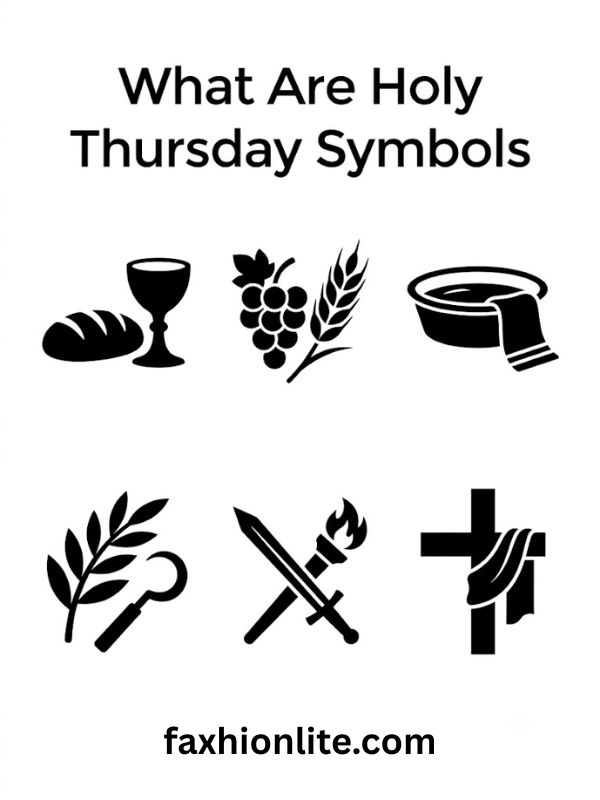
Holy Thursday symbols are the physical objects, gestures, and rituals used to represent the events of the Last Supper and Jesus’s teachings on humility and sacrifice. They connect an ancient story to something you can see, touch, and experience in church today.
These symbols come directly from the Gospel accounts, especially John chapter 13, where Jesus Christ shares a final meal with his twelve disciples, washes their feet, and institutes what Christians now call the Eucharist. Each symbol carries layered meaning. The bread and wine point to sacrifice and communion.
The basin and towel point to service and humility. Even the color of the vestments a priest wears that evening carries intentional symbolism.What makes Holy Thursday symbols unique compared to other Christian holy days is how personal and intimate they feel.
Christmas celebrates birth. Easter celebrates resurrection. Holy Thursday sits in a quieter, more reflective space. It’s about relationship, service, and the kind of love that shows up in small, humble actions rather than grand gestures. Holy Thursday is often described by theologians as the night the Church was born, since it marks the institution of the priesthood and the Eucharist in Catholic teaching.
Holy Thursday Meaning And Symbolism
Holy Thursday’s meaning centers on Jesus’s last night with his disciples before his arrest, a night defined by sacrifice, service, and the institution of the sacrament of communion.
Holy Thursday Meaning
The word “Holy” in Holy Thursday reflects the sacredness of the events that took place. According to the Gospels, Jesus gathered with his twelve disciples in an upper room in Jerusalem to share the Passover meal. During that meal, he took bread, blessed it, and said it represented his body. He then took wine and said it represented his blood, given for the forgiveness of sins.
This moment is considered the origin of the Eucharist, one of the central sacraments in Catholic and many Protestant traditions. For millions of believers, this single meal transformed an ordinary act of eating into something eternal and sacramental.
Beyond the meal itself, Holy Thursday also marks the beginning of what’s known as the Easter Triduum, the three sacred days leading up to Easter Sunday. It’s the emotional and spiritual doorway into Good Friday’s sorrow and Easter’s joy.
Thursday Symbolism
Thursday itself holds unique symbolic weight within Holy Week. It represents transition, the quiet before the storm. While Palm Sunday celebrates a joyful entrance and Good Friday mourns a brutal death, Thursday sits in between as a night of intimacy, teaching, and preparation.
In liturgical tradition, Thursday evening Mass often ends without a formal dismissal. Instead, the congregation is invited to sit in silence, reflecting the disciples’ own uncertainty after Jesus told them one of them would betray him. That silence is itself a symbol, one of anticipation and unease.
Some scholars also point out that Thursday’s placement within the Jewish Passover calendar wasn’t accidental. Jesus’s final meal aligned with a holiday already rich in symbolism around liberation and sacrifice, which deepens the theological meaning for many believers.
Happy Holy Thursday
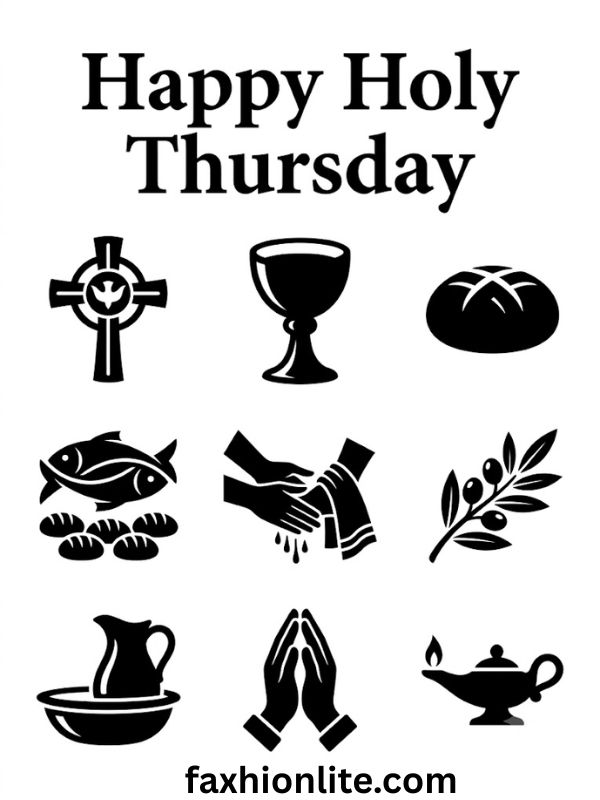
You might notice greeting cards or social media posts saying “Happy Holy Thursday,” but many church leaders gently push back on that phrasing. Because the day commemorates betrayal, sacrifice, and the events leading directly to the crucifixion, it’s traditionally treated with reverence rather than celebration.
That said, there’s nothing wrong with expressing warmth to someone on this day. A more fitting phrase might be “Blessed Holy Thursday” or simply “Peace to you this Holy Thursday.” These acknowledge the solemnity while still sharing goodwill.
Many families use the day to gather for a simple meal, sometimes even recreating elements of the Last Supper at home, as a way to mark the occasion without treating it like a festive holiday.
Holy Week Symbols And Meanings
Holy Week symbols trace the final week of Jesus’s earthly life, moving from triumphant entry to death and, ultimately, resurrection.
Holy Week Symbols And Meanings
Holy Week begins with Palm Sunday, where palm branches symbolize the crowd’s welcome of Jesus into Jerusalem. It continues through Holy Wednesday, sometimes called “Spy Wednesday” because of Judas’s betrayal, and reaches its emotional peak with Holy Thursday and Good Friday.
Each day has its own visual language. Palms represent celebration. The color purple, worn during Lent, represents penance. Candles represent the light of Christ. Understanding these symbols as a connected story, rather than isolated events, helps explain why Holy Thursday feels so pivotal. It’s the hinge between celebration and sorrow.
Churches often physically transform during this week too. Statues get covered in violet cloth. Bells stop ringing after the Holy Thursday Mass and don’t ring again until the Easter Vigil. These sensory shifts reinforce the emotional arc of the week for worshippers.
Good Friday Symbol
The primary symbol of Good Friday is the cross, representing Jesus’s crucifixion and the ultimate act of sacrifice in Christian theology. Where Holy Thursday focuses on service and communion, Good Friday focuses on suffering and redemption.
Other Good Friday symbols include the crown of thorns, representing mockery and pain, and the color black or deep red, often used in vestments to reflect mourning. Some parishes also observe the “Veneration of the Cross,” where worshippers approach and kiss or touch a wooden cross as an act of devotion.
Understanding Good Friday’s symbolism helps put Holy Thursday into context. Thursday’s washing of feet and shared meal become even more poignant when you realize what happens just hours later in the biblical timeline.
Holy Thursday Symbols Catholic
Catholic Holy Thursday traditions center on two main liturgical events, the Chrism Mass and the Mass of the Lord’s Supper, each rich with its own symbolism.
Holy Thursday Symbols Catholic
In the Catholic Church, Holy Thursday typically begins with the Chrism Mass, usually celebrated by a bishop earlier in the day. During this Mass, holy oils used throughout the year for baptisms, confirmations, and anointing the sick are blessed. This event symbolizes renewal and the ongoing ministry of the priesthood.
Later that evening, parishes celebrate the Mass of the Lord’s Supper, which includes the foot washing ritual and often ends with a procession where the Eucharist is carried to a specially prepared altar for adoration. Many Catholics stay well into the night in quiet prayer, symbolically keeping watch the way the disciples were asked to in the Garden of Gethsemane.
According to estimates from the Vatican and various diocesan reports, over a billion Catholics worldwide participate in some form of Holy Thursday observance each year, making it one of the most widely recognized liturgical events on the Christian calendar.
Catholic Holy Thursday Symbols
Vestment color plays a big role in Catholic symbolism on this day. Priests wear white or gold, a departure from the purple of Lent, symbolizing joy in the institution of the Eucharist even amid the coming sorrow of Good Friday.
The altar itself becomes a symbol. After Thursday’s Mass concludes, the altar is stripped bare, and all decorations are removed. This stark, empty appearance visually represents Jesus being stripped of his garments before his crucifixion, and it’s one of the most visually striking Catholic Holy Thursday symbols.
Bells also carry symbolic weight. During the “Gloria” hymn on Holy Thursday, church bells and instruments ring out one final time before falling silent until the Easter Vigil, marking a period of solemn quiet across the entire liturgical season.
Maundy Thursday Symbols Explained
Maundy Thursday gets its name from the Latin word “mandatum,” meaning commandment, referring to Jesus’s command to love one another as he demonstrated through washing his disciples’ feet.
Maundy Thursday Symbols
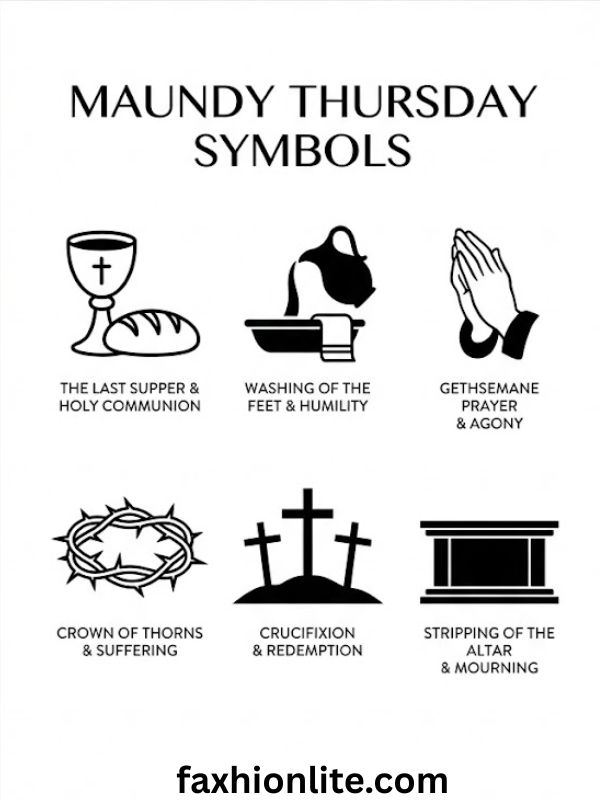
The core Maundy Thursday symbols include the basin and towel, representing humility and service, and the shared meal, representing unity and sacrifice. Together, they teach that true leadership looks like service, not power.
This naming convention is more common in Anglican, Lutheran, and some Protestant traditions, while “Holy Thursday” is more frequently used in Catholic contexts, though both refer to the exact same day and events.
Symbols Of Maundy Thursday
Beyond the basin and towel, many Maundy Thursday services include a simple, shared meal among congregants, echoing the intimacy of the original Last Supper. Some churches also incorporate agape meals, communal dinners meant to reflect Christian fellowship and equality.
Maundy Thursday Symbol
If you had to pick just one defining symbol of Maundy Thursday, it would be the foot washing ceremony. This single act encapsulates the entire spirit of the day: a leader lowering himself to serve those he leads.
Maundy Thursday Holy Thursday Symbols
Whether your church calls it Maundy Thursday or Holy Thursday, the symbols overlap almost entirely. The naming difference tends to come down to denominational tradition rather than theological disagreement, which is worth knowing if you’ve ever felt confused switching between churches or communities.
Symbols Of Holy Thursday
Holy Thursday symbols can be grouped into three broad categories: symbols of sacrifice, symbols of service, and symbols of unity.
Symbols Of Holy Thursday
Here’s a quick reference table of the most searched Holy Thursday symbols and what each one represents.
| Symbol | What It Represents |
| Bread | Christ’s body, given for humanity |
| Wine | Christ’s blood, poured out for forgiveness |
| Basin and towel | Humility and service |
| Chalice | The new covenant established at the Last Supper |
| Stripped altar | Christ being stripped before crucifixion |
| Twelve seats | The twelve apostles and the foundation of the Church |
| White or gold vestments | Joy amid coming sorrow |
| Silence after Mass | Watching and waiting with Christ |
Symbols For Holy Thursday
Beyond the main list above, some traditions also use olive branches, oil lamps, and unleavened bread to reinforce the connection to the original Jewish Passover setting where the Last Supper took place.
Holy Thursday Symbol
If someone asks you to name just one symbol for a quiz or quick answer, the safest response is bread and wine, since it’s the most universally recognized across denominations.
Symbol Of Holy Thursday
To wrap up this section, remember that no single symbol fully captures Holy Thursday’s meaning. It’s the combination of sacrifice (bread and wine), service (basin and towel), and community (the shared table) that tells the complete story.
Last Supper And Eucharist Symbols
The Last Supper’s central symbols are bread and wine, representing the body and blood of Christ and forming the foundation of the Christian Eucharist.
Last Supper Holy Thursday Symbols
The Last Supper itself is often depicted in art, most famously in Leonardo da Vinci’s painting of the same name. That painting captures the moment Jesus announces that one of his disciples will betray him, and the reactions around the table have become iconic symbols in their own right, shock, denial, and quiet grief.
Supper Holy Thursday Symbols
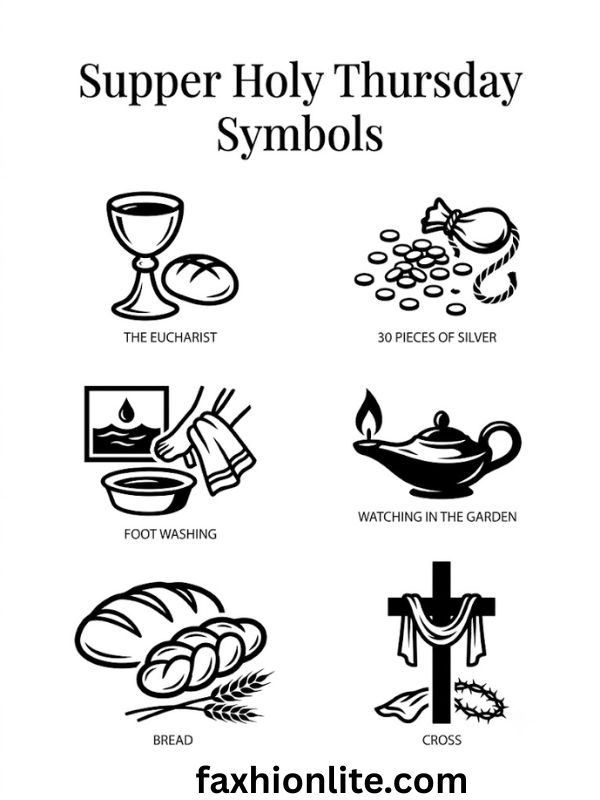
The meal setting also matters. Passover meals traditionally include unleavened bread, bitter herbs, and wine, each carrying symbolic meaning tied to the Exodus story. Jesus reframed these familiar symbols to point toward his own sacrifice, layering new meaning onto an already sacred tradition.
Holy Eucharist Holy Thursday Symbols
The Eucharist, sometimes called Holy Communion, remains the most enduring symbol to come out of Holy Thursday. In Catholic theology, the bread and wine are believed to become the actual body and blood of Christ through transubstantiation, while many Protestant traditions view the elements more symbolically. Either way, the ritual traces directly back to this one meal nearly two thousand years ago.
Washing Of Feet Symbols
The washing of feet symbolizes humility, service, and the idea that true greatness comes from serving others rather than being served.
Feet Holy Thursday Symbols
In first century Jewish culture, washing feet was a task reserved for the lowest servants in a household, since roads were dusty and sandals offered little protection. When Jesus washed his disciples’ feet, he intentionally took on the role of a servant, shocking his own followers.
Washing Holy Thursday Symbols
Peter’s reaction in the Gospel of John captures this shock perfectly. He initially refuses to let Jesus wash his feet, feeling it was inappropriate for his teacher to perform such a lowly task. Jesus’s response, that Peter would have no part with him unless he allowed it, reframes the entire act as necessary for spiritual connection, not just etiquette.
Washing Feet Holy Thursday Symbols
Today, many churches recreate this ritual during Holy Thursday Mass, with priests washing the feet of twelve parishioners to represent the twelve apostles. Pope Francis notably expanded this tradition by washing the feet of prisoners, refugees, and people from different faith backgrounds, emphasizing the universal nature of humble service.
Jesus Washing Feet Holy Thursday Symbols
This act remains one of the most quoted teaching moments in the Gospels. Jesus explicitly tells his disciples afterward that he has set an example for them to follow, making foot washing not just a historical event but an ongoing instruction for how Christians are meant to treat one another.
Creative And Visual Symbols
Beyond formal religious imagery, Holy Thursday also inspires creative and visual representations used in church bulletins, classrooms, and family devotionals.
Clipart Holy Thursday Symbols
Many churches and religious educators use simple clipart depicting bread, chalices, and basins to help younger congregants understand the day’s meaning. These visuals are especially common in Sunday school materials and printable worksheets.
Action Holy Thursday Symbols
Beyond static images, action based symbols like kneeling, bowing, and the literal act of washing feet carry just as much weight as physical objects. These embodied symbols often stick with people longer than any image because they involve physical participation, not just observation.
Holy Thursday Images And Downloads
Many people search for Holy Thursday images to use in church bulletins, social media posts, or personal devotionals.
Holy Thursday Images Free Download
If you’re looking for images to use, it’s best to check reputable Christian stock photo sites or your own church’s media resources to ensure proper usage rights. Many dioceses also publish free downloadable graphics specifically for parish use during Holy Week.
Maundy Thursday Images 2026
For 2026 specifically, expect a wave of updated digital graphics from major Christian publishers, often featuring modern, minimalist takes on traditional symbols like the chalice and basin, designed to appeal to younger audiences on social platforms.
Deep Symbolic Meaning
At its core, Holy Thursday teaches that love expressed through service outweighs love expressed through words alone. Every symbol tied to this day, from the shared meal to the basin and towel, points back to this single idea.
This is why so many people, religious or not, find themselves drawn to Holy Thursday’s story. It’s not just about doctrine. It’s about a leader choosing vulnerability and service over power, right before facing his own death.
That kind of humility resonates across cultures and belief systems, which helps explain why Holy Thursday symbolism has remained relevant for nearly two millennia.Theologians often describe this night as the moment Jesus modeled what he had been teaching all along, that greatness comes from serving others, not standing above them.
Types / Variations of Holy Thursday Symbols
The Bread and Wine
Bread and wine remain the most universally recognized Holy Thursday symbols. They represent sacrifice, nourishment, and the ongoing sacrament of communion practiced weekly or daily in churches around the world.
The Basin and Towel
The basin and towel represent humility in its purest form. Some modern churches now display an actual basin and towel on the altar throughout Holy Week as a visual reminder of this teaching.
The Chalice
The chalice used during the Last Supper has inspired centuries of art, literature, and even legend, most famously the stories surrounding the Holy Grail. In liturgical practice, the chalice represents the new covenant Jesus established with humanity.
The Twelve Disciples
The twelve disciples symbolize the foundation of the Christian Church. Each apostle represents a different personality and response to faith, from Peter’s boldness to Thomas’s doubt, offering relatable entry points for modern believers.
The Stripped Altar
The stripped altar, as mentioned earlier, visually represents Jesus’s humiliation before crucifixion. It’s one of the more somber and visually powerful symbols observed in Catholic and Anglican churches alike.
Holy Thursday Symbols Across Cultures
Holy Thursday looks different depending on where you are in the world, even though the core symbols remain consistent.
In the Philippines, Holy Thursday often includes the Visita Iglesia, a tradition of visiting seven churches for prayer and reflection. In Italy, some regions hold torchlight processions symbolizing the journey to Gethsemane.
In Mexico, home altars and family gatherings often replace large public events, emphasizing intimacy over spectacle. Eastern Orthodox churches, meanwhile, follow a different liturgical calendar and often observe the Twelve Gospels service, reading twelve passages detailing Christ’s Passion.
These cultural variations show how a single set of symbols can be expressed in wildly different ways while still pointing back to the same core story of sacrifice and service.
Holy Thursday Symbols in Art, Movies and Pop Culture
Religious art has kept Holy Thursday symbolism alive for centuries. Da Vinci’s “The Last Supper” remains the most recognized artistic depiction, but countless other painters, from Tintoretto to modern religious illustrators, have reinterpreted the scene.
In film and television, the Last Supper imagery frequently appears as visual shorthand for betrayal, sacrifice, or final gatherings, even in secular storytelling. This crossover into mainstream pop culture shows just how deeply these symbols have embedded themselves into broader Western visual language, well beyond strictly religious contexts.
Spiritual and Dream Meaning of Holy Thursday Symbols
For those interested in spiritual interpretation, dreaming about elements tied to Holy Thursday, like bread, wine, or washing feet, is often interpreted as a signal of humility, cleansing, or a need for reflection in waking life.
Dream interpreters outside strict religious frameworks sometimes connect foot washing dreams to feelings of being cared for or a need to serve others more intentionally. While this interpretation isn’t rooted in formal theology, it reflects how deeply these symbols have permeated broader cultural consciousness around service and humility.
Positive vs Negative Meaning
Holy Thursday symbols carry an overwhelmingly positive theological meaning centered on love, service, and sacrifice, though the day also holds an undercurrent of sorrow due to its connection to betrayal and the events leading to the crucifixion.
This duality is intentional. Judas’s betrayal, foretold during the Last Supper, introduces a note of darkness even within an otherwise hopeful evening. Understanding both sides helps explain why Holy Thursday feels emotionally complex compared to more straightforwardly joyful holidays like Christmas.
Why Humans Are Attracted to This Symbol
People across cultures and even across religious lines feel drawn to Holy Thursday symbolism because it speaks to universal human values: humility, service, community, and sacrifice.
Psychologically, rituals like shared meals and acts of service create a sense of belonging and meaning, which explains why even secular audiences find themselves moved by the Last Supper narrative.
Anthropologists studying ritual behavior often point to shared meals as one of the oldest and most universal ways humans build trust and community, which helps explain why this particular story has endured for so long.
Frequently Asked Questions
What is the main symbol of Holy Thursday?
Bread and wine remain the main symbols, representing Christ’s body and blood shared during the Last Supper.
Why is foot washing important on Holy Thursday?
Foot washing teaches humility and service, showing that true leadership means serving others rather than ruling them.
What does the stripped altar mean?
The stripped altar symbolizes Jesus being stripped before his crucifixion, marking the shift from intimacy toward sorrow.
Are Holy Thursday symbols only religious?
No, many symbols like humility and service carry universal meaning that resonates beyond strictly religious audiences today.
What do these symbols mean in dreams?
Dreaming of these symbols often suggests needed humility, spiritual cleansing, or a stronger call toward serving others.
Conclusion
Holy Thursday symbols aren’t just religious decorations. They’re a complete story told through bread, wine, water, and towels, one about a leader who chose to serve instead of rule.
Whether you observe this day through Mass, quiet reflection, or simply reading the Gospel account at home, understanding these symbols gives Holy Week 2026 a depth that’s easy to miss if you’re only going through the motions. Take some time this year to sit with the meaning behind each symbol. You might find it changes how you see the whole season.