77+ Mental Health Symbols You’ve Seen But Never Truly Understood (Finally Explained)
Mental health symbols are visual images,like the semicolon, the green ribbon, and the lotus flower,that people use to represent emotional struggle, awareness, and recovery without saying a word. You’ve probably scrolled past dozens of them without knowing their backstory.
That tiny punctuation mark tattooed on someone’s wrist has a real founder, a real tragedy, and a real movement behind it. The green pin on a coworker’s lanyard in May traces back to a specific decade and cause. This guide walks through all of it, from ancient symbolism to modern tattoos. By the end, you’ll actually know what these images are saying.
What Are Mental Health Symbols?
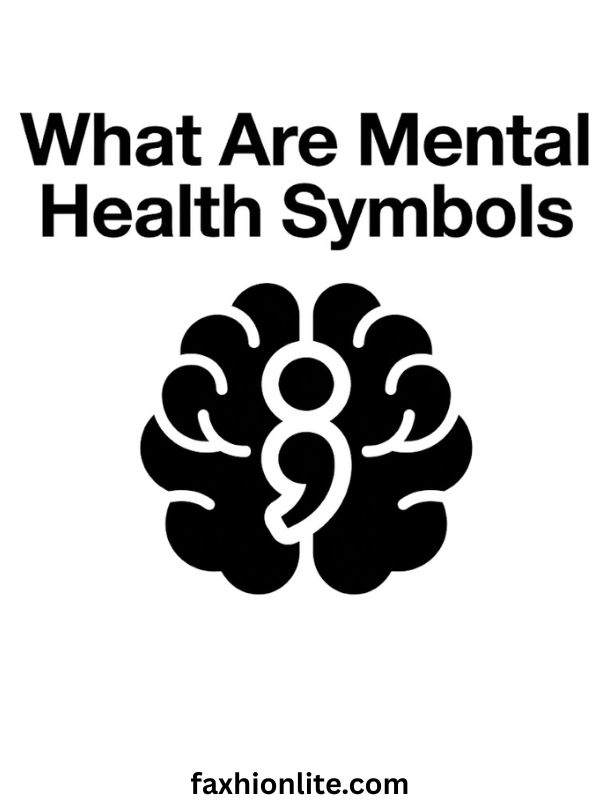
These are images, marks, or objects that stand in for something hard to say out loud — depression, anxiety, trauma, or surviving all three. A small semicolon tattoo can say “I struggled and I’m still here” in a glance, compressing a complicated personal story into something small enough to wear or share.
Nonprofits also needed a unifying visual for awareness campaigns, the same way pink became shorthand for breast cancer. Ribbons, colors, and icons let organizations communicate quickly across billboards, social posts, and merchandise, and social media has let these symbols spread faster than ever. Symbols work best alongside real self-care practices — therapy, rest, a support system — not as a replacement for them.
Symbols and Meanings
Tattoos
Tattoos are a permanent, personal way to carry a symbol. People typically choose them to represent survival, remembrance, or hope — a semicolon for survival, a date for remembrance, a sunrise for hope. Many combine two or three into one piece.
Wrist and forearm placements act as daily reminders; placements behind the ear or on the ribs are more private. Neither is more valid — it reflects how public or private someone wants their journey to be.
Recovery Symbols
The semicolon, phoenix, lotus, and anchor recur in recovery because each carries a built-in metaphor for continuing forward. Having a concrete image to point to during hard moments is genuinely useful — some therapists encourage clients to pick one to represent their progress.
A symbol’s meaning often deepens as the person’s healing continues, even if the image itself doesn’t change. The tree of life is a common choice here too, since its branching roots and growing canopy represent an ongoing process rather than a single moment of victory.
Copy-Paste Symbols
For people who don’t want a tattoo or pin, simple text characters and emoji work as a low-commitment signal in bios and captions:
| Symbol | Character/Emoji | Common Meaning |
| Semicolon | ; | Survival, continuing your story |
| Green heart | 💚 | Mental health awareness |
| Ribbon | 🎗️ | General awareness support |
| Butterfly | 🦋 | Transformation and healing |
| Infinity | ∞ / ♾️ | Ongoing support or lifelong condition |
| Lotus | 🪷 | Growth through hardship |
These usually appear in Instagram bios, X captions, and TikTok comments, often with hashtags like #mentalhealthawareness.
Specific Tattoo Choices
The semicolon remains the most requested, thanks to Project Semicolon’s spread after 2015. Butterfly tattoos rank close behind, often chosen during major transitions like leaving an abusive relationship or completing treatment.
Minimalist line art has become the dominant style — a thin-lined lotus or small outlined anchor communicates as much as a larger piece without the same commitment. Worth stating plainly: a tattoo doesn’t erase the underlying struggle. It marks the journey; it isn’t a substitute for therapy, medication, or support systems.
Emoji
The green heart 💚 appears constantly during Mental Health Awareness Month; the butterfly 🦋 shows up in growth-related captions; the infinity symbol ♾️ often represents ongoing conditions like anxiety or depression without a clear finish line.
None of these were designed for mental health — communities repurposed existing emoji because no official one exists yet. Casual use like this has helped normalize talking about mental health online.
Drawings
Hand-drawn versions show up in journals, planners, and posters because they require no artistic skill. Therapists sometimes ask clients to draw a symbol representing their emotional state that week — a low-pressure exercise that can surface feelings words might not, in line with broader art therapy practice.
Popular Awareness Symbols
The Semicolon
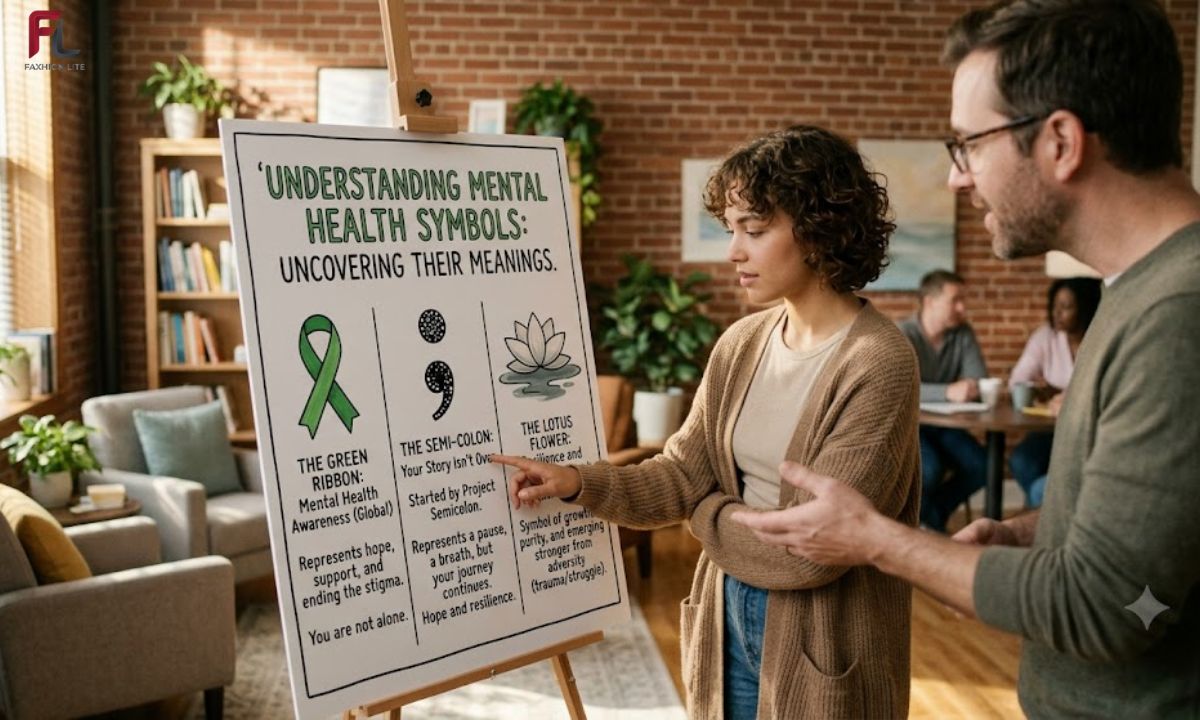
Grammatically, a semicolon connects two clauses a writer could have separated into full sentences but chose to continue instead. Project Semicolon built its entire metaphor on that: you are the author, and your life is the sentence.
Amy Bleuel founded the movement in April 2013 to honor her father, who died by suicide. She had her own long history with depression and self-harm, and first asked others to draw a semicolon on their wrist as a quiet signal of solidarity. It grew slowly, then went global by 2015 through social media.
Bleuel died by suicide in 2017 at age 31, deepening the symbol’s weight for the community. Project Semicolon continued as a nonprofit afterward, later partnering with organizations including NASCAR and the video game Apex Legends.
No Single Universal Symbol
Unlike the pink ribbon for breast cancer, mental illness has no single agreed-upon symbol — the space is a patchwork of ribbons, colors, and icons. Some advocates want one unifying image for recognizability; others argue the range of conditions is too broad for any single icon to fairly represent. The green ribbon comes closest to a general default, while other colors cover specific conditions.
Core Awareness Lineup
Green ribbon (general mental health), semicolon (suicide prevention/survival), purple ribbon (suicide prevention specifically), and teal ribbon (PTSD/anxiety) are the main entries, deployed most heavily during May (Mental Health Awareness Month in the U.S.) and World Mental Health Day on October 10. Increasingly, campaigns use illustrations, hashtags, and digital badges rather than physical objects, since so much advocacy now happens online.
Why Symbolism Works
Abstract images let people project their own experience onto a shared visual without needing an exact match — a lotus means something slightly different to everyone, but “growth through difficulty” stays constant.
A rigid, overly literal symbol would only speak to a narrow group; flexible ones like a butterfly or anchor can represent anxiety, depression, grief, or addiction recovery alike. This is really a modern continuation of humans using visual metaphor to process emotion, a practice going back to early art.
Cognition-Focused “Mental Symbols”
Searches for “mental symbols” often point to imagery about cognition rather than emotion — brain icons, lightbulbs for insight, mazes for confusion or overthinking. These appear frequently in materials about ADHD or cognitive decline, and wellness apps favor this category because it reads as more clinical and less emotionally loaded than a ribbon.
Other Common Images
Doves (peace/calm), open hands (support/safety), and rainbows (hope, and LGBTQ+ inclusion specifically) round out the broader category.
Doves carry a peace association predating mental health use by centuries; mental health advocacy simply borrowed it. Open hands appear often in suicide prevention material, representing catching someone before a crisis point.
Condition-Specific Symbols
Depression: blue/teal, plus cloud and rain imagery for persistent low mood. Anxiety: tangled thread or knots for racing thoughts. Bipolar disorder: a half-sun, half-moon image for the shift between states.
These are informal, grassroots community adoptions rather than official medical designations — no clinical body has certified a rain cloud as “the” depression symbol.
Symbols of Suffering
Broken chains, thorns, and storm clouds represent pain directly rather than skipping to hope, and many people find that honesty valuable. A broken chain can represent both being trapped and breaking free in one image.
Mental health professionals generally agree that acknowledging pain honestly supports healthier long-term processing of trauma and grief.
Choosing a Symbol
Start by asking what part of your story you want to honor — survival, ongoing struggle, a specific person lost, or hope ahead. Research a symbol’s origin before adopting it, especially ones borrowed from specific cultural or religious traditions like the lotus or dreamcatcher.
You aren’t locked into one meaning — many people layer several symbols together (a semicolon with a small anchor, for instance).
Ten Most-Searched Symbols
Semicolon, green ribbon, lotus flower, butterfly, anchor, phoenix, infinity symbol, green heart, sunflower, rising sun.
Clinical and Specialized Uses
Genograms
A genogram is a family tree used in therapy that maps emotional relationships and mental health history across generations. Squares represent males, circles represent females, and different line styles show relationship types.
Popularized through family systems therapy starting in the 1980s, genograms help clients spot recurring patterns like depression or substance use across generations. Because the shorthand is standardized, any trained counselor can read one accurately.
Men’s Mental Health
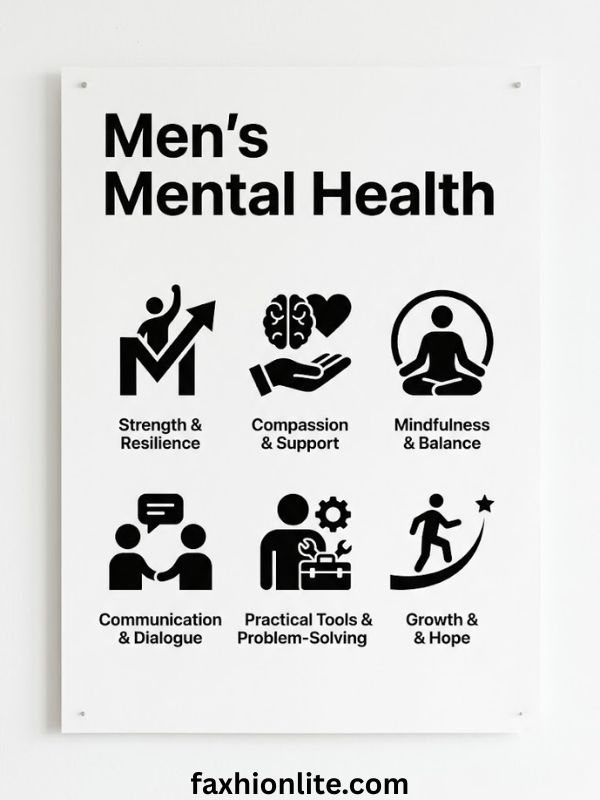
The blue ribbon and Movember’s mustache icon are the main symbols here. Movember began focused on prostate cancer and later expanded to men’s mental health and suicide prevention.
Men are statistically less likely to seek therapy or talk openly, so campaigns using more understated, activity-based symbols tend to land better than generic imagery — the mustache lowers the barrier to participation by being playful and low-stakes.
Combined Tattoos
A common combination is a semicolon integrated into a butterfly’s body, merging “continuing your story” with “transformation.” An anchor with a small compass represents both grounding and direction.
These combination pieces are often less recognizable to strangers, which some people prefer since it keeps the full meaning private.
Quick Reference Table
| Symbol | Primary Meaning |
| Semicolon | Continuing your story, suicide survival |
| Green ribbon | General mental health awareness |
| Lotus flower | Growth through difficulty |
| Butterfly | Transformation, personal change |
| Anchor | Stability, staying grounded |
| Phoenix | Rebirth after crisis |
| Infinity symbol | Ongoing support, lifelong condition |
Timing and Shared Meaning
People often get tattoos on specific milestones — one year sober, an anniversary of a loss — rather than a random date, which turns a common image into a genuinely personal marker. Matching tattoos with a friend or support group member can turn an individual healing symbol into a shared bond.
Depression Symbolism
Rain clouds represent persistent low mood; a rising sun or small light in darkness represents hope of improvement. Teal or deep blue-green sometimes distinguishes depression-specific materials from general mental health green. Depression is one of the leading causes of disability worldwide according to the World Health Organization.
Positive Symbols
Sunflowers, sunrises, and open doors represent stability and forward movement rather than struggle, and appear more in general wellness content. Sunflowers turn toward light, translating naturally into “choosing hope.” Open doors often represent the first step of reaching out for help.
Illustration Style
Professional illustrators favor soft, rounded linework and muted palettes to feel calming rather than alarming, across book covers, apps, and posters. A full illustrated scene — a person walking from a dark forest into light — can combine several symbolic elements into one narrative.
Children’s Materials
Children’s resources lean on weather metaphors (cloudy day for sadness, sunny day for happiness) and color-coded feelings charts rather than abstract adult symbols like ribbons.
Young children often can’t verbalize complex feelings but can point to a storm cloud, making this genuinely effective as a teaching tool. Tree imagery — wilted in winter, blooming in spring — also helps kids talk about “bad days” and “good days.”
Anxiety Imagery
Tangled or knotted thread represents racing thoughts, sometimes paired with a smoothed-out thread showing the process toward calm. The teal ribbon carries anxiety associations alongside its PTSD meaning since the conditions overlap. Wave and breathing imagery mirrors grounding techniques therapists teach for managing acute anxiety.
Deeper Symbolic Meaning
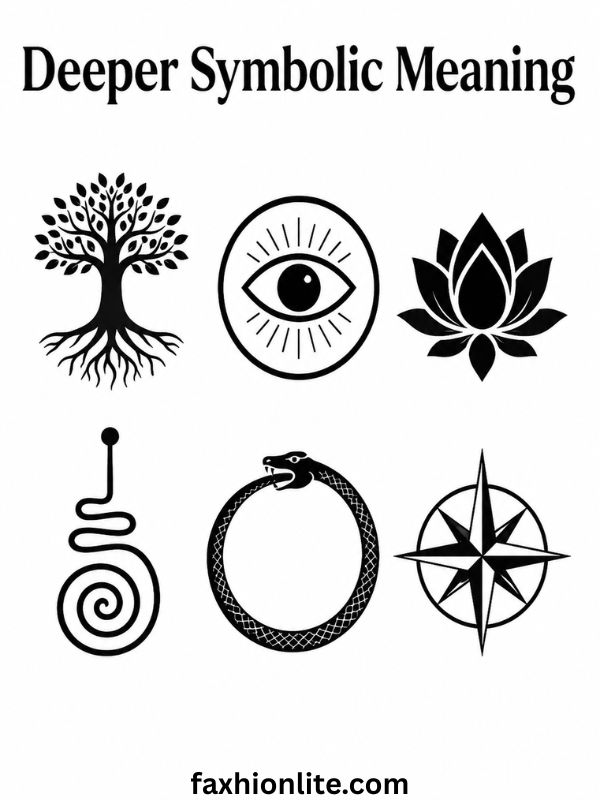
Spiritual: The lotus’s Buddhist and Hindu roots frame suffering as the soil from which growth happens. A phoenix rising from ashes connects private struggle to something ancient and universal. Even secular people often use spiritually loaded language like “rebirth” when describing recovery.
Psychological: Symbols work because the brain processes visual and metaphorical information differently than literal language, often engaging more emotional regions. Externalizing an internal struggle as a symbol creates useful distance from it — similar to narrative therapy, which encourages separating a problem from one’s identity (“I am dealing with anxiety” rather than “I am an anxious person”).
Cultural: Shared symbols build community and reduce stigma by making struggle visible. Recognizing a matching semicolon tattoo on a stranger creates instant, wordless recognition. Project Semicolon succeeded by turning millions of private stories into one collective symbol.
Across Cultures
- Ancient Egypt: The scarab beetle symbolized rebirth and renewal, tied to the sun god Ra and beliefs about the afterlife.
- Eastern traditions: The yin-yang represents balance between opposing states rather than eliminating one. Mandalas, used in Hindu and Buddhist practice, are now a recognized mindfulness technique in Western therapy.
- Greek mythology: Psyche, meaning “soul” or “mind,” is depicted with butterfly wings, linking the butterfly to transformation over two thousand years before modern advocacy. The staff of Asclepius remains a recognized medical symbol for healing broadly.
- Indigenous cultures: Dreamcatchers, traditionally associated with the Ojibwe people, are believed to filter out bad dreams. Different nations developed distinct symbols tied to their own traditions, so treating them as generic imagery overlooks real variation.
- Modern Western culture: Standardized ribbons, hashtags, and pins replaced older mythological symbols because they could be mass-produced and instantly recognized. Hashtags like #youarenotalone now function the same way.
In Art, Film, and Fashion
Filmmakers use storms and darkness for depression or caged birds for feeling trapped, letting a film communicate complexity without heavy dialogue. Painters used dark palettes and isolated figures to represent internal states long before “mental health” was common language. Book covers frequently use butterflies, storms, and light imagery to signal genre and tone instantly.
Public figures sharing their own mental health tattoos have helped destigmatize these symbols for mainstream audiences. Awareness merchandise — pins, apparel, accessories — has grown into its own market, often funding nonprofits directly and putting these symbols into everyday public life.
Dream and Symbolic Duality
Dreaming repeatedly of a butterfly often coincides with a period of major personal change; storms or dark water often reflect unprocessed stress; light breaking through darkness can reflect a sense of an approaching turning point.
Researchers caution against rigid dream dictionaries, but repeated symbolic encounters are generally worth sitting with.
The same symbol can carry opposite weight depending on context. A broken chain can represent trauma or freedom from it.
A storm cloud alone reads as distress; add a ray of sun and the same image turns hopeful. This flexibility lets one visual vocabulary match wherever someone actually is in their journey.
Why These Symbols Resonate
Humans are pattern-seeking, story-driven creatures, and symbols give complicated internal experiences a shape we can hold onto and recognize in others. Adopting a shared symbol signals membership in a community that understands a specific struggle, which can meaningfully reduce isolation.
Choosing exactly which image represents your story — and when to share it — gives people real agency over a part of their experience that might otherwise feel out of their control.
Frequently Asked Questions
What is the most common symbol for mental health awareness?
The green ribbon represents general mental health awareness, while the semicolon specifically symbolizes suicide prevention and personal survival.
What does the semicolon tattoo mean for mental health?
It means choosing to continue your story instead of ending it, like a grammatical sentence.
What color represents mental health awareness?
Green is the internationally recognized color, adopted in the United States during the early 1990s.
What symbol represents anxiety?
Tangled or knotted thread commonly represents anxiety, alongside the teal ribbon, which also signifies PTSD awareness.
Is there an official mental health symbol?
No single official symbol exists; the green ribbon functions as the closest general awareness standard worldwide.
Conclusion
A semicolon on someone’s wrist traces back to a real founder, a real loss, and a global movement. A green ribbon connects to decades of advocacy. Even a casual emoji taps into an old human tradition of using images to say what words can’t.
If any of these symbols resonate with your own experience, remember they work best alongside real support — therapy, community, or an honest conversation with someone you trust.