90+ Best Hand Symbols and Their Hidden Meanings Explained in 2026
Hand symbols are gestures or shapes made with the hands that carry specific meanings, ranging from spiritual protection and religious blessing to modern social signals like a thumbs up or peace sign. Long before written language existed, people used their hands to communicate emotion, status, and belief, and that habit never went away, it just evolved.
Today you’ll see hand symbols on jewelry, in yoga studios, at protests, in anime, and in everyday conversation. Hands are one of the oldest tools of communication we have, predating spoken language in many anthropological theories. This guide breaks down the hidden meanings of hand symbols, from ancient spiritual practices to the gestures you see scrolling through social media in 2026.
What Are Hand Symbols?
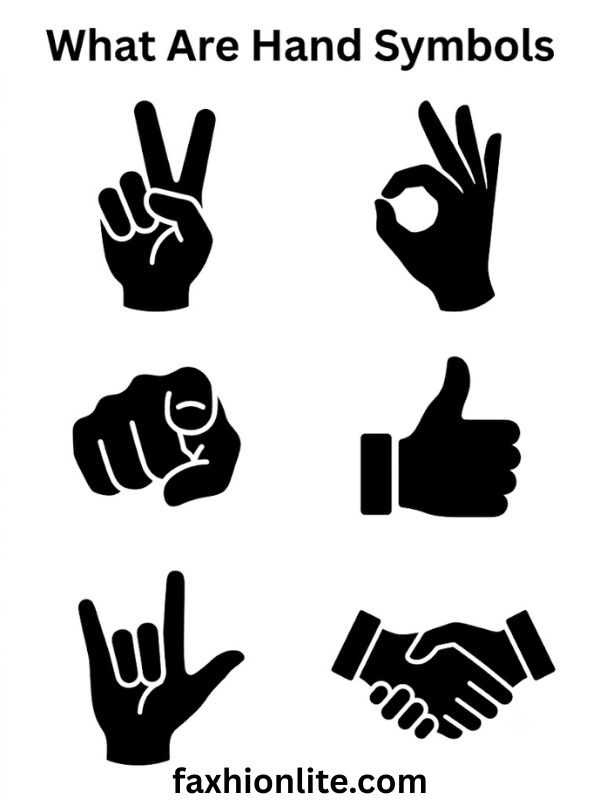
A hand symbol is any shape, position, or movement of the hand that conveys a specific message beyond its literal physical form. A gesture is often spontaneous, like waving, while a symbol is intentional and loaded with meaning, like the Hamsa hand representing protection from harm.
Cave paintings in places like Argentina’s Cueva de las Manos show hand stencils dating back over 9,000 years, and archaeologists agree these early hand symbols marked identity, presence, or ritual significance, a function that carries through to 2026.
Hand Symbols and Meanings Guide
Most hand symbols fall into three broad categories: spiritual, cultural, and modern social gestures, each carrying different layers of meaning depending on context. Hand symbolism works because hands are visible, expressive, and universally understood as extensions of intention.
What do hands symbolize? Creation, labor, protection, connection, and power are the most common themes across cultures. In psychology, hands represent agency, since they’re how we build, comfort, and defend, while in spirituality hands are seen as channels for energy, which is why practices like Reiki and mudras focus so heavily on hand positioning.
Hand Gestures and Modern Meanings
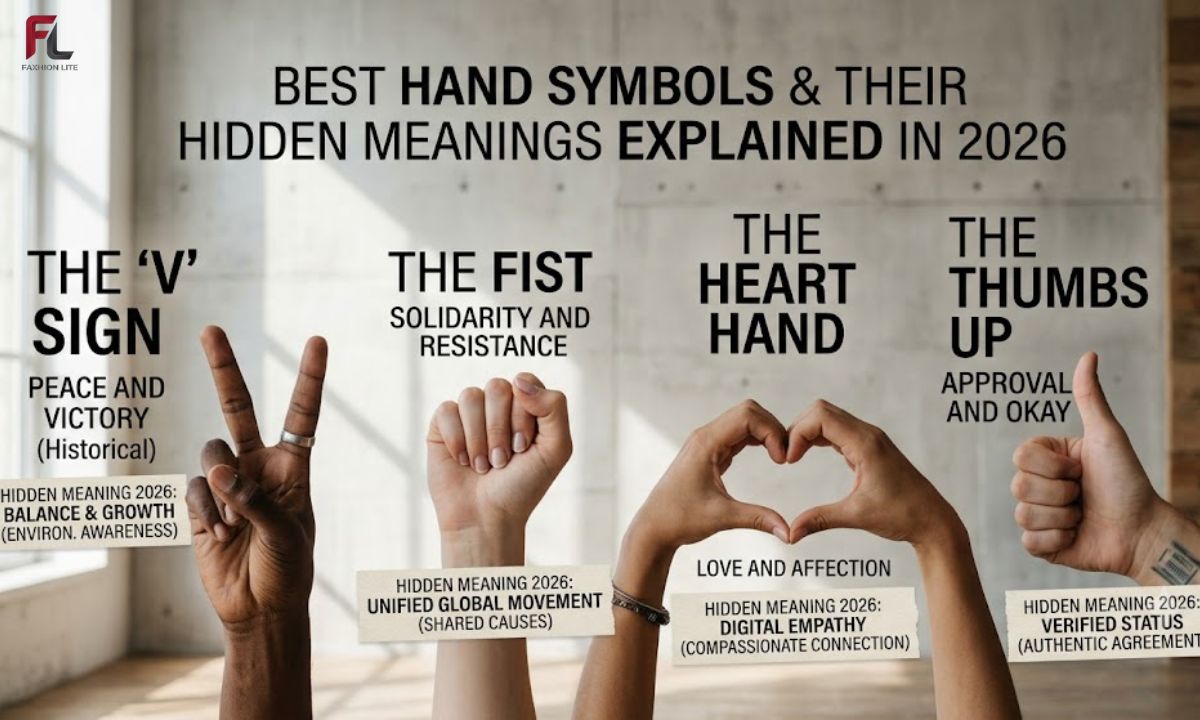
Modern hand gestures function as a fast, universal form of nonverbal communication, often conveying emotion faster than words can. A thumbs up at work means approval, but the same gesture in parts of the Middle East and West Africa can be deeply offensive, which is why hand signs with meaning matter more than ever in a connected world.
- Thumbs up – approval or “good job”
- Peace sign – calm or anti-war sentiment
- OK sign – approval in the US, offensive elsewhere
- Fist bump – casual, equal-footing greeting
- Pointing finger – emphasis, sometimes rude
- Open palm wave – greeting or farewell
- Prayer hands – gratitude or reverence
Bad hand gestures meaning matters just as much: the middle finger is the most recognized offensive gesture in the US, while the “OK” sign is documented as offensive in countries including Brazil and Turkey.
Spiritual, Ancient and Cultural Hand Symbols
Spiritual hand symbols are gestures believed to channel energy, offer protection, or connect the practitioner to a higher power, with roots tracing back thousands of years.
This category includes the Hamsa, Buddhist mudras, and the raised palm used in blessings across multiple faiths, and the fact that these meanings overlap across religions developed independently suggests something universal about how humans process devotion through hand positioning.
Ancient hand symbols, like the Eye of Providence hand pose in Egyptian iconography or Native American hand symbols in ceremonial dances, were never decorative; they were functional tools believed to ward off evil or mark sacred status.
Religious, Occult and Pop Culture Hand Symbols
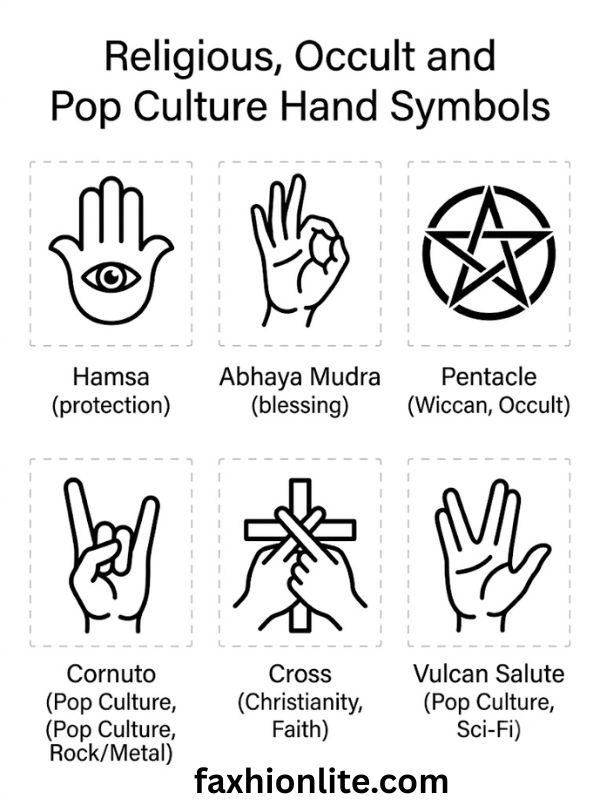
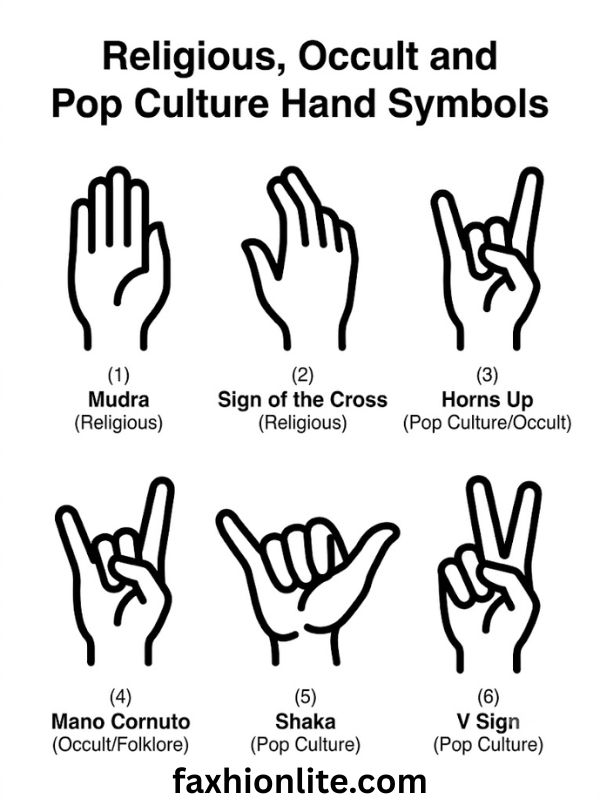
Religious and occult hand symbols carry specific, often contested meanings rooted in centuries-old tradition and, in some cases, modern misinterpretation. Christian hand symbols include the sign of the cross and praying hands, while Buddhist mudras direct spiritual energy in meditation.
Satanic hand symbols, most notably the “sign of the horns,” actually originated as a protective folk gesture in Mediterranean cultures, with its modern link to heavy metal coming from musician Ronnie James Dio in the 1970s rather than occult ritual.
Illuminati hand symbols are tied more to internet conspiracy culture than documented history, while Masonic and Freemason hand symbols are real recognition signs rooted in medieval stonemason guilds, and sorority hand symbols are modern markers of pride within Greek life.
Entertainment and Specialized Hand Signs
Hand signs in entertainment borrow heavily from real cultural traditions, reshaping them into fictional or instructional systems. Naruto hand symbols were inspired by real mudras from Japanese Buddhist tradition, fictionalized into ninja techniques, and Domain Expansion hand symbols from Jujutsu Kaisen follow a similar dramatic pattern.
Solfege hand symbols, or Curwen hand signs, are different entirely, developed in the 19th century as a music education tool still taught in American classrooms today.
Deep Symbolic Meaning of Hand Symbols
Hand symbols operate simultaneously on spiritual, psychological, and cultural levels, which is why the same gesture can feel sacred to one person and casual to another. On a spiritual level, they’re believed to direct energy, central to practices like yoga and Reiki.
On a psychological level, hand gestures reveal confidence or nervousness, a field experts call kinesics, and research including foundational work by Paul Ekman shows hand movement often reveals emotion more honestly than facial expressions. On a cultural level, meaning shifts by geography, which is why hand symbolism in cultures deserves nuanced treatment.
Types and Variations of Hand Symbols
Six hand symbols dominate global recognition today: the Hamsa, mudras, the raised fist, the peace sign, the handshake, and the open palm blessing. The Hamsa hand meaning centers on protection against the evil eye. Mudras meaning involves precise finger positions believed to direct energy flow. The raised fist meaning became globally recognized through civil rights and labor movements. The peace sign meaning traces to the 1958 British nuclear disarmament movement. The handshake meaning comes from an ancient gesture proving neither party held a weapon, and the open palm meaning signals blessing and honesty across religions.
| Symbol | Origin | Core Meaning |
| Hamsa Hand | Middle East / North Africa | Protection from evil |
| Mudras | Ancient India | Energy direction, meditation |
| Raised Fist | Civil rights movements | Solidarity, resistance |
| Peace Sign | 1958 UK anti-nuclear movement | Peace, anti-war |
| Handshake | Ancient Greece (documented) | Trust, agreement |
| Open Palm | Cross-cultural | Blessing, honesty |
Hand Symbols Across Cultures
Hand symbolism varies dramatically by region, yet nearly every culture independently developed gestures of protection, blessing, and greeting. Ancient Egypt, Mesopotamia, and Greece used hand imagery to represent divine authority, South Asian traditions built mudra systems into Hinduism and Buddhism, and the Hamsa remains a defense against the evil eye across Turkey, Egypt, and Morocco.
Western culture leans toward political and social gestures, while East Asian symbolism blends mudras with martial arts traditions of focus and discipline.
Hand Symbols in Art, Movies and Pop Culture
Michelangelo’s Creation of Adam remains one of history’s most referenced images, built around two outstretched hands nearly touching, reproduced endlessly in film and advertising since.
Modern franchises lean on hand symbols constantly, from superhero salutes to fictional gang signs, and music videos often feature symbolic gestures specifically to spark conversation, a tactic that’s worked since at least the MTV era.
Spiritual and Dream Meaning of Hand Symbols
Dreaming about hands often relates to a sense of control in waking life: strong, capable hands suggest confidence, while injured hands point to helplessness. In meditation, seeing a hand symbol during visualization is often read as a sign of guidance, an interpretation that isn’t scientifically proven but remains widely discussed in spiritual communities online.
Positive vs Negative Meaning of Hand Symbols
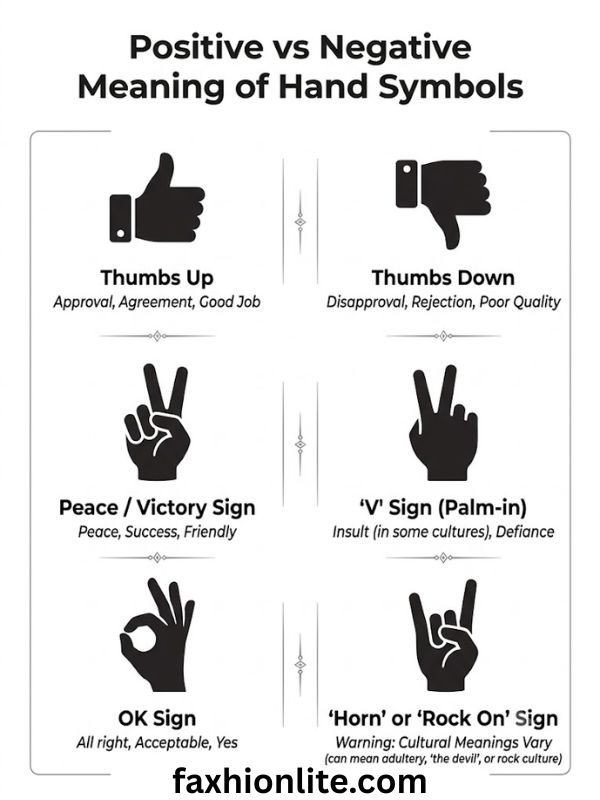
Most hand symbols carry either a clearly positive or negative association, though context can flip the meaning entirely. Peace signs and the Hamsa lean positive, while offensive or occult-associated signs lean negative, and a raised fist can mean solidarity at a protest or aggression elsewhere, so reading the situation matters as much as the symbol.
Why Humans Are Attracted to Hand Symbols
Humans are drawn to hand symbols because hands are the primary tool we use to shape our physical world, making them a natural extension of identity. Hand gestures communicate emotional and social information faster than spoken language in many contexts, which explains their enduring appeal across every documented human culture.
Evolutionary psychologists tie this to hands being central to early survival, used for building, defending, and signaling danger long before complex language developed.
Frequently Asked Questions
What is the most common hand symbol?
The peace sign is the most recognized hand symbol worldwide, representing calm, friendship, and anti-war sentiment globally.
What hand symbol means protection?
The Hamsa hand symbolizes protection against the evil eye, especially across Middle Eastern and North African cultures.
What does the raised fist mean?
The raised fist represents solidarity, resistance, and unity, popularized through civil rights and labor movements historically.
Are hand gestures the same everywhere?
No, meanings vary widely by region; a friendly gesture here can be offensive elsewhere internationally.
What is the spiritual meaning of praying hands?
Praying hands symbolize humility, gratitude, and reverence before a higher power across multiple religious traditions.
Conclusion
Hand symbols carry meaning far beyond their simple shape. They connect ancient ritual to modern social media. From the Hamsa to the raised fist, each gesture tells a story.
Culture, religion, and psychology all shape how we read them. Understanding hand symbols helps you understand a piece of human history.