
105+ Italian Symbols That Reveal Italy’s Hidden Soul, Passion, Power & Ancient Mysteries (2026)
Italy is a land where every symbol tells a story of history, faith, art, and national pride. From the legendary Roman Eagle to the iconic Colosseum, Italian symbols reflect centuries of culture, strength, and timeless beauty. These powerful emblems reveal the country’s hidden soul, passionate spirit, and ancient traditions that continue to inspire the world today.
In this guide, you’ll discover 105+ famous Italian symbols, their fascinating meanings, historical origins, and why they remain deeply connected to Italy’s identity in 2026. Whether you’re a traveler, history enthusiast, or simply curious about Italian culture, these symbols offer a captivating journey through Italy’s rich heritage.
What Are Italian Symbols?
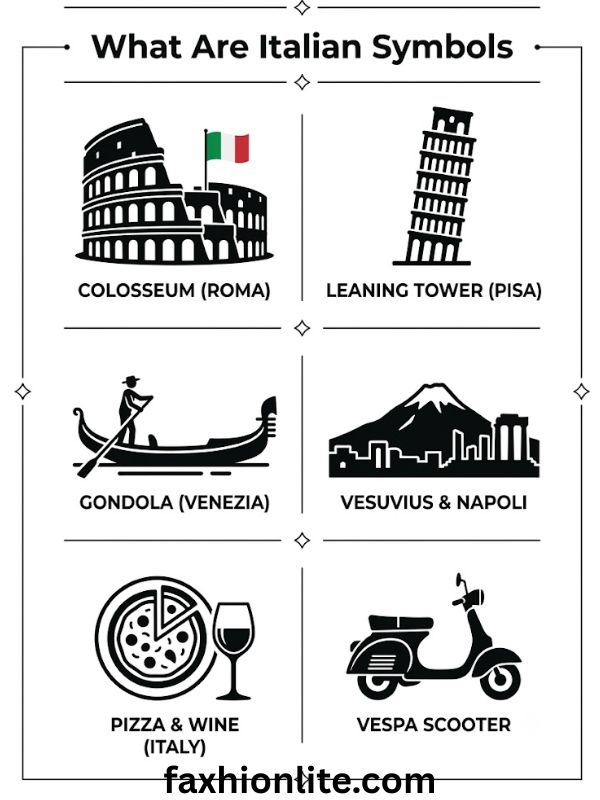
Italian symbols are images, objects, gestures, and emblems that represent Italy’s history, faith, family values, and national identity. They range from official state symbols to folk charms passed down through generations.
Most people think of symbols of Italy as just the flag or the Colosseum, but the reality runs much deeper. Italian symbolism spans three overlapping categories: national emblems recognized by the government, religious and spiritual symbols shaped by centuries of Catholic tradition, and personal or folk symbols tied to luck, protection, and family.
A single object, like the cornicello horn charm, can carry meaning in all three categories at once, which is part of why Italian symbolism feels so layered compared to symbolism from other cultures.Italian symbolism also isn’t static.
Meanings shift depending on region, era, and even political context. A symbol that meant one thing under the Roman Empire might carry a completely different weight during the Renaissance or in modern Italian-American communities.
That’s what makes this topic worth exploring in depth rather than skimming a quick list.By the end of this guide, you’ll understand not just what these symbols look like, but why they were created, how they’ve evolved, and where you’ll still find them in daily Italian life today.
Famous Italian Symbols And Their Meanings
The most famous Italian symbols and meanings include the Roman eagle for power, the olive branch for peace, and the cornicello horn for protection against bad luck.
Italian Symbols And Meanings
Every major Italian symbol falls into a theme: luck, love, protection, power, or faith. The Roman eagle represents strength and empire. The laurel wreath symbolizes victory and honor, a tradition still echoed at Italian university graduations today.
The fleur-de-lis, tied closely to Florence, represents purity and civic pride. Understanding these themes makes the rest of Italian symbolism much easier to remember.
Italian Symbols Tattoos
Italian tattoo requests in the United States have grown steadily, especially among people reconnecting with their Italian heritage. The cornicello, the phrase “la famiglia,” and Roman numeral tattoos marking birth dates or family anniversaries are among the most requested designs at American tattoo studios.
Italian Tattoo Symbols
Beyond design trends, the symbols themselves carry weight. A tattoo combining the Roman eagle with an olive branch signals strength balanced with peace. Rosary beads inked around a wrist often represent Catholic faith passed down through an Italian-American family. Choosing a symbol with real meaning, rather than one that just “looks Italian,” tends to age better emotionally for the wearer.
Ancient Italian Symbols
Ancient Italian symbols predate the Roman Empire itself. Etruscan artifacts show early versions of protective horns and animal totems that later influenced Roman iconography. Archaeologists have found these motifs on pottery and jewelry dating back to the 8th century BCE, long before Rome became the dominant power in the region.
National Symbols Of Italy
The national symbols of Italy include the tricolor flag, the national anthem “Il Canto degli Italiani,” the coat of arms featuring a five-pointed star known as the Stella d’Italia, and the Italian wolf as the national animal. These are officially recognized by the Italian Republic and appear on government documents, embassies, and state ceremonies.
Traditional Italian Culture And Heritage Symbols
Traditional Italian heritage symbols center on family, protection, and faith, values that have shaped daily life in Italy for centuries.
Italian Symbols Letters
Monograms and initials carry personal significance in Italian jewelry traditions. Families often pass down pendants engraved with a single letter representing a surname or a matriarch’s name, a practice especially common in southern Italian and Sicilian households.
Italian Symbols Of Protection
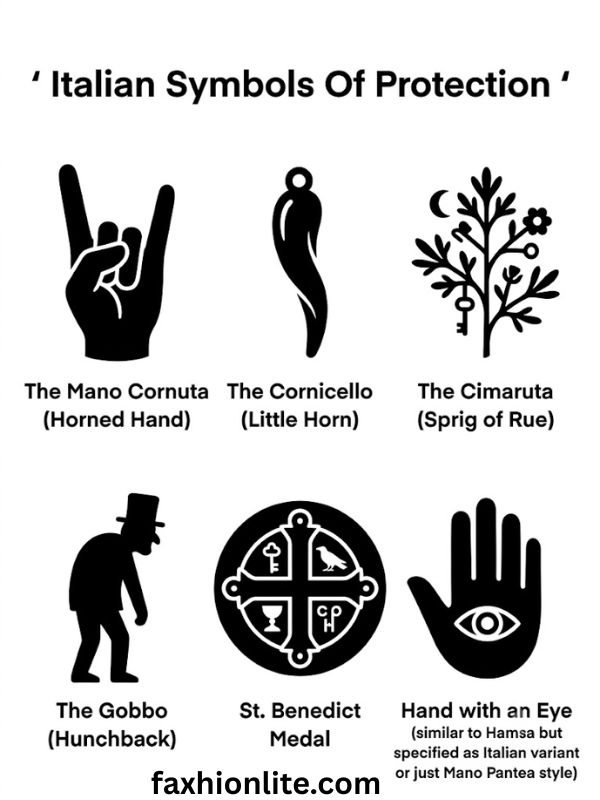
Protection symbols dominate everyday Italian culture. The cornicello wards off the evil eye, known as malocchio. The mano cornuta, a hand gesture with the index and pinky extended, serves a similar purpose. These aren’t just decorative, many Italians genuinely believe in their protective function, and the tradition has survived for centuries partly because of that sincere belief.
Italian Symbols For Family
La famiglia sits at the center of Italian identity. Symbols representing family include the Sacred Heart, intertwined wedding rings, and personalized family crests known as stemma di famiglia. These crests date back to medieval Italian city-states, when noble and merchant families used them to mark ownership and lineage.
Symbols Of Italy
Broader national identity markers include the Colosseum, the Vespa scooter, the espresso cup, and Vatican City’s dome. These images dominate tourism branding, but they also reflect genuine daily life, Italians really do ride Vespas and drink espresso standing at a bar counter every morning.
Italian Symbols Jewelry
Coral and gold cornetto pendants remain some of the most gifted items in Italian families, especially for newborns. Red string bracelets and rosary jewelry also carry protective and spiritual significance, blending folk belief with Catholic tradition.
Italian National Symbols
Beyond the flag and anthem, official heraldry includes the eagle used by the Italian Republic’s institutions and regional coats of arms like the Winged Lion of Venice and the Tuscan lily. Each region proudly maintains its own symbolic identity within the larger national framework.
Ancient And Modern Symbols That Represent Italy
Italy blends ancient imagery with modern icons, meaning symbols from 2,000 years ago sit comfortably alongside 20th century inventions like the Vespa.
Italy Symbols
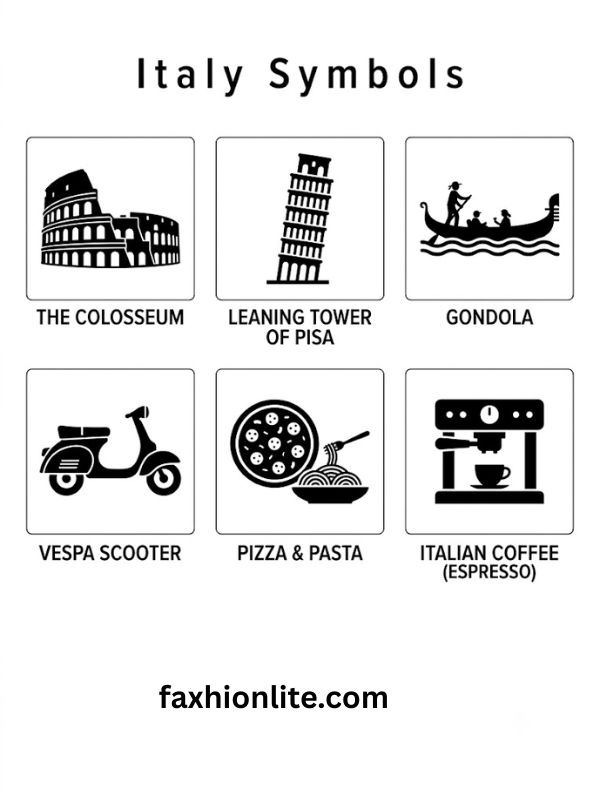
A quick-reference list of recognized symbols includes the tricolor flag, the Roman eagle, the she-wolf of Rome, the laurel wreath, and the Colosseum. Together, these form the backbone of how Italy presents itself globally.
Italian Symbols Of Love
The Roman god Cupid and the heart-pierced-by-arrow motif originated in classical mythology and remain popular love symbols today. Verona, thanks to Shakespeare’s Romeo and Juliet, draws thousands of visitors yearly to Juliet’s balcony, turning literary fiction into a modern pilgrimage site for love.
Things That Represent Italy
Gelato, opera masks, the Fiat 500, and handmade pasta all function as informal symbols of Italian identity. These carry as much cultural recognition worldwide as any official emblem, proving that symbolism doesn’t require government approval to matter.
Ancient Italian Symbols And Meanings
SPQR (Senatus Populusque Romanus) still appears on manhole covers and government buildings in Rome today, representing “the Senate and People of Rome.” The fasces, a bundle of rods, originally symbolized civic unity and authority in ancient Rome, though its meaning became politically complicated in the 20th century.
Something That Represents Italy
If you had to pick one color palette, it would be the green, white, and red of the flag. If you had to pick one building, it would likely be the Colosseum or St. Peter’s Basilica. Both answers reflect how deeply Italy’s identity is tied to visual shorthand.
Things That Represent Italian Culture
Food, music, Catholic faith, and strong family bonds define Italian culture more than any single object. These values show up in symbols indirectly, the Sacred Heart reflects faith, the family crest reflects lineage, and the olive branch reflects the Mediterranean lifestyle itself.
Italian Symbols Of Strength
The Roman eagle, the she-wolf known as Lupa Capitolina (the legendary figure who nursed Romulus and Remus), and lion imagery all represent power and resilience. These symbols appear frequently in Italian-American tattoo requests tied to family strength and perseverance.
The Deep Symbolic Meaning Behind Italian Symbols
Italian symbols work on spiritual, psychological, and cultural levels simultaneously, which is part of why they resonate so strongly across generations.
Spiritual Meaning
Catholicism has shaped Italian spiritual symbolism more than any other force. Saints, rosaries, and patron protection beliefs blend seamlessly with older folk traditions like the malocchio, creating a unique folk-Catholic hybrid found almost nowhere else in Europe.
Psychological Meaning
Psychologists studying cultural identity have long noted that symbols provide a sense of belonging and continuity, especially for diaspora communities. This explains why Italian-Americans, sometimes generations removed from Italy itself, still feel strong emotional pulls toward symbols like the cornicello or family crest.
Cultural Meaning
Regional identity plays a huge role here. Northern Italian symbolism, shaped by Venetian and Milanese history, often emphasizes commerce and civic pride. Southern Italian and Sicilian symbolism leans more heavily on folk protection charms and family loyalty, reflecting a history of poverty and migration that shaped those communities differently.
Types of Italian Symbols and Their Meanings
Here are five of the most historically significant Italian symbols, broken down in detail.
The Cornicello
Visual Description
A twisted horn shape, usually made of red coral or gold, curving gently like a chili pepper or animal horn.
Meaning
Represents luck, virility, and protection against the evil eye. Fact: the cornicello’s shape is believed to symbolize both an animal horn and a phallic charm, two ancient protective forms merged into one object.
Where It Appears
Necklaces, keychains, car mirrors, and street vendor stalls throughout Naples, plus countless Italian-American households.
The Roman Eagle
Visual Description
A spread-wing eagle, often gripping a scepter, wreath, or lightning bolt.
Meaning
Represents imperial power, military strength, and sovereignty, dating back to the standards carried by Roman legions.
Where It Appears
Ancient Roman coins, government buildings, tattoos, and modern Italian military insignia.
The Olive Branch
Visual Description
A simple branch with silver-green leaves, often shown crossed with another branch or held in an animal’s beak.
Meaning
Symbolizes peace, prosperity, and divine favor, a tradition inherited from both Greek and Roman antiquity.
Where It Appears
Italy’s official coat of arms, wedding ceremonies, and political imagery worldwide.
The Lion of Venice
Visual Description
A winged lion holding an open book beneath one paw, representing Saint Mark the Evangelist.
Meaning
Represents guardianship, wisdom, and Venetian civic pride, tied to the city’s patron saint.
Where It Appears
Venice’s official flag, statues throughout the city, and branding for the Venice Biennale art festival.
The Fleur-de-lis
Visual Description
A stylized three-petaled lily, often shown in gold or red.
Meaning
Represents purity, nobility, and Florence’s civic identity, adopted centuries before it became associated with French royalty.
Where It Appears
Florence’s city flag, Medici-era Renaissance art, and Florentine jewelry designs.
Italian Symbols Across Different Cultures
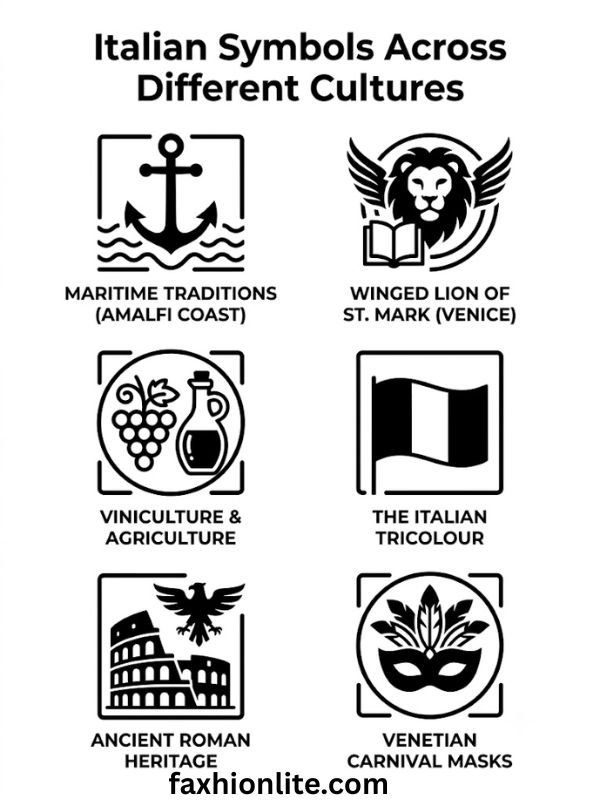
Italian symbolism evolved dramatically as rulers, religions, and city-states rose and fell across the peninsula.
Ancient Roman Culture
SPQR, the fasces, and eagle standards defined civic and military identity across the Roman Empire.
Christian Italian Culture
Saints, crosses, and rosaries became dominant symbols once Catholicism spread through the peninsula, blending with older Roman iconography.
Renaissance Italy
The Medici family used symbols like the palle (balls on their coat of arms) to mark banking power, while artists like Michelangelo and Leonardo da Vinci embedded classical symbolism throughout their work.
Medieval Italian States
Rival city-states like Venice, Genoa, and Florence each developed distinct heraldry to distinguish themselves during centuries of competition and conflict.
Modern Global Culture
Italian-American communities preserved many of these symbols even as Italy itself modernized, creating a fascinating case where diaspora tradition sometimes outlasts practice back home.
Italian Symbols in Art, Movies, Literature, Tattoos and Fashion
Italian symbolism shows up constantly across creative industries, from Renaissance painting to modern luxury branding. Botticelli and Michelangelo filled their work with classical and religious symbolism, much of which still shapes how people picture Italy today.
Hollywood leans heavily on Roman imagery for historical epics and on family and faith symbols for films about Italian-American life. Fashion houses draw directly from this well too, Versace’s Medusa head and Gucci’s interlocking G both root themselves in classical Italian iconography rather than modern invention.
Spiritual And Dream Meaning of Italian Symbols
Dreaming about specific Italian symbols often carries folk interpretations passed down through oral tradition. Dreaming of a horn charm is traditionally read as a sign of upcoming good fortune, while dreaming of an eagle suggests personal strength or an upcoming challenge you’re equipped to handle.
These folk readings differ from formal psychological dream theory, which instead focuses on what the symbol personally represents to the dreamer rather than a fixed universal meaning.
Positive And Negative Meanings of Italian Symbols
Not every Italian symbol carries a simple, unchanging meaning. The fasces, once a neutral symbol of civic unity in ancient Rome, became politically loaded in the 20th century and is now approached with far more caution.
Protective symbols like the malocchio countercharm carry both a positive meaning (safety) and a negative implication (the belief that jealousy or ill will can actually harm you). Context always matters more than the image itself.
Why Humans Feel Deeply Attracted to Italian Symbols
People are drawn to Italian symbols because they connect to something bigger than themselves: history, ancestry, and a sense of belonging. The Roman Empire’s global legacy still shapes Western law, architecture, and language, giving Roman symbols a familiarity that feels almost instinctive even to people with no Italian ancestry.
For Italian-Americans specifically, these symbols often serve as a tangible link to family history that might otherwise feel distant or lost across generations.
Italian Symbols And Their Role In Daily Italian Life
Italian symbols aren’t just historical artifacts, they show up in everyday routines across the country. Many Italians still hang cornicello charms in their cars for protection. Wine labels frequently feature family crests to signal generational winemaking heritage.
Regional festivals, like those honoring patron saints, center almost entirely around specific religious symbols carried through town in procession. Younger Italians are also reviving older folk symbols in modern streetwear and design, proving this tradition is far from frozen in the past.
Frequently Asked Questions
What are the most famous Italian symbols?
Famous Italian symbols include the Roman Eagle, Colosseum, Leaning Tower, Olive Branch, Wolf, and Italian flag, representing heritage and pride.
Why are Italian symbols important?
Italian symbols preserve history, celebrate cultural identity, inspire national pride, and connect modern generations with ancient traditions and values.
What does the Roman Eagle symbolize?
The Roman Eagle symbolizes strength, military power, leadership, victory, and the enduring legacy of the ancient Roman Empire worldwide.
Which Italian symbol represents peace?
The Olive Branch represents peace, hope, harmony, prosperity, and Italy’s long-standing connection to Mediterranean traditions and cultural heritage today.
Are Italian symbols still relevant today?
Yes, Italian symbols remain meaningful through festivals, architecture, art, fashion, tourism, and national celebrations across Italy every year.
Conclusion
Italian symbols connect ancient history, deep faith, and everyday family life into a single, remarkably consistent visual language. From the cornicello protecting a newborn to the Roman eagle representing centuries of imperial power, these symbols carry weight because they were built on genuine belief, not just aesthetics.
Whether you’re exploring your own heritage or simply fascinated by Italy’s layered history, understanding these symbols gives you a much richer way to see the country, and maybe even your own family’s story within it.