90+ Cute Heart Symbols That Speak Love Without Words
Cute heart symbols are small graphic or emoji representations of the heart shape that let people express love, affection, friendship, and emotion without saying a single word. You’ve sent one today. Maybe you double tapped a photo, texted a red heart to your mom, or added a sparkly pink one to your Instagram bio. It felt automatic, right? But there’s a lot more going on behind that little shape than most people realize.
Heart symbols are one of the oldest and most recognized pieces of visual language on the planet. They show up in ancient coins, medieval manuscripts, tattoo parlors, wedding rings, and every phone keyboard in America. And here’s something worth sitting with: the heart symbol we use today doesn’t actually look like a real human heart. It never has. That disconnect is part of what makes this symbol so fascinating.
What Are Cute Heart Symbols?
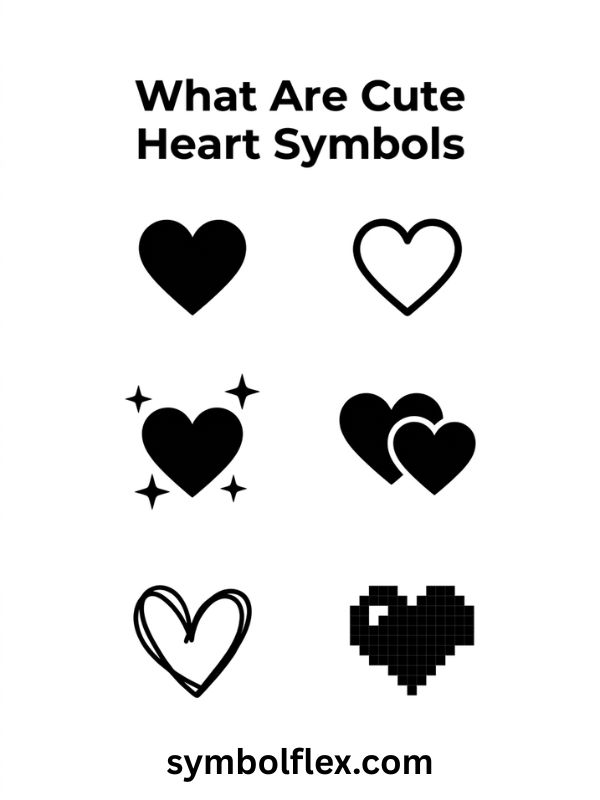
Cute heart symbols are stylized visual icons, whether drawn, printed, or sent as emojis, that use the familiar rounded, two lobed shape to represent love, warmth, or emotional connection. They’re not meant to be anatomically accurate. They’re meant to be instantly recognizable.
This matters because a lot of people assume the heart symbol was designed to look like the human heart. It wasn’t, and it doesn’t. The organ that keeps you alive is lumpy, asymmetrical, and honestly not very cute. The symbol we use, that smooth, symmetrical curve with a point at the bottom, comes from a completely different visual tradition.
Some historians trace it to ancient plant seeds, others to medieval interpretations of anatomy texts, and others to stylized ivy leaves used in art. We’ll walk through those theories later, because the origin story is genuinely one of the more surprising parts of this topic.
Deep Symbolic Meaning
Heart symbols carry meaning on three separate levels: spiritual, psychological, and cultural. Each one explains a different piece of why this shape has stuck with humanity for thousands of years.
Spiritual Level
On a spiritual level, the heart has long been treated as the seat of the soul, not just an organ that pumps blood. In many belief systems, the heart is where intention, conscience, and inner truth live.
In Hindu and Buddhist traditions, the heart center, known as Anahata in the chakra system, represents love, compassion, and balance. It’s considered the bridge between the lower chakras, which relate to survival and instinct, and the upper chakras, which relate to expression and higher thought. When people talk about being “heart centered” in meditation or yoga spaces today, they’re drawing directly from this concept, even if they don’t realize it.
Christianity has its own powerful heart symbolism through the image of the Sacred Heart, which depicts Jesus with an exposed, glowing heart to represent divine love and sacrifice. This imagery became especially prominent in Catholic devotional art starting in the medieval and early modern periods, and it’s still recognizable in religious iconography today.
Across nearly every major spiritual tradition, the heart shows up as a symbol of something deeper than biology. It represents the part of a person that connects to others and to something greater than themselves.
Psychological Level
Psychologically, humans are wired to respond to simple, symmetrical shapes, and the heart checks every box. Symmetry signals order and safety to the brain, which is part of why the heart shape feels comforting rather than random.
Color plays a huge role here too. Red hearts trigger associations with passion and urgency because red is processed by the brain faster than most other colors and is tied to arousal and intensity.
Pink hearts, on the other hand, read as gentler and safer, which is why they’re associated with affection, sweetness, and platonic warmth rather than intense romance. This is not just aesthetic preference. Color psychology is a well documented area of research, and heart symbols are one of the clearest everyday examples of it in action.
Cultural Level
Culturally, the heart symbol has become something rare: a shape that means roughly the same thing almost everywhere in the world. You don’t need to speak the same language as someone to understand what a heart symbol communicates. That’s an incredibly unusual achievement for any piece of visual design.
One of the clearest examples of the heart symbol’s cultural power is the “I ❤ NY” logo, designed by Milton Glaser in 1977 for a New York tourism campaign. The design used the heart symbol in place of the word “love,” and it became so iconic that it’s now one of the most copied logo formats in the world. Cities, brands, and causes everywhere have adapted the same “I heart” formula because the symbol does the emotional work instantly, without needing translation.
Heart symbols have also become deeply embedded in youth culture and internet slang, where different heart colors and styles carry their own micro meanings among younger users. A black heart doesn’t mean the same thing as a red one on TikTok, and teenagers and young adults have built an entire informal vocabulary around these distinctions, which we’ll break down in the next section.
Types and Variations of Cute Heart Symbols
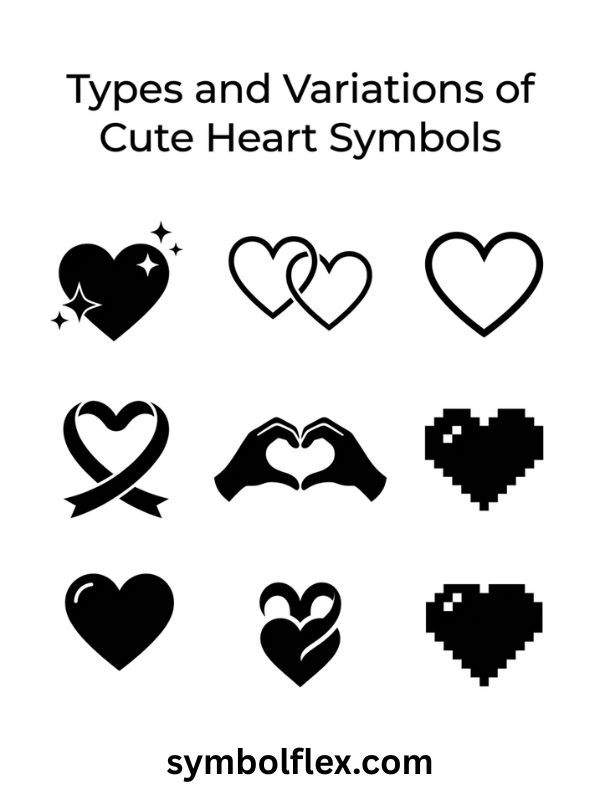
Not all heart symbols mean the same thing, and using the wrong one can send a very different message than you intended. Here’s a breakdown of the most common heart symbol types and what each one actually communicates.
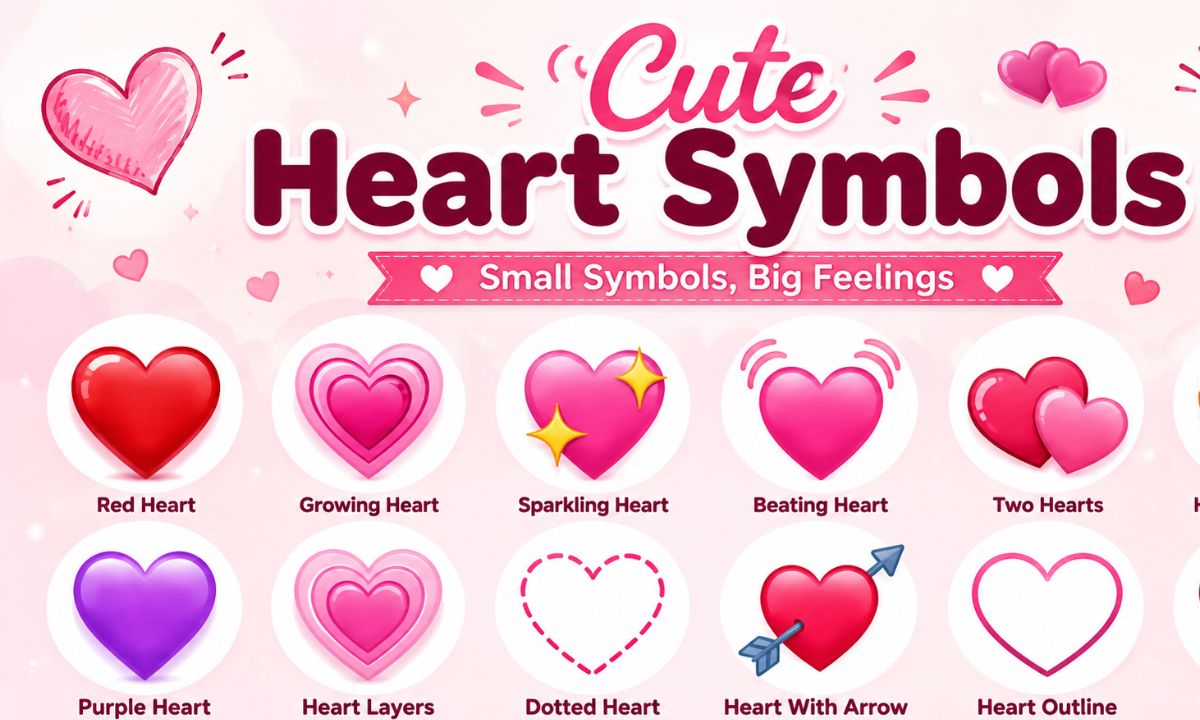
Red Heart
The classic red heart is the most recognized symbol of romantic love, passion, and deep affection anywhere in the world. It’s also, according to emoji researchers, the single most versatile heart symbol in use today.
Red Heart was approved as part of Unicode 1.1 in 1993 under the technical name “Heavy Black Heart,” long before color emoji existed, and it was officially added to the Emoji 1.0 standard in 2015. This history explains why the red heart carries more cultural weight than newer heart variations; it has simply been around the longest.
That long history is exactly why the red heart can feel confusing sometimes. It’s used for genuine romantic love, but it’s also used casually, as a quick way to react to a photo or confirm you read a text. Context matters more with this symbol than almost any other heart type.
Pink Heart
Pink hearts carry a softer, gentler emotional tone than red ones. They’re associated with tenderness, sweetness, and affection that doesn’t necessarily carry romantic weight.
This makes pink hearts especially popular for expressing platonic love, family affection, or a “soft” version of romantic interest that isn’t quite ready to be called intense. Younger users, particularly Gen Z, tend to reach for pink hearts specifically because they read as warm without being as loaded as a red heart.
You’ll also see pink hearts used heavily in aesthetic and lifestyle content, where the goal is to convey a cozy, feminine, or nostalgic mood rather than a strong emotional statement.
Sparkling Heart
The sparkling heart, a heart surrounded by small stars or sparkles, represents excitement, new love, and that fluttery feeling people describe as having butterflies.
This symbol is especially common in early relationship texting, when someone has a crush or is just starting to fall for another person. It captures a sense of anticipation and giddiness that a plain red heart doesn’t quite convey. A sparkling heart says “I’m excited about this,” rather than “I love you,” which is an important distinction.
It’s also frequently used to celebrate someone else’s happy news, like an engagement or a new relationship, because the sparkle adds a celebratory tone on top of the affection.
Broken Heart
The broken heart symbol is one of the most emotionally direct symbols in common use. It represents heartbreak, grief, sadness, or the end of a relationship.
Unlike most other heart variations, there’s very little ambiguity with this one. People reach for the broken heart specifically when words feel insufficient for describing loss, whether that’s romantic heartbreak, the death of a loved one, or general disappointment.
One common mistake is using the broken heart symbol sarcastically or jokingly in a context where the recipient might take it literally. Because this symbol carries real emotional weight, it’s worth using thoughtfully rather than as a throwaway reaction.
Black Heart
Black hearts have a more complicated meaning than most people assume. They can represent dark humor, mourning, or an edgy aesthetic, but they can also be used ironically to express love in a way that feels understated rather than sentimental.
In Gothic and alternative fashion communities, the black heart is a staple symbol, representing depth of feeling without the sweetness associated with red or pink hearts. It’s love, but filtered through a different emotional lens.
On social media, black hearts are also frequently used simply because they match a dark themed aesthetic post, without carrying any negative meaning at all. Context, once again, changes everything with this symbol.
Growing Heart
The growing heart, usually shown as a heart with small lines radiating outward as if it’s expanding, represents increasing affection, overwhelming gratitude, or a feeling that’s building rather than static.
This symbol works especially well for moments when a simple “thank you” doesn’t feel like enough. It’s commonly used in heartfelt messages, gratitude posts, and situations where someone wants to express that their feelings are growing stronger over time, like watching a relationship deepen or reflecting on someone’s kindness.
Heart With Arrow
The heart with arrow symbol traces directly back to the mythology of Cupid, the Roman god of desire, who was said to shoot arrows that made people fall in love instantly. This symbol represents the idea of falling in love, romantic pursuit, or being struck by sudden attraction.
It’s one of the oldest heart related symbols still in common use, and its meaning hasn’t changed much in centuries. Whether it appears on a Valentine’s Day card or in a text message, the heart with arrow almost always signals romantic pursuit specifically, rather than general affection or friendship.
Cute Heart Symbols Across Cultures
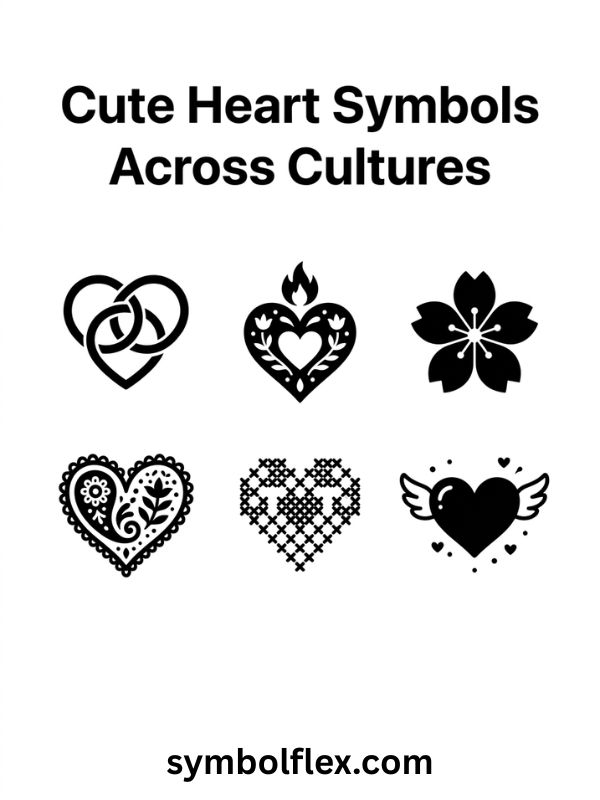
Heart symbolism didn’t start with emojis, and it didn’t start with medieval Europe either. This symbol has a long, winding history that stretches across continents and thousands of years.
Ancient Egypt
In ancient Egyptian belief, the heart, called the ib, was considered the center of intelligence, emotion, and moral character, more important than the brain in determining a person’s true self. The Egyptians believed the heart retained a record of everything a person did in life.
This belief shows up most vividly in the concept of the “weighing of the heart” ritual, described in the Egyptian Book of the Dead, where the deceased’s heart was weighed against the feather of Ma’at, the goddess of truth and justice. If the heart was heavier than the feather, weighed down by wrongdoing, the soul faced destruction. If it balanced with the feather, the person passed into the afterlife.
This is a far cry from the cute, decorative heart symbols we use today, but it establishes something important: the idea that the heart represents a person’s true, inner self isn’t a modern invention. It’s thousands of years old.
Ancient Greece
Greek mythology gave us one of the most enduring heart related images: Eros, the god of desire, later adapted by the Romans as Cupid, who used arrows to make people fall in love. This is the direct source of the heart with arrow symbol still used today.
There’s also a fascinating, debated theory connecting the heart shape itself to ancient Greek commerce. Coins from the ancient city of Cyrene, minted around 500 to 480 BCE, depicted the seed pod of a plant called silphium, which was shaped remarkably like the heart symbol we recognize today.
The seeds of the silphium plant were heart shaped, and combined with the plant’s reputation as an aphrodisiac and contraceptive, many historians believe this may be the true origin of the heart shape associated with love. It’s a theory, not a settled fact, but it’s a genuinely compelling one that most heart symbol articles skip entirely.
Medieval Europe
By the medieval period, the heart symbol as we recognize it today began appearing more consistently in European art, particularly in illuminated manuscripts and playing cards. It became closely tied to the tradition of courtly love, a formalized code of romantic devotion practiced among European nobility.
Medieval playing cards are actually one of the reasons the heart symbol became so standardized across Europe. The heart suit, alongside spades, clubs, and diamonds, helped cement the shape into everyday visual culture in a way that religious art alone couldn’t achieve.
This period also solidified the heart’s association with romantic, rather than purely spiritual or anatomical, meaning. The shift from “heart as soul” to “heart as romantic love” largely happened during this stretch of European history.
Eastern Traditions
Heart symbolism in Eastern cultures often takes a different shape, both literally and figuratively, than the Western romantic focus. In Chinese culture, for instance, the heart is closely tied to the concept of xin, which represents mind and heart as a single, unified concept rather than two separate things.
Japanese culture has embraced the Western heart emoji enthusiastically in modern digital communication, but traditional Japanese symbolism historically leaned more on other emotional symbols, like the cherry blossom, to represent fleeting beauty and emotional depth.
The heart chakra concept from Hindu and Buddhist philosophy, mentioned earlier in the spiritual meaning section, remains one of the most influential Eastern contributions to how people globally think about the heart as a center of compassion and balance, rather than strictly romantic love.
Modern Global Culture
Today, heart emojis function as one of the closest things humanity has to a truly universal written language. A heart symbol sent from someone in Tokyo means roughly the same thing to someone in Texas, even if they don’t share a single spoken word in common.
Social media platforms played a massive role in standardizing this meaning worldwide. Instagram’s double tap heart, Facebook’s heart reaction, and the near universal adoption of heart emojis in texting apps created a shared visual vocabulary that transcends national borders in a way few other symbols ever have.
Cute Heart Symbols in Art, Movies and Pop Culture
Heart symbols have appeared consistently throughout modern art and entertainment, often as shorthand for love, but sometimes as commentary on it. Pop artists in the mid twentieth century, including figures associated with the Pop Art movement, frequently used bold, graphic heart imagery to critique consumer culture and mass produced sentimentality.
Street artist Keith Haring made the heart symbol a central motif in his work throughout the 1980s, using it alongside his signature dancing figures to represent connection, joy, and unity. His hearts weren’t subtle. They were bold, bright, and instantly recognizable, and they helped push the heart symbol further into mainstream visual culture.
Film and television have leaned on heart imagery constantly, from romantic comedies using heart shaped visuals in title sequences to animated films personifying hearts as literal characters. Album covers, band merchandise, and music videos have followed the same pattern, using heart symbolism as an instant emotional signal to audiences before a single lyric plays.
Spiritual and Dream Meaning of Cute Heart Symbols
Dreaming about hearts is generally interpreted as a reflection of your emotional state, particularly around love, connection, and self worth. A dream involving a whole, healthy looking heart is often associated with emotional security and contentment in relationships.
A dream involving a broken or damaged heart typically points toward unresolved grief, heartbreak, or anxiety about a relationship, whether romantic or otherwise. Dream interpretation isn’t an exact science, but this particular symbol shows up consistently enough across dream analysis traditions that it’s worth taking seriously as a signal to check in with your own emotional wellbeing.
In tarot, the suit of Cups is closely associated with the heart’s traditional meanings, representing emotion, intuition, and relationships rather than logic or material concerns. While tarot isn’t heart symbol specific the way playing cards are, the emotional territory it covers overlaps heavily with everything the heart shape has represented throughout history.
Positive vs Negative Meaning
Heart symbols aren’t universally positive, even though most people assume they are. Context and heart type both shape whether a symbol reads as uplifting or heavy.
Positive Meaning
In their most common use, heart symbols represent love, gratitude, friendship, celebration, and encouragement. A heart sent after good news signals genuine happiness for the other person. A heart at the end of a supportive message adds warmth and reassurance that plain text often struggles to convey on its own.
Negative Meaning
On the other end, heart symbols can represent heartbreak, sarcasm, or emotional distance, particularly through the broken heart or, in certain contexts, the black heart symbol. Some people also use heart symbols passive aggressively, sending a heart in place of a genuine response to close off a conversation without seeming outright cold. Reading the full context of a conversation matters just as much as the symbol itself.
Why Humans Are Attracted to This Symbol
Part of the answer comes down to evolutionary psychology. Human brains are naturally drawn to patterns that are symmetrical, simple, and easy to process quickly, and the heart shape checks every one of those boxes almost perfectly.
There’s also the matter of pure simplicity. Unlike more complex symbols that require cultural context to understand, a heart requires almost none. A child who has never been taught what the symbol formally means will still generally understand that it relates to love or affection, simply from repeated exposure. That kind of intuitive, low effort recognition is extremely rare for any visual symbol.
Finally, there’s the engagement factor. Heart symbols consistently outperform plain text in emotional impact on social media, largely because they communicate feeling faster than words can be read and processed. A single heart emoji at the end of a comment can convey warmth, support, or celebration in a fraction of a second, which is part of why platforms built entire features, like Instagram’s double tap like system, directly around this one shape.
Frequently Asked Questions
What does each heart color mean?
Red = romance, pink = friendship/soft affection, black = edgy or ironic, purple = compassion or support.
What is the most romantic heart symbol?
The red heart, with the heart-with-arrow signaling “falling in love” specifically.
Why do people use a black heart instead of red?
It reads as understated, edgy, or aesthetic rather than emotionally intense.
What’s the difference between ♥ and ❤️?
♥ Is a plain text character; ❤️ is the full-color emoji version.
What heart symbol should I use for a friend versus a partner?
Pink or purple for friends, red or heart-with-arrow for a partner.
Conclusion
Cute heart symbols carry a lot more history and meaning than most people ever stop to consider. What feels like a quick, casual tap on a screen is actually the latest chapter in a symbol that stretches back through ancient Egyptian belief systems, Greek mythology, medieval European art, and possibly even an extinct North African plant that shaped an entire civilization’s economy.
Understanding the differences between a red heart and a pink one, or a sparkling heart and a black one, gives you a more precise way to communicate emotion in a world where so much of our connection happens through screens. The next time you send a heart symbol, you’ll know there’s real weight, and real history, behind that tiny shape.