
ALR Meaning in Text: What It Really Means (2026 Guide)
If someone just texted you “alr” and you paused for a second, you’re not alone. ALR meaning in text is simple on the surface but tricky in real conversations. Here’s the direct answer: ALR is a shortened way of typing “alright,” used to show agreement, confirm something, or close out a conversation quickly.
That’s the dictionary version. The real question most people have isn’t what the letters stand for. It’s what someone meant by sending it. That’s what this guide actually covers.
What Does ALR Mean in Text?
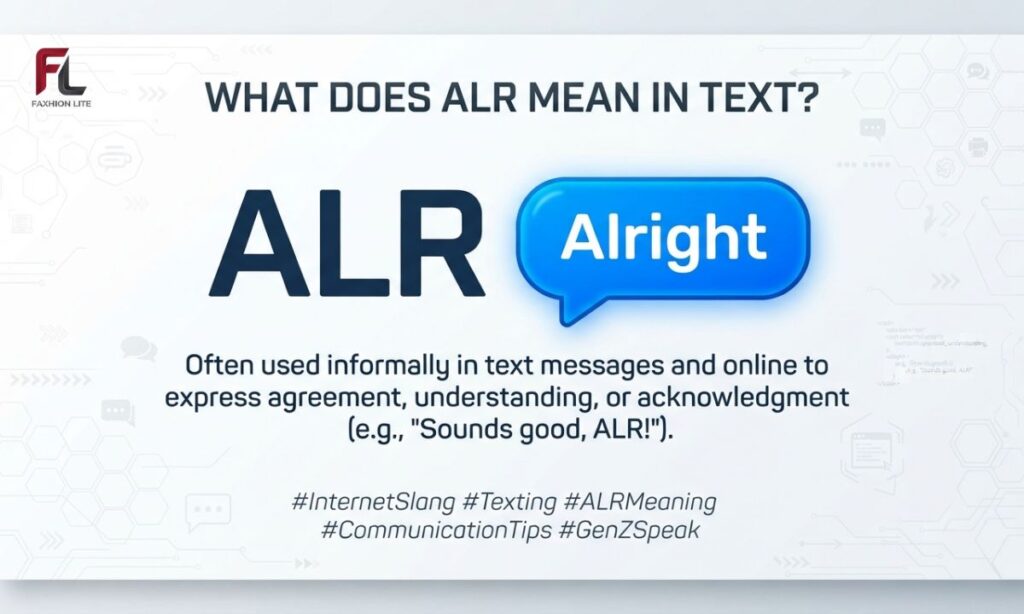
ALR stands for “alright.” People use it in texts, DMs, and comments as a faster way to say okay, understood, or fine. It’s one of the most common shorthand replies in casual digital conversation.
On its own, ALR carries no strong emotion. The feeling behind it comes from everything around it: punctuation, timing, and the relationship between the two people texting.
Where Did ALR Come From?
ALR grew out of early SMS culture, back when phones had character limits and typing on tiny keypads was slow. Shortening common words like “alright” to “alr” saved time and effort.
The habit stuck even after phones got easier to type on. It became part of a bigger pattern of texting shorthand, alongside terms like “u,” “rn,” and “idk.” As messaging moved to WhatsApp, Snapchat, and Instagram, ALR just came along for the ride.
The Tone Test: How to Tell What ALR Really Means
This is where most guides stop short. ALR isn’t one fixed tone. It shifts based on three things: punctuation, response time, and context. Here’s a quick way to read it.
| What You See | Likely Meaning |
| “alr” (no punctuation) | Neutral, casual agreement |
| “Alr!” | Enthusiastic, upbeat agreement |
| “alr.” (with a period) | Flat, possibly annoyed or done talking |
| “alr?” | Genuine question, confirming something |
| “alrr” or “alrighty” | Playful, lighthearted |
Timing matters just as much as punctuation. A fast “alr” after a fun message usually means genuine agreement. A slow “alr” after you asked a real question, especially one with emotional weight, often signals someone doesn’t want to keep talking right now.
Relationship context is the third piece. A close friend texting “alr” mid-joke is completely different from a partner texting “alr” after an argument. Same word, very different meaning.
ALR by Platform: Does It Change Meaning?
The core meaning of ALR stays the same everywhere, but the social weight behind it shifts depending on where you see it.
Texting and iMessage
This is usually one-on-one, so tone carries more weight. An “alr” here can feel more personal, and silence or a flat “alr” after a serious message tends to land harder.
Snapchat
Snapchat culture favors short, quick replies to keep streaks and chats moving. “Alr” here is often just efficient, not emotional. It’s the digital equivalent of a quick nod.
Group Chats and Gaming
In groups, ALR is almost always low-stakes. It confirms plans or acknowledges a message without needing a personal reply. Nobody reads much into it here.
Dating Apps
This is where tone matters most. A short “alr” in early dating conversation can read as low interest, while “alr, I’m down” paired with more text still shows engagement. Context around the word does the heavy lifting.
Real Text Examples With Explanation
| Message Exchange | What ALR Means Here |
| “Same time tomorrow?” → “alr” | Simple confirmation, no emotion attached |
| “I really needed to vent today” → “alr.” | Possibly distracted or uninterested, not fully engaged |
| “Guess who just got the job!!” → “ALRR let’s gooo” | Excited celebration, playful energy |
| “Can you grab milk on your way home?” → “alr” | Casual task acknowledgment |
| “We need to talk about last night” → “alr” (after a long pause) | Guarded or hesitant, possibly avoiding conflict |
Is ALR the Same as “Already”?
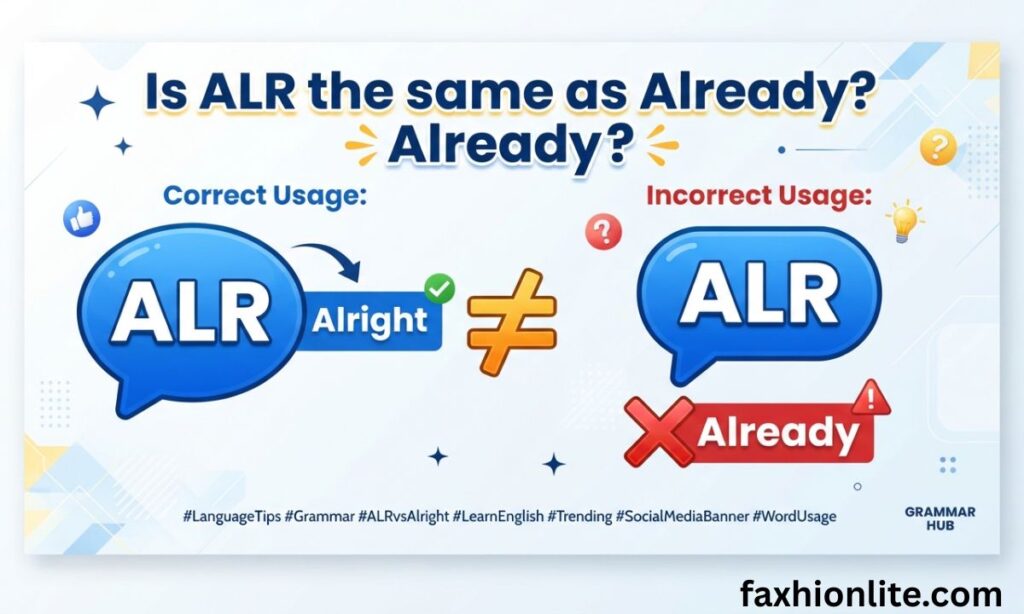
Rarely, but it does happen. Some people use ALR as shorthand for “already,” usually in casual or regional texting styles. The trick to telling them apart is sentence position.
If ALR shows up as a full reply on its own, it almost always means “alright.” If it shows up in the middle of a sentence, like “I did it alr,” it likely means “already.” When in doubt, “alright” is the safer read, since it’s far more common.
ALR vs Bet vs Ight vs K vs Okay
These terms all confirm something, but they don’t carry the same energy.
| Term | Formality Level | Typical Vibe |
| Okay | Most formal | Clear, straightforward |
| Understood | Very formal | Professional, distant |
| ALR | Middle ground | Casual but not cold |
| Ight | Informal | Relaxed, slightly urban slang |
| K | Least formal | Can read as dismissive or curt |
| Bet | Informal, energetic | Excited agreement |
ALR sits comfortably in the middle. It’s casual enough for everyday texting but doesn’t carry the coldness that a bare “k” often does.
Is ALR Rude or Dismissive?
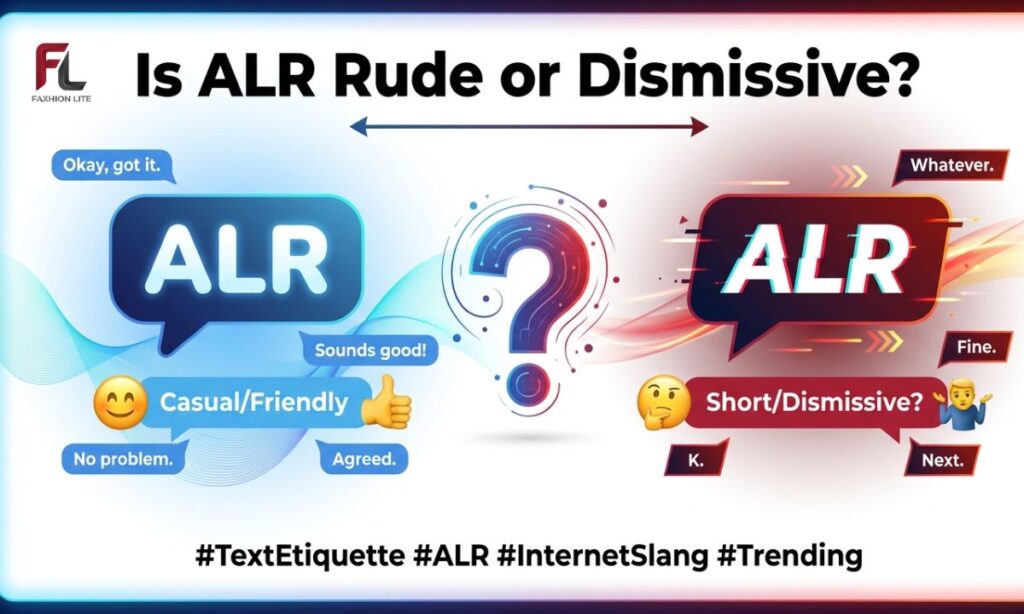
Not by default. ALR is neutral at its core. It only feels rude when it replaces a longer expected response, especially after something emotional or important was said.
If someone sends “alr” after you shared big news or a real concern, the flatness of the reply is what feels off, not the word itself. The abbreviation is just doing its job: being short.
What to Text Back When Someone Sends Just “ALR”
This is the part most guides skip entirely. If you get a flat “alr” and want to keep the conversation open, here are a few real options depending on your goal.
- To keep things light: Match the energy with something equally short, like “bet” or a quick follow-up question.
- To check if something’s wrong: Ask directly but gently, such as “you good?” or “everything okay?”
- To re-engage without pressure: Send something new and low-stakes instead of asking why they were short with you.
- To address it head-on: If it’s a pattern with someone close to you, a simple “I feel like you’re distracted, is now a bad time?” opens the door without accusing them.
Common Mistakes People Make With ALR
A few habits trip people up when it comes to ALR.
- Assuming it always means “already.” It almost never does.
- Using it in formal emails or professional messages, where it reads as unprofessional.
- Reading too much into a single “alr” without checking the full conversation for context clues.
- Writing it in schoolwork or exams, where full words are expected.
Should You Use ALR Yourself?
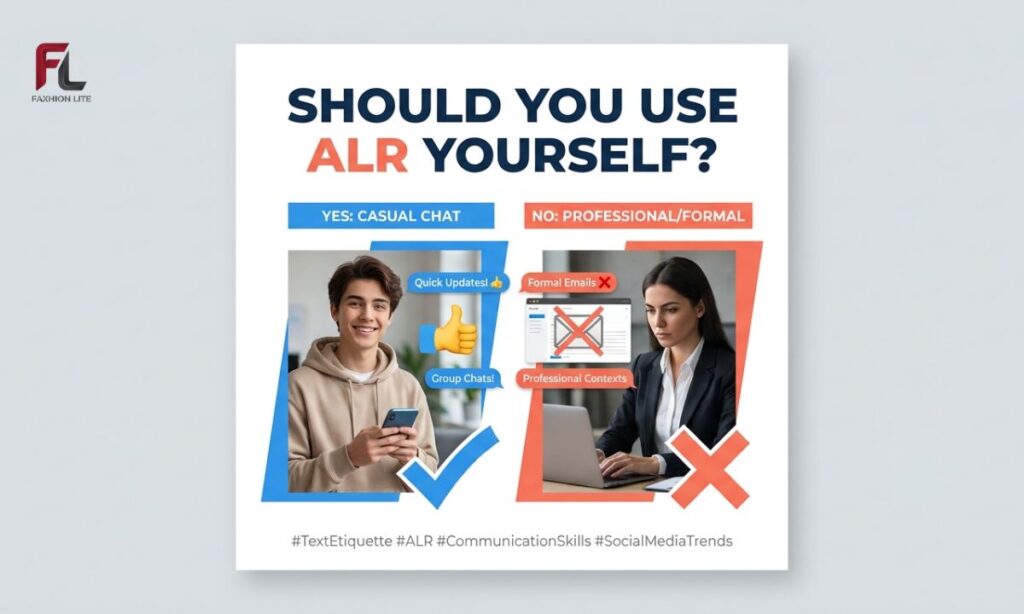
ALR works well in casual texting, DMs, and group chats. It fits naturally with friends, in gaming chats, and in relaxed conversations. It’s less suited for work emails, formal messages, or first impressions with someone you don’t know well yet.
If you’re unsure how casual a conversation is, a full “alright” is always a safe fallback until you get a feel for the other person’s texting style.
Frequently Asked Questions
What does ALR mean in text?
ALR is a short way of writing alright, showing quick agreement or casual acknowledgment in everyday texting.
Does ALR always mean already?
No, ALR usually means alright, not already. It rarely means already, only when placed mid sentence casually.
Is ALR rude or dismissive?
ALR is neutral by default. It can feel dismissive only after emotional messages or important conversations shared.
What is the difference between ALR and OK?
ALR feels more casual and friendly than OK, which sounds neutral, formal, and slightly more distant overall.
How should you reply to a flat ALR?
Match their energy, ask if something’s wrong, or send a light message to keep talking naturally again.
Final Thoughts
ALR meaning in text really does boil down to “alright,” but the word carries different weight depending on punctuation, timing, and who’s sending it.
Reading it well means paying attention to the whole conversation, not just the three letters themselves. Once you get a feel for that, you’ll never second-guess an “alr” again.