
YH Meaning in Text: What It Really Means and How to Use It
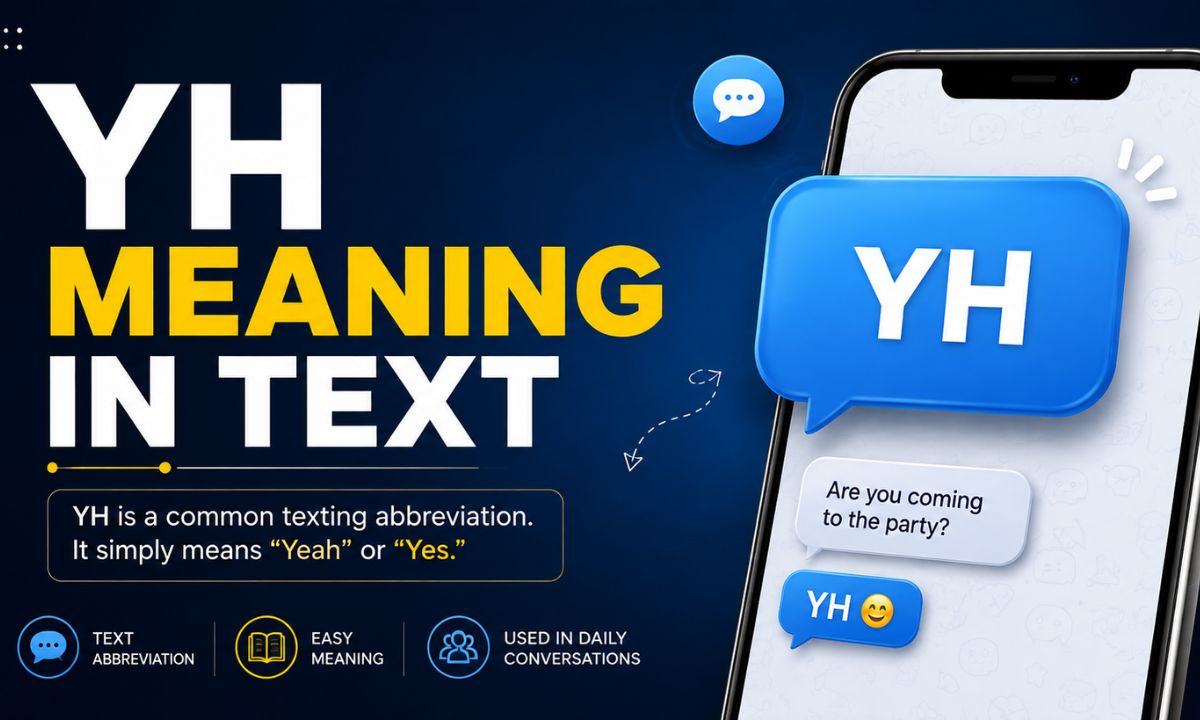
You get a message back and all it says is “YH” and now you’re wondering what that even means. YH meaning in text is simpler than it looks. It just means “yeah”, a quick casual way to agree or confirm something without typing the full word.
But those two letters can feel warm, cold, or somewhere in between depending on how it’s written, who sent it, and where the conversation is happening. This guide breaks it all down fast.
What Does YH Mean in Text?
YH means “yeah.” It’s a two-letter shortcut people use in texts, DMs, and online chats to agree with something, confirm a plan, or acknowledge a message without typing the full word.
Direct answer: YH stands for “yeah” and is used as a quick, casual way to say yes in digital conversations. It’s informal, brief, and widely understood across most messaging platforms.
That’s the simple version. The fuller picture is that those same two letters can sound warm, cold, enthusiastic, or completely disinterested depending on how they’re written and what’s happening in the conversation around them. That’s what this guide breaks down.
Why Do People Use YH Instead of Just Typing “Yeah”?
Speed is the main reason. Texting culture rewards short responses, especially in fast-moving conversations. YH saves two keystrokes and still gets the point across.
It also fits the rhythm of casual digital speech. In the same way people write “lol” instead of “haha” or “tbh” instead of “to be honest,” YH developed as a compressed version of a word people already said constantly. It wasn’t invented on purpose. It spread naturally as a habit.
The abbreviation has roots in early SMS culture, when texts were capped at 160 characters and phone keyboards were slow. People got aggressive about trimming words down to their bare bones. YH stuck around long after those limitations disappeared because it just felt natural.
How YH Is Used in Everyday Conversations
YH shows up in a few different situations, and each one carries its own feel.
Agreeing with someone:
“That movie was actually really good.” “yh it was”
Confirming plans:
“So you’re coming Saturday?” “yh, around 7”
Answering a quick yes/no question:
“Did you eat already?” “yh”
Responding in a group chat without making it a whole thing:
“Is everyone ready?” “yh” “yh same” “yh lmk”
In all of these, YH does the job efficiently. Nobody reads much into it. The problem only starts when YH appears in a context where more was expected.
Does YH Mean the Same Thing on Every Platform?
Not quite. The meaning stays the same, but how it feels shifts depending on where you see it.
- Snapchat: Fast-paced and low-stakes by design. A “yh” reply here is completely normal and carries no negative signal. Nobody expects long responses on Snap.
- WhatsApp: Common in both one-on-one and group chats. YH works here as simple agreement. International users are comfortable with it, especially in the UK where it’s especially widespread.
- Instagram DMs: Depends on the relationship. Between close friends, it’s casual shorthand. Between newer connections, a lone “yh” can feel a little flat.
- TikTok comments: Nobody’s writing essays in comment sections. YH is used to co-sign an opinion or say “same” without adding noise. Completely normal.
- Discord and gaming chats: Pure efficiency. Emotional tone is basically irrelevant here. Sometimes YH is also shorthand for “you here?” when checking if someone is online or active in a game.
- iMessage / standard texting: This is where “yh” gets misread most often. One-on-one texts feel more personal, so a two-letter reply to something heartfelt or detailed can land wrong even when it wasn’t meant to.
Is YH Rude?
Not inherently. But context makes a difference.
A lot of people wonder about this because a two-letter reply can feel dismissive, especially when someone expected a fuller response. The issue isn’t the word itself. It’s the mismatch between what was sent and how little came back.
Here’s a simple way to think about it:
| Situation | How It Reads |
| “You free later?” gets “yh” back | Totally normal |
| Someone shares something personal, gets “yh” back | Feels cold |
| Group chat response to logistics | Fine |
| Reply to a parent’s important question | Might come off as careless |
The biggest risk is punctuation. A “yh” with nothing else attached feels more closed-off than “yh lol” or “yh for sure.” One extra word or emoji changes the entire tone.
Is YH Flirty?

By itself, no. YH doesn’t carry any romantic meaning. It’s agreement, not affection.
That said, in a flirty conversation, someone might use “yh” the same way they’d use any short, casual reply to keep things breezy and low-pressure.
The flirting isn’t coming from the word. It’s coming from everything else around it. If someone’s been texting you warmly all conversation and then sends “yh,” that’s just them agreeing with you. Don’t overread it.
The YH Variants That Actually Change the Meaning
Most guides treat YH as one fixed thing. It isn’t. The way it’s written shifts the tone noticeably.
| Variant | Tone | What It Signals |
| yh | Neutral, casual | Standard agreement. The default. |
| YH | Slightly emphatic | Genuine stress on “yes,” or mild sarcasm |
| yhh / yhhh | Warm, expressive | Friendly and engaged |
| yh. | Flat, final | Coldest version. Reads as clipped. |
| yhyh | Dismissive | Half-listening or wants to move on |
| yh fr | Validating | “Yeah, for real.” More engaged than plain yh |
YH vs. Yeah vs. Yep vs. Yup
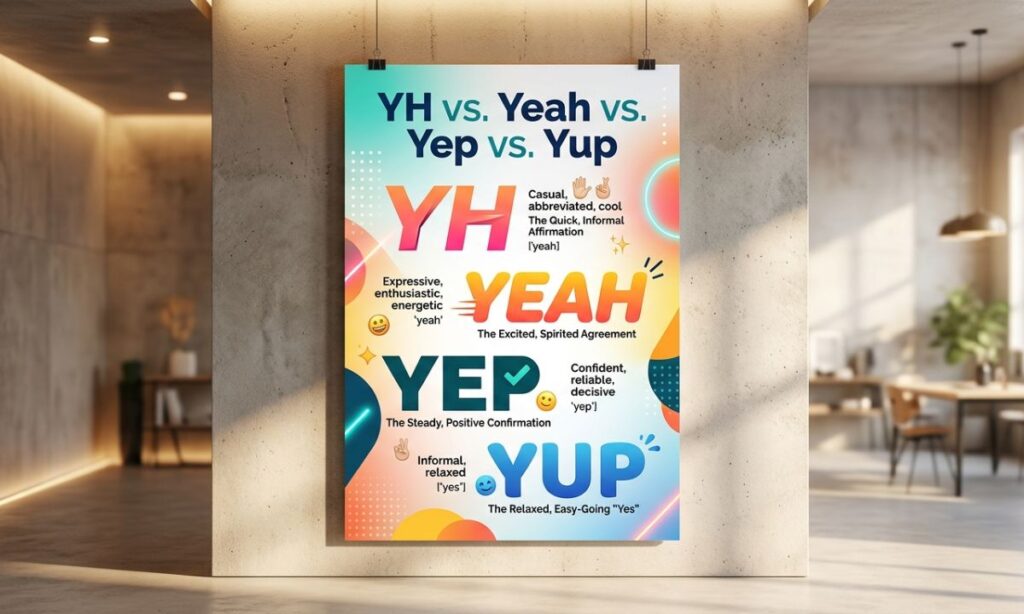
They all mean yes, but they don’t all land the same way.
| Word | Tone | Best Used When |
| Yes | Formal, clear | Professional or serious contexts |
| Yeah | Warm, natural | Most casual conversations |
| Yep | Slightly playful, upbeat | Quick affirmations between friends |
| Yup | Relaxed, a bit more personality | Informal chats |
| Yh | Minimal, fast | High-speed or low-stakes exchanges |
YH sits at the bottom of the emotional-investment scale. That’s not a bad thing. Sometimes minimal is exactly right.
When Should You Use YH? (And When Should You Avoid It?)
Use it when:
- The conversation is casual and fast-moving
- You’re in a group chat and just need to confirm
- You’re texting close friends who already know your communication style
- A quick yes is genuinely all that’s needed
Avoid it when:
- Someone shared something emotional or vulnerable
- You’re texting a parent, boss, or anyone who might read brevity as disrespect
- The conversation deserves a fuller response and you know it
- You’re on a work platform or in any professional context
The general rule: if the other person wrote three sentences, matching with two letters is probably not the move.
How to Reply When Someone Sends You YH
Depends on what you need from the conversation.
- If everything is fine: Match their energy. Reply casually and keep the conversation going naturally.
- If the conversation feels like it’s slowing down: Break the pattern. Ask a follow-up question or add something new. “yh totally — did you see what happened after?” brings the energy back without making it weird.
- If you’re unsure whether they’re annoyed: Don’t read into a single message. Look at the pattern across the whole conversation. One “yh” doesn’t mean much. Several in a row with no follow-up might.
- If the tone felt off: Address it directly if it matters to you. Asking “everything good?” is always cleaner than silently wondering what “yh” meant.
Frequently Asked Questions
What does YH mean in text?
YH means “yeah.” It’s a casual, fast way to agree or confirm something in a chat or text message.
Is YH rude?
Not on its own. It can feel dismissive if the situation called for more, but most of the time it’s just a quick, informal yes.
What’s the difference between YH and YHYH?
YH is simple agreement. YHYH (“yeah yeah”) often signals someone who’s only half-engaged or wants to move past a topic. Context determines whether it’s friendly or dismissive.
Can adults use YH?
Yes, though it’s most common among Gen Z and younger millennials. Anyone comfortable with casual texting can use it in the right context.
Is YH the same as yes?
Same meaning, different register. “Yes” is formal; YH is informal. You wouldn’t put YH in a work email, but you’d use it all day in a group chat with friends.
Does capitalization change what YH means?
Slightly. Lowercase “yh” is neutral and casual. Uppercase “YH” can feel more emphatic or occasionally sarcastic depending on what was said before it.
Conclusion
YH is just two letters, but now you know it carries a lot more than a simple “yes.” Whether it sounds casual, cold, or enthusiastic depends on how it’s written, who’s sending it, and what platform you’re on.
Once you understand the context behind it, you’ll never second-guess a “yh” in your chat again. Use it when the moment calls for it, skip it when it doesn’t, and you’re already ahead of most people texting today.