83+ Nature Symbols That Carry Powerful Energy And Transform Your Perspective
Nature symbols are images and objects from the natural world, like trees, water, the sun, and animals, that represent deeper ideas such as growth, strength, renewal, and peace, and people have relied on them for thousands of years to express feelings that plain words can’t quite capture.
If you’ve ever felt an unexplainable sense of calm looking at the ocean, or sensed that a single tree standing alone in a field means something more than just “a tree,” you’ve already experienced the pull of nature symbolism firsthand. This guide covers over 83 nature symbols and their meanings, from ancient spiritual signs to modern nature emojis, so you can find the ones that genuinely resonate with you.
What Are Nature Symbols?
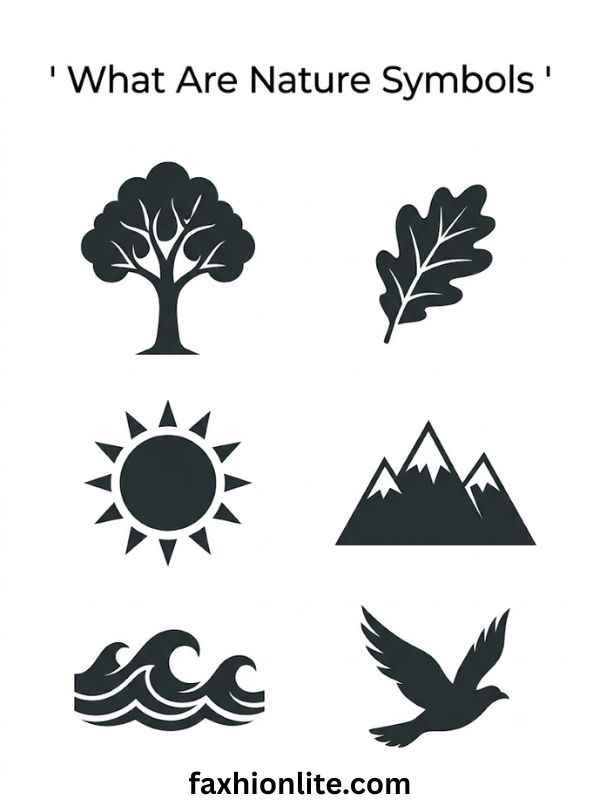
Nature symbols are visual or written representations of natural elements used to convey emotions, values, or spiritual ideas. They act as a shortcut for communication, letting one small image carry a big meaning.
Think about how a single dove instantly signals peace, or how a rising sun represents new beginnings without anyone needing to explain it. That’s the whole point of a symbol. It compresses a complex idea into something you can recognize at a glance. Nature symbols pull from the physical world, plants, weather, animals, landscapes, and turn them into carriers of meaning that go far beyond their literal form.
You’ll find nature symbols in religious texts, folklore, national flags, tattoos, and everyday conversation. A “rock” isn’t just a rock when someone calls their friend “solid as a rock.” A “storm” isn’t just weather when it’s used to describe someone’s temper. These comparisons work because humans have used natural symbols as a shared language for practically all of recorded history.
Nature Symbols And Their Hidden Meanings
Nature symbols carry hidden meanings that shift depending on culture, context, and how they’re used. A single symbol like water can mean cleansing in one setting and emotional overwhelm in another.
This section breaks down the many ways people search for, use, and interpret nature symbols today, from emoji combos to hand drawn sketches.
Nature Symbols Meaning
The meaning behind nature symbols usually connects to something humans experience but can’t always name directly. The sun often represents energy, clarity, and life force. The moon leans toward intuition, emotion, and cycles. Mountains suggest stability and the idea of overcoming a challenge.
What makes these meanings powerful is that they’re rooted in real, observable patterns. The sun does provide life and energy, literally. The moon does control tides and cycles. Mountains really do take strength to climb. Symbolism isn’t random; it grows out of lived experience with the natural world.
Interpretation also depends heavily on personal association. A tree might mean “family roots” to one person and “quiet strength” to another, based on their own memories and experiences. This is why nature symbols feel personal even though they’re shared across entire cultures.
Nature Symbols Emoji
Nature emojis are a quick, modern way to express symbolic meaning without typing a full sentence. A few common ones and what they typically represent:
| Emoji | Common Meaning |
| 🌳 | Growth, stability, family |
| 🌊 | Emotion, change, flow |
| ☀️ | Energy, positivity, clarity |
| 🌙 | Intuition, rest, cycles |
| 🍃 | Freshness, simplicity |
| ⛰️ | Strength, achievement |
These emojis show up constantly in texts and captions because they let people add emotional texture without sounding dramatic. A simple 🌊 at the end of a message can say “things are shifting” without needing an explanation.
Emoji use has also become its own small language on social platforms. Younger USA audiences especially tend to layer emojis to build a mood rather than state a fact directly, which is part of why nature emojis remain some of the most used symbols in daily digital communication.
Beautiful Nature Symbols
Some nature symbols are prized simply for how visually striking they are, separate from their deeper meaning. The lotus flower is one of the most popular examples, admired for growing beautifully out of muddy water. Feathers, mandalas built from leaf patterns, and spiral shells also fall into this “beautiful first, meaningful second” category.
Aesthetic appeal matters a lot in how these symbols spread. People are drawn to visually pleasing designs before they even learn what the symbol represents, and then the meaning deepens their attachment to it. This is common with home decor pieces like sun and moon wall hangings or botanical line art.
Beauty and symbolism reinforce each other. A gorgeous sunset photo means more to people because sunsets already symbolize closure and peace. The visual and emotional layers work together, which is part of why nature imagery dominates platforms built around aesthetics, like Pinterest and Instagram.
Nature Symbol Text
Nature symbol text refers to small text characters people use to represent natural elements without needing an actual image. Characters like ☘ ✿ ❀ ⛅ and ❄ are common examples used in usernames, bios, or stylized captions.
These text symbols became popular because they work across almost every platform and font without loading an image. They’re lightweight, universally readable, and add a decorative touch to plain text.
People often use them to soften a message or add personality. A username like “Sage ❀” reads differently than just “Sage,” carrying a hint of the natural, calming quality tied to flowers.
Nature Emoji For Instagram
For Instagram captions and bios, certain nature emojis consistently perform well because they pair naturally with lifestyle, wellness, and travel content. 🌿🌸🌅🍂🌌 are frequent favorites because they suggest calm, beauty, and authenticity, qualities that tend to boost engagement.
Captions built around a seasonal theme, like autumn leaves 🍂 or spring blossoms 🌸, also tend to resonate because they tie into something the audience is already noticing in their own environment. Seasonal relevance boosts relatability.
Bio use is slightly different from captions. In bios, people often pick one or two emojis that represent their personality or values long term, like 🌊 for someone who identifies with calm energy, or 🌵 for someone who values resilience.
Nature Symbols And Meanings
Going a bit deeper than basic definitions, nature symbols and their meanings often connect directly to human emotional states. Rivers symbolize change because they never stop moving. Owls symbolize wisdom because of their association with quiet observation. Storms symbolize inner turmoil because they mirror emotional intensity.
This emotional mapping is not accidental. Humans have always used the natural world to make sense of internal experiences that are otherwise abstract. Grief becomes “a storm passing.” Growth becomes “putting down roots.” Hope becomes “a new dawn.”
This layered meaning is exactly why nature symbols remain useful in therapy, art, and personal reflection. They give people a vocabulary for feelings that plain language sometimes can’t fully capture.
Nature Emoji Combos
Nature emoji combos pair two or more symbols to tell a small story in a single glance. 🌊🌙 often signals calm nighttime reflection. 🌳🍄 suggests earthy, grounded growth. 🔥🌵 can represent resilience through hardship.
Combos work because they layer meaning the way a sentence layers words. One emoji sets a tone; the second sharpens it. This lets people express nuance quickly, which matters a lot in fast-moving digital conversations.
People often develop personal combos that become part of their identity online, using the same pairing repeatedly until followers associate it with them specifically.
Nature Symbol Drawing
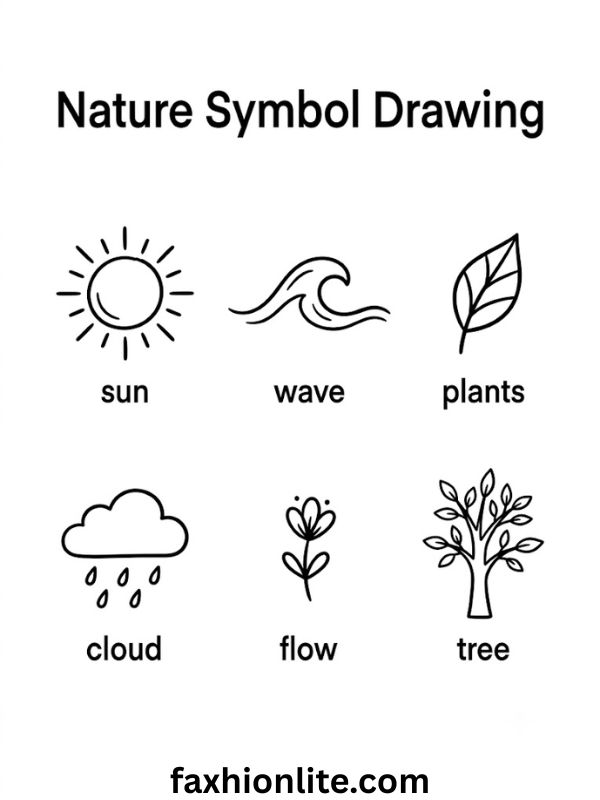
For beginners interested in nature symbol drawing, some of the easiest and most rewarding symbols to sketch include a single leaf, a wave line, sun rays, and a crescent moon. These shapes are simple enough for anyone to draw but still carry strong symbolic weight.
Journaling communities, especially bullet journal enthusiasts, use hand drawn nature symbols constantly to mark moods, seasons, or personal milestones. A small drawn sun next to a journal entry might indicate a good day, while a drawn cloud might mark a harder one.
Drawing these symbols by hand, rather than using a digital emoji, tends to create a stronger personal connection. The physical act of sketching something meaningful reinforces the emotional association behind it.
Symbols Of Nature
Symbols of nature broadly include anything visual or conceptual borrowed from the natural world to represent an idea. This covers everything already discussed, trees, water, animals, weather, along with less obvious ones like stones, seeds, and roots.
What ties them together is that each one reflects something observable in the physical world that maps onto a human experience. Seeds represent potential. Stones represent permanence. Roots represent origin and connection.
This broad category is useful as a starting point for anyone exploring nature symbolism for the first time, since it opens the door to dozens of smaller, more specific symbols worth exploring individually.
An Original Symbol For Nature
Interest in creating an original symbol for nature has grown alongside the modern environmental movement. Some designers and activists have proposed new icons meant to represent ecological balance or sustainability, separate from older, more traditional symbols.
These newer symbols often combine elements, like a leaf shaped like a heart, or a globe wrapped in vines, to represent a modern relationship with the planet that blends care, urgency, and hope.
While no single new symbol has reached the universal recognition of something like the recycling logo, this space continues to grow as more people look for ways to visually represent environmental values in branding, art, and personal expression.
Nature Symbolism Examples
Real world nature symbolism examples include the owl representing wisdom, the phoenix representing rebirth, the river representing constant change, and the mountain representing overcoming adversity.
Another strong example is the butterfly, which represents transformation because of its dramatic physical change from caterpillar to winged insect. This example is used so often in psychology and personal growth spaces that it has become almost shorthand for the concept of positive change.
These examples matter because they show symbolism isn’t abstract theory, it’s built on things people can directly observe and relate their own lives to.
Symbols For Nature
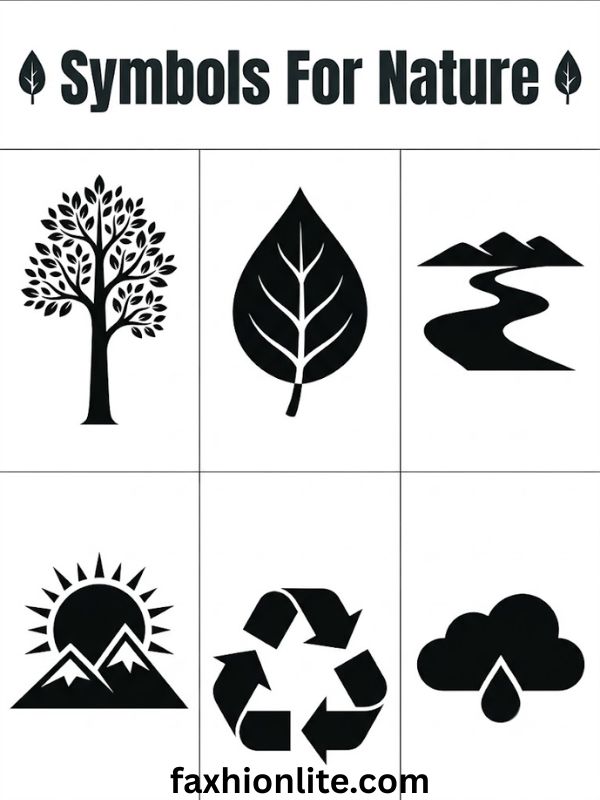
When people search for symbols for nature, they’re often looking for practical use cases, like logos, designs, or icons for branding, especially in eco-friendly or outdoor focused businesses.
Common choices include a simple tree outline, a leaf, a mountain range silhouette, or a wave. These are popular precisely because they’re instantly recognizable and require no explanation.
Brands lean on these symbols because they build trust quickly. A logo with a leaf implies environmental responsibility before a customer even reads the company description.
Symbols That Represent Nature
The most universally recognized symbols that represent nature include the globe, a tree, a water droplet, and a leaf. These four show up repeatedly across cultures, industries, and design systems.
Their universal recognition comes from simplicity. Each one is easy to draw, easy to recognize at a small size, and directly tied to something everyone has personally experienced, whether that’s holding a leaf or seeing a globe in a classroom.
This is why these particular symbols dominate places like environmental campaigns, recycling programs, and sustainability branding across the USA and beyond.
Things That Represent Nature
Beyond specific symbols, there are broader things that represent nature in everyday life, including natural colors like green and blue, sounds like birdsong or rainfall, and textures like wood grain or stone.
These sensory representations matter because they engage more than just sight. Sound and texture create a fuller emotional experience, which is part of why nature sounds are so popular in meditation apps and sleep aids.
Color psychology also plays a role here. Green is widely associated with calm and balance, while blue is tied to peace and depth, both directly borrowed from the natural world.
Symbols In Nature
Interestingly, nature itself contains symbols in nature that exist without any human interference. The spiral shape found in seashells and the center of sunflowers follows a mathematical pattern called the Fibonacci sequence, which appears repeatedly throughout the natural world.
This is one of those lesser known facts that most competing articles skip over. The presence of consistent mathematical patterns in nature, like spirals and symmetry, has led many scientists and philosophers to view nature itself as inherently symbolic, carrying order and meaning independent of human interpretation.
Recognizing these natural patterns adds a layer of wonder to symbolism, since it shows that meaning in nature isn’t only something humans project onto it. Some of it appears to already be built in.
Spiritual And Ancient Nature Symbolism
Spiritual nature symbolism connects natural elements to concepts like the soul, the afterlife, and universal energy. Ancient cultures relied heavily on nature to explain what they couldn’t yet understand scientifically.
This section explores how nature symbols have carried deep spiritual weight across history and continue to shape modern spiritual practice.
What Represents Nature?
When people ask what represents nature, the honest answer is almost anything observable in the physical world, plants, animals, weather patterns, and geological formations. But certain elements consistently rise to the top across cultures: earth, water, fire, air, and later additions like metal and wood in some traditions.
These core elements represent nature because they were considered the fundamental building blocks of existence in ancient philosophy, long before modern chemistry explained the actual composition of matter.
Even today, these same elements show up constantly in spiritual practice, astrology, and personal identity, like someone describing themselves as having a “fiery” personality or a “grounded, earthy” nature.
Symbols Of Connection In Nature
Symbols of connection highlight how everything in the natural world is linked. Roots spreading underground, spider webs, and interlocking tree branches all represent unity and interdependence.
Indigenous traditions across the world, including many Native American communities, have long emphasized this interconnectedness, teaching that no part of nature exists in isolation. This worldview has influenced modern ecological thinking significantly.
Circles are another strong symbol of connection, representing continuity without a clear beginning or end, often used to describe the cycle of life itself.
Symbols Of Transformation In Nature
The butterfly remains the most iconic symbol of transformation, but it’s far from the only one. Seasonal change, from bare winter trees to full spring bloom, represents transformation on a larger scale. The caterpillar to cocoon to butterfly process specifically represents personal growth through difficult, uncomfortable stages.
Fire also carries transformation symbolism, since it destroys but also clears space for new growth, something seen literally in forest ecosystems where certain plants only regenerate after a fire.
This theme of destruction followed by renewal appears across nearly every major mythology and religion, reinforcing how deeply humans relate personal change to patterns already happening in the natural world.
12 Elements Of Nature Symbols
Different traditions expand the classic four elements into a broader list. A commonly referenced set of 12 elements of nature symbols includes:
- Earth
- Water
- Fire
- Air
- Wood
- Metal
- Sun
- Moon
- Stars
- Mountains
- Forests
- Oceans
This expanded list reflects how various cultures, especially East Asian traditions like Chinese Five Element theory, added categories beyond the basic four to capture more of the natural world’s complexity.
Copy Paste Nature Symbols
For quick use, here are simple copy paste nature symbols people commonly search for:
These are useful for bios, captions, journals, or messages where typing an emoji isn’t convenient through a standard keyboard shortcut.
Cute Nature Symbols
Cute nature symbols lean toward smaller, softer imagery like mushrooms 🍄, ladybugs 🐞, tiny flowers, and baby animals. These tend to appeal especially to younger audiences and anyone drawn to whimsical, lighthearted design.
Their appeal comes from scale and softness. A tiny mushroom feels approachable and non-threatening compared to something larger like a mountain, making these symbols popular in cute, minimalist design styles.
Ancient Nature Symbols
Ancient nature symbols include spirals, sun wheels, and the Tree of Life, all appearing across multiple ancient civilizations independently. The spiral, in particular, shows up in Celtic carvings, Native American petroglyphs, and Neolithic European art, suggesting it held near universal meaning tied to growth, energy, or the cycle of life.
These symbols have survived thousands of years because they represent ideas that never stop being relevant, birth, death, growth, and continuity.
Mother Nature Symbols
Mother Nature herself is often represented through the image of a woman surrounded by plants, animals, and natural landscapes, tying back to ancient fertility and earth goddess figures like Gaia in Greek mythology.
This symbolism frames nature as nurturing, life giving, and powerful, reflecting humanity’s long standing dependence on the earth for survival.
Spiritual Nature Symbols
Spiritual nature symbols are widely used in meditation and energy work, including the lotus for enlightenment, the tree for grounding, and the sun for clarity and life force.
Many meditation practices specifically incorporate natural imagery, asking practitioners to visualize roots growing from their feet into the earth, directly borrowing tree symbolism to represent stability.
Nature Symbols Of Love
Nature symbols of love include intertwined tree branches, roses, and doves, all representing connection, affection, and lasting bonds.
Intertwined branches specifically symbolize two lives growing together over time, a metaphor commonly used in wedding ceremonies and vow writing across the USA.
All Elements Of Nature Symbols
Bringing it together, all elements of nature symbols span physical elements like earth and water, celestial elements like the sun and moon, and living elements like animals and plants, each contributing its own layer of meaning to the larger system of natural symbolism.
Japanese Nature Symbols
Japanese nature symbols include cherry blossoms representing the beauty of life’s impermanence, koi fish representing perseverance, and bamboo representing flexibility and strength.
Cherry blossoms specifically tie to the concept of “mono no aware,” a Japanese term describing bittersweet awareness that beauty is temporary.
Celtic Nature Symbols
Celtic nature symbols include the Tree of Life, representing balance between the earthly and spiritual worlds, and the triskele, a triple spiral representing life, death, and rebirth.
These symbols remain popular in modern jewelry and tattoo design across the USA, often chosen for their deep historical roots and visual complexity.
Aesthetic Nature Symbols
Currently trending aesthetic nature symbols include muted botanical line art, moon phase illustrations, and pressed flower imagery, all popular in home decor and social media content.
Natural Symbols That Reflect Wisdom And Life
Nature symbols reflect wisdom and life by mirroring patterns of growth, endurance, and change that humans experience themselves. Trees that survive storms and animals that adapt to their environment become natural teachers.
What Does Nature Symbolize?
At its core, nature symbolizes life, growth, balance, and the passage of time. Nearly every natural symbol ties back to one of these larger themes in some form.
Symbols Of Wisdom In Nature
The owl remains the top symbol of wisdom, largely due to its quiet, observant behavior and nighttime presence, which historically was associated with insight beyond ordinary sight. Old growth trees also symbolize wisdom, representing knowledge accumulated slowly over long periods of time.
What Symbolizes Nature?
Beyond specific objects, colors and seasons also symbolize nature as a whole, green for growth, blue for calm, and the four seasons representing the full cycle of life from birth to renewal.
Symbolism Of Nature
The broader symbolism of nature ultimately reflects humanity’s relationship with the world it depends on, one built on respect, observation, and personal meaning making.
Deep Symbolic Meaning
Nature symbols carry meaning on multiple levels at once, spiritual, psychological, and cultural. Understanding all three gives a fuller picture of why these symbols hold so much power.
Spiritual Level
On a spiritual level, nature symbols often represent connection to something larger than the self, whether that’s called God, the universe, or simply “energy.” Many faiths, from Hinduism to Indigenous spiritual traditions, use natural imagery to describe divine presence.
Psychological Level
Psychologist Carl Jung proposed that certain natural symbols, like the sun, water, and trees, function as universal archetypes shared across cultures because they emerge from what he called the collective unconscious. This theory helps explain why nature symbolism feels instinctively familiar even to people who’ve never studied it.
Cultural Level
On a cultural level, the same symbol can carry different meanings depending on region and tradition. A dragon represents danger in much of Western folklore but represents power and good fortune in Chinese culture, showing how context completely reshapes symbolic meaning.
Types / Variations of Nature Symbols
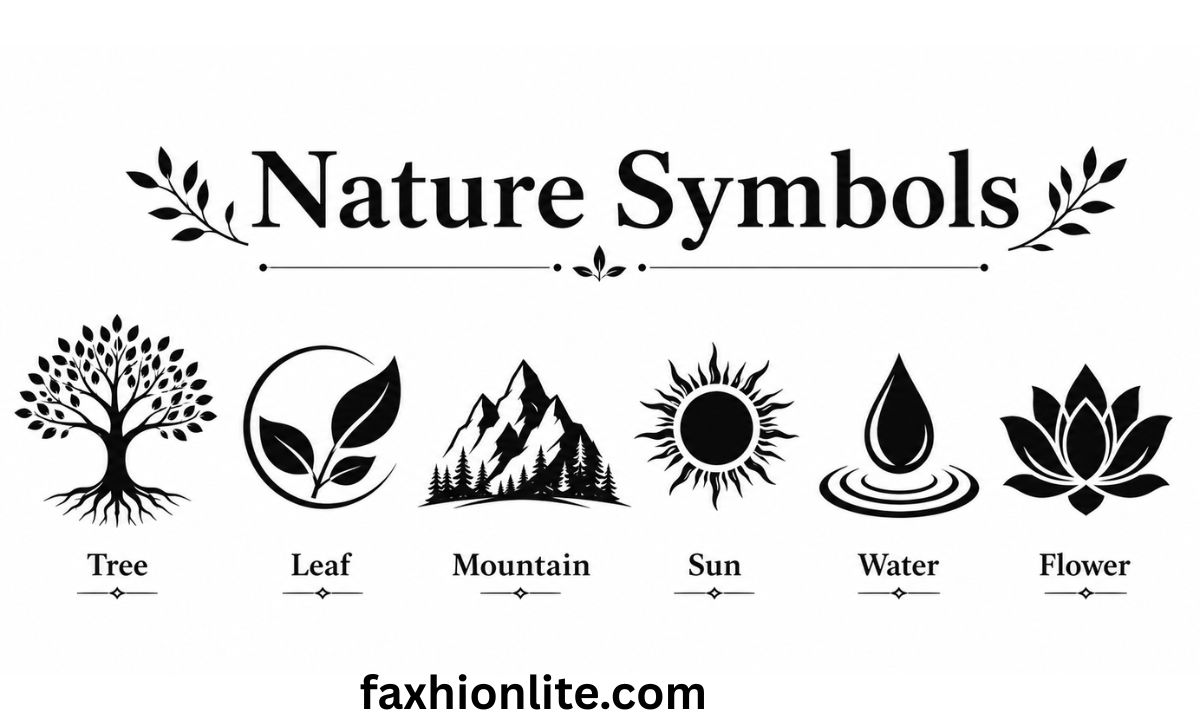
Tree
The tree represents growth, family roots, and resilience, most famously through the Tree of Life concept found in cultures worldwide.
Water
Water represents emotion, flow, and renewal, often used to describe cleansing or major life change.
Sun
The sun represents energy, positivity, and life force, tied to nearly every mythology as a symbol of power and vitality.
Moon
The moon represents intuition, femininity, and cycles, closely tied to emotional rhythm and reflection.
Mountain
Mountains represent stability, challenge, and achievement, often used to describe overcoming a difficult period.
Animals
Animal symbolism varies widely: owls for wisdom, wolves for loyalty, butterflies for transformation, and eagles for freedom.
Nature Symbols Across Cultures
Nature symbols across cultures share common themes but express them through different imagery based on regional history and belief systems.
Ancient Egypt
Ancient Egyptian culture used the lotus to represent rebirth and the scarab beetle to represent renewal, both tied closely to their beliefs about the afterlife.
Chinese Culture
Chinese tradition features the dragon as a symbol of power and good fortune, alongside bamboo, representing flexibility and resilience.
Native American Traditions
Many Native American traditions use the eagle feather to represent honor and connection to the spirit world, along with animal totems representing personal or tribal identity.
Hindu Culture
In Hindu culture, the lotus represents purity and spiritual awakening, often shown blooming from murky water to represent enlightenment despite difficult surroundings.
Celtic Traditions
Celtic traditions emphasize the Tree of Life and spiral patterns, representing balance, continuity, and the connection between physical and spiritual realms.
Nature Symbols in Art, Movies & Pop Culture
Nature symbolism appears constantly in art, film, and pop culture, often used to represent a character’s emotional journey or a story’s larger theme. Directors and artists frequently use storms to represent conflict, sunrises to represent hope, and wilting flowers to represent loss.
This use of symbolism isn’t accidental. Visual storytelling relies on shared cultural understanding, and nature symbols provide an instantly readable emotional shorthand audiences don’t need explained. A film showing a character walking through a barren winter landscape immediately signals isolation or hardship without a single line of dialogue.
Music and album art follow similar patterns, frequently using natural imagery like oceans, mountains, or wildlife to represent themes of freedom, struggle, or transformation. This consistent use across mediums reinforces just how deeply nature symbolism is embedded in modern storytelling.
Spiritual & Dream Meaning of Nature Symbols
In dreams, nature symbols often represent the dreamer’s emotional or spiritual state rather than literal events. Water in a dream frequently points to emotional processing, while trees can represent personal growth or stability.
Dream interpretation traditions, found in psychology as well as folklore, generally agree that nature imagery in dreams reflects the subconscious mind working through real life experiences. A stormy dream might follow a stressful week, while a dream involving calm water might follow a period of emotional resolution.
Many people track recurring nature symbols in dream journals specifically because patterns tend to emerge over time, offering insight into ongoing emotional themes they may not be consciously aware of during waking life.
Positive vs Negative Meaning
The same nature symbol can carry both positive and negative meaning depending on context. Fire can represent passion or destruction. Water can represent calm or emotional overwhelm. Storms can represent necessary change or chaos.
This dual nature is part of what makes symbolism so useful and so complex. A single image can hold contradictory truths at once, much like real human emotions often do. Understanding this nuance prevents oversimplified interpretations that miss the fuller picture a symbol is trying to communicate.
Recognizing both sides also helps when applying nature symbolism personally, whether in journaling, art, or spiritual practice, since it encourages a more balanced, honest reflection rather than assuming every symbol only carries one fixed meaning.
Why Humans Are Attracted to Nature Symbols
Humans are drawn to nature symbols because of an instinctive connection to the natural world that predates modern civilization. This concept, known as biophilia, suggests humans are wired to seek out and find comfort in natural patterns and imagery.
This attraction shows up in measurable ways. Studies on biophilic design have found that incorporating natural elements into workspaces and homes can improve focus and reduce stress. This is part of why nature symbols aren’t just decorative, they serve a real psychological function, offering a sense of grounding in an increasingly digital, fast paced world.
Nature symbols also offer something modern life often lacks: a slower, more permanent kind of meaning. A mountain has stood for thousands of years. A tree can outlive generations. Anchoring personal meaning to something this enduring offers comfort that fast changing trends simply can’t replicate.
Conclusion
Nature symbols connect people to something bigger than themselves, whether that’s a spiritual belief, an emotional truth, or simply a beautiful image that feels right. From ancient civilizations carving spirals into stone to modern Instagram bios filled with leaf emojis, the underlying instinct hasn’t changed much at all. Humans have always looked to the natural world to make sense of their own experiences.
Whether you’re drawn to the deep, ancient meaning of the Tree of Life or you just like the way a wave emoji looks in your bio, nature symbols offer a flexible, personal way to express something true about who you are. Take some time to notice which symbols you’re naturally drawn to. That pull often says more about you than you might expect.
Frequently Asked Questions
What is the most powerful nature symbol?
The tree is widely considered one of the most powerful nature symbols because it represents growth, stability, and connection across nearly every culture in history.
What symbol represents nature as a whole?
The globe and the tree are the two most universally recognized symbols representing nature as a whole.
What are the 5 elements of nature symbols?
The five classic elements are earth, water, fire, air, and in many traditions, spirit or ether.
What does a tree symbolize spiritually?
Spiritually, a tree often represents grounding, growth, and the connection between the physical and spiritual worlds.
Are nature symbols the same in every culture?
No, while many nature symbols share similar core themes, their specific meaning often changes depending on cultural and historical context.