
MYF Meaning in Text: What It Really Means and How to Use It
MYF meaning in text is one of those abbreviations that looks simple but actually shifts meaning based on who sent it.The most common meaning is “Miss Your Face,” used when someone misses seeing you but wants to keep it casual.
It is softer than saying “I miss you” and works perfectly in quick, low-pressure messages between close people.The second meaning is “My Fault,” a fast accountability phrase used the same way people say “my bad.”
You will see this version constantly in gaming chats, TikTok comments, and group conversations after a mistake.Both meanings are harmless, friendly, and completely normal in everyday texting.
What Does MYF Mean in Text?
MYF meaning in text is not fixed. The same three letters can signal affection, a quick apology, or a sharp brush-off, depending entirely on who sent it and where.
Direct answer: MYF most commonly means “Miss Your Face” in personal texts and DMs, and “My Fault” in gaming chats, TikTok comments, and group conversations. A third meaning, “Mind Your F***ing [Business],” shows up when someone is shutting down a conversation or joking about being left alone.
If you got a MYF and you’re not sure which meaning fits, keep reading. By the end of this guide, you’ll be able to decode it in seconds every time.
The Three Main Meanings of MYF
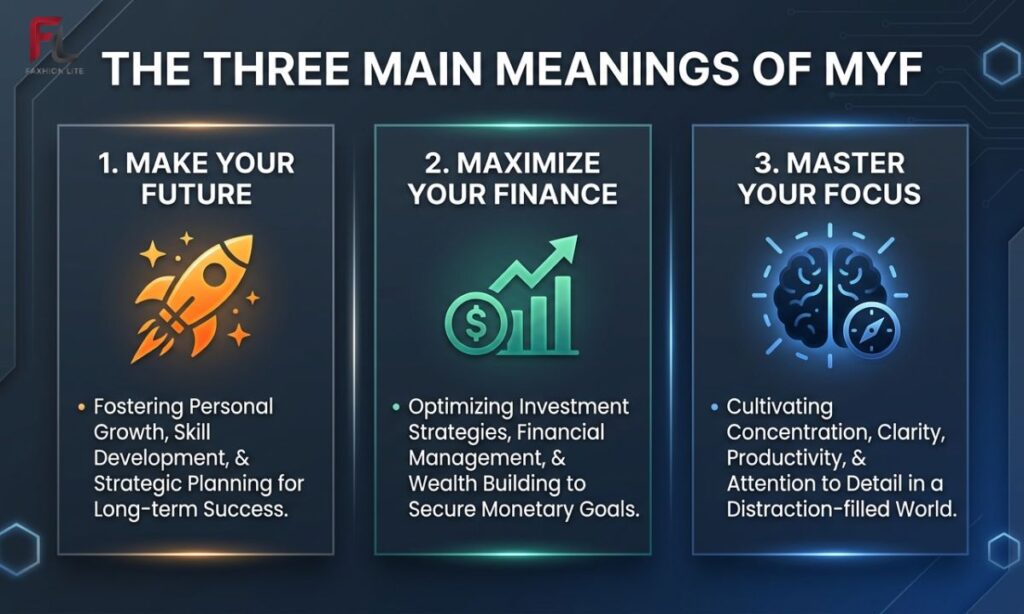
1. Miss Your Face
This is the most common meaning in personal conversations. It’s affectionate and low-key. Instead of saying “I miss you,” which can feel heavy, people use MYF to keep it casual and light. You’ll mostly see this in iMessage, WhatsApp, and Snapchat DMs.
2. My Fault
This one dominates gaming, TikTok, Reddit, and Discord. It’s a fast, no-drama way to own a mistake. Think of it as a shorter version of “my bad.” No emotion attached, just accountability and moving on.
3. Mind Your F***ing [Business]
This shows up when someone wants to push back or shut something down. The full phrase is usually implied, not typed out. The tone can range from jokey to genuinely annoyed. Emojis like the eye-roll or smirk usually tell you which one it is.
How to Tell Which Meaning Is Correct
Competitors always say “context matters” without telling you how to actually read that context. Here is the real method:
Read the emotional temperature first. Is the message warm, neutral, or edgy?
- Warm tone plus personal topic = Miss Your Face
- Neutral tone after a mistake or delay = My Fault
- Slightly edgy tone after someone pried or criticized = Mind Your F***ing Business
Then look at what came right before it in the chat. MYF almost never opens a conversation cold. The previous message almost always gives it away:
- Someone mentioned they haven’t seen you or posted a throwback photo? Miss Your Face.
- Someone just called out a mistake or a late reply? My Fault.
- Someone just gave unsolicited advice or asked something nosy? Mind Your Business.
Those two signals together will resolve MYF correctly in nearly every situation.
Does the Platform Change What MYF Means?
Yes, and this is something most guides completely ignore. Different platforms have different conversation cultures, and those cultures make certain meanings far more likely.
Snapchat almost always uses MYF to mean Miss Your Face. The whole app is built around selfies and faces. Receiving MYF after a snap or in a DM when you haven’t talked in a while is almost always affectionate.
TikTok leans toward My Fault. Comment culture on TikTok is reaction-based. People drop MYF when admitting they misunderstood something, messed up a trend, or gave wrong info. It fits the self-aware humor the platform rewards.
Discord and gaming chats are almost exclusively My Fault territory. Speed matters in multiplayer. MYF is purely functional there. Nobody in a team game is sending “Miss Your Face.”
iMessage and personal texts can go either way, but the affectionate meaning is more common because one-on-one texting is more personal than public comment sections.
Instagram DMs get both, depending on what triggered the message. A MYF under a selfie story reply is almost always Miss Your Face. A MYF after someone called you out for missing plans is My Fault.
| Platform | Most Likely MYF Meaning |
| Snapchat | Miss Your Face |
| TikTok | My Fault |
| Discord / Gaming | My Fault |
| iMessage / WhatsApp | Miss Your Face |
| Instagram DM | Depends on context |
The Sarcastic Version No One Talks About
There is a fourth version of MYF that almost no guide covers, and it’s genuinely different in meaning.
Sarcastic MYF sounds like this:
- “Oh right, MYF for having an opinion”
- “Sure, MYF for existing apparently”
- “MYF for breathing I guess”
This is not an apology and it is not affection. It’s a performative non-apology. The person is signaling they refuse to take blame for something, usually with irony or low-key frustration. The 🙄 emoji is almost always nearby.
If someone sends you a sarcastic MYF and you reply warmly thinking it was “Miss Your Face,” you’ll get a confused response. Look for the eye-roll energy in the rest of the message.
What Happens When You Misread MYF
No other guide covers this. Here are the three most common misread situations:
Misread 1: Your friend texts “long time 😭 MYF” and you assume it’s My Fault. You reply “for what lol?” They were trying to say they miss you. Now it’s awkward.
Misread 2: A teammate says “MYF” after a bad play and you think it’s affectionate. You reply “aww haha.” They’re confused. Small but weird.
Misread 3: Someone says “MYF business” to push back, and you miss the full phrase. You reply warmly. They think you didn’t register the pushback.
The fix for any of these: Just ask. “Wait, did you mean Miss Your Face or My Fault?” One quick message saves the whole back-and-forth.
Real Conversation Examples
Miss Your Face:
A: Just saw that old photo from last summer
B: STOPPP MYF literally 😭
A: Same we have to actually hang soon
My Fault:
A: You were supposed to send that file an hour ago
B: MYF, just sent it now
A: All good
Mind Your F***ing Business:
A: Why are you still friends with them?
B: MYF honestly lol
A: Okay okay, fair
Sarcastic My Fault:
A: You always do this
B: Right, MYF for literally everything 🙄
How to Reply to MYF (Depending on the Meaning)
This is the most-searched follow-up question for this term, and most articles give useless answers like “reply friendly.” Here’s what actually works:
When MYF = Miss Your Face:
- “MYF too honestly 😭”
- “We literally need to fix this, when are you free”
- “Haha same, where have you been hiding”
Avoid sending a long emotional reply to a casual three-letter message. Match the low-key energy.
When MYF = My Fault:
- “All good”
- “No worries”
- “It happens”
Don’t turn their quick apology into a long conversation unless the situation actually calls for it. They kept it short on purpose.
When MYF = Mind Your Business:
- If it’s jokey: “Lmaooo okay noted 😂”
- If it feels tense: “Fair enough” and move on
- Don’t push back or ask why they’re being like that. They already told you they don’t want to engage.
Other Meanings of MYF (Rare but Real)
These come up occasionally in specific contexts, so it’s worth knowing they exist:
Methodist Youth Fellowship shows up in church community chats, flyers, or event announcements. If you see “MYF meeting at 7pm,” you’re in a church group context, not a text slang situation.
Multi-Year Forecast is used in corporate settings. If your colleague sends “did you review the MYF numbers,” they’re talking about financial planning documents.
My Friend is occasionally used as a casual address, like “thanks MYF, appreciate it.” Less common, but it exists in informal group chats.
None of these will appear in a typical personal text. If the conversation is clearly casual and personal, ignore these.
MYF vs. Similar Slang
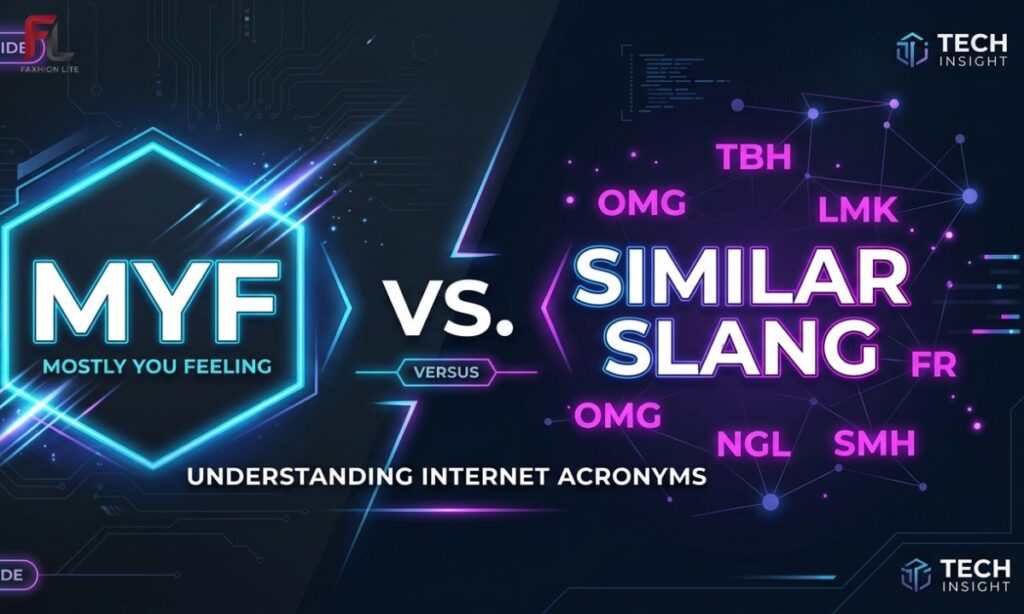
It helps to know how MYF fits alongside the abbreviations it’s often used near:
- IMY (I Miss You): More direct and more emotional than MYF. MYF keeps it light.
- MYSM (Miss You So Much): Stronger version. MYF is the casual alternative.
- MB / My Bad: Nearly identical to the My Fault version of MYF. Slightly more common overall.
- FR (For Real): Often added after MYF for emphasis, like “MYF fr”
- ILY (I Love You): What MYF can escalate to in close relationships
Is MYF Rude or Offensive?
The Miss Your Face and My Fault versions are completely harmless. Most people receiving them will read them as friendly or neutral.
The “Mind Your F***ing” version does contain a profanity, even if it’s abbreviated. In a joking exchange between close friends, it’s usually fine. In a serious conversation or with someone you don’t know well, it can land badly.
A good rule: if you’re not sure how well the other person knows texting slang, spell it out instead of abbreviating. Three letters are easy to misread.
When Not to Use MYF
Keep MYF out of these situations:
- Professional emails or work Slack messages (unless you mean Multi-Year Forecast, which is fine in that context)
- Messages to people you just met who may not know the slang
- Serious conversations where a real apology is needed and “My Fault” feels dismissive
- Anything formal where full words are expected
Frequently Asked Questions
What does MYF mean in a text from a girl?
It usually means Miss Your Face, especially if the tone is warm or it came after a selfie or a memory. If the context is about a mistake, it’s My Fault.
Is MYF flirty?
The Miss Your Face version can be, depending on the relationship. It’s softer than saying “I miss you,” which is part of why people use it when they want to show affection without making it intense.
Can MYF mean My Friend?
Yes, occasionally. It’s less common, but you’ll see it in casual group chats where someone uses it as a relaxed way to address someone.
Should I use MYF in a work message?
Only if you mean Multi-Year Forecast in a business context. Never use the slang version professionally.
What if I still can’t tell which meaning it is?
Just ask. “Did you mean miss your face or my fault?” is a completely normal question and will never come across as weird.
Conclusion
MYF meaning in text comes down to three real possibilities: Miss Your Face (affectionate, common in personal DMs), My Fault (quick accountability, common on TikTok and in gaming), and Mind Your F***ing Business (blunt or jokey pushback).
Read the emotional tone of the message and look at what came right before it. Those two signals will give you the correct meaning almost every time. When in doubt, just ask.