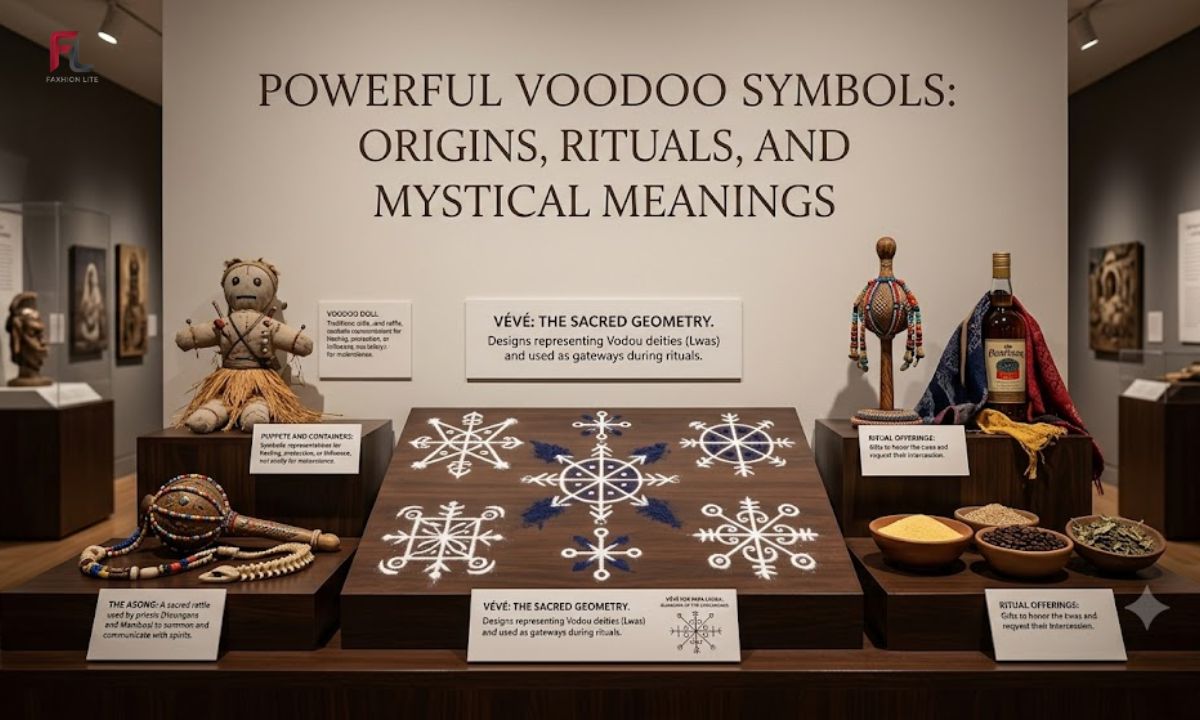
73 Powerful Voodoo Symbols: Origins, Rituals, and Mystical Meanings
Voodoo symbols are sacred visual marks, drawn or crafted, that practitioners use to call on spirits, protect their homes, and connect with ancestors. That’s the short answer. Now let’s dig into the fascinating, misunderstood, and genuinely rich world behind them.
If you’ve ever seen a lacy, swirling design drawn on the ground in a movie about New Orleans, or spotted a small charm bag hanging near a doorway in the French Quarter, you’ve brushed up against this tradition, even if Hollywood never told you the real story.
Vodou is a recognized religion practiced by millions of people, and its symbols carry meaning that goes far beyond curses and dolls. This guide walks through 73 symbols, their origins, and what they actually mean to the people who use them.
What Are Voodoo Symbols?
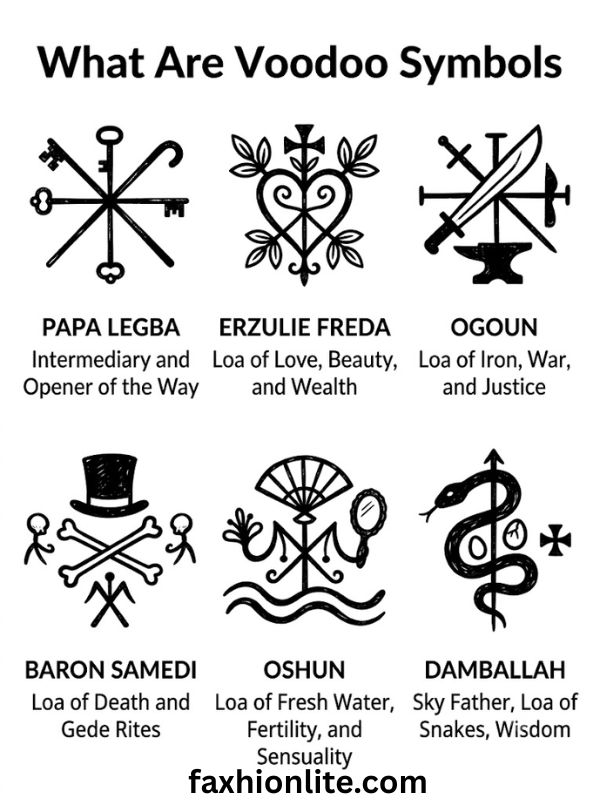
Voodoo symbols are visual representations, usually drawn, stitched, or carved, that practitioners use to invite specific spirits, called lwa, into a ceremony. They act as a kind of spiritual address book, each design pointing to a different spirit with its own personality, powers, and preferences.
Most people outside the religion picture a Voodoo doll stuck with pins the moment they hear the word “Voodoo.” That image comes almost entirely from American horror films, not from actual practice. Real Voodoo symbolism is closer to what you’d find in any organized faith: sacred geometry, ceremonial tools, and drawings that carry layered spiritual weight, similar in function to a cross in Christianity or a mandala in Buddhism.
These symbols aren’t random art. Each one is passed down through generations of houngans (priests) and mambos (priestesses), and the designs stay remarkably consistent across different temples, called peristyles or hounfours. A veve for the spirit Papa Legba drawn in Haiti today looks nearly identical to one drawn decades ago, because precision matters. Practitioners believe an inaccurate symbol simply won’t open the spiritual gateway it’s meant to open.
The word “Voodoo” itself traces back to Vodun, a Fon word from what’s now Benin, meaning “spirit” or “deity.” Understanding that root helps explain why symbols sit at the center of the religion. If the whole practice is built around communicating with spirits, then the visual language used to reach them becomes the most important tool a practitioner owns.
Voodoo Symbols | Meanings, Uses and Types
Voodoo symbols serve different purposes depending on the ceremony, ranging from honoring the dead to inviting love, luck, or protection into someone’s life. Below is a breakdown of the most searched categories and what each one really involves.
Voodoo Symbols for Death
Death in Vodou isn’t treated as an ending, it’s treated as a transition. The Gede family of spirits, led by Baron Samedi, governs death, ancestors, and the boundary between the living and the dead. Symbols associated with death often include crosses, skulls, and grave markers, but they’re used to honor and communicate with ancestors, not to curse anyone.
Baron Samedi’s veve typically features a cross inside a circle, sometimes with a coffin shape worked into the design. Practitioners draw this symbol during Fèt Gede, a major Haitian holiday celebrating the dead each November, which shares some spiritual DNA with Mexico’s Día de los Muertos.
Voodoo Symbols PDF
A lot of people search for a downloadable reference chart, and honestly, that makes sense given how many symbols exist. A well-made Voodoo symbols PDF guide should include the symbol’s image, its name, the associated spirit, its region of origin, and a short note on when it’s used. If you’re building or looking for one, prioritize sources connected to Haitian cultural organizations or academic folklore departments over generic clip art sites, since accuracy really does matter here.
Voodoo Symbols for Good Luck
Luck symbols in Vodou often overlap with gris-gris, small cloth bags filled with herbs, stones, or personal items believed to attract fortune or repel bad energy. The veve for Papa Legba is sometimes used for luck too, since he’s the spirit who opens doors, literally and figuratively, for opportunities to come through.
Voodoo Symbols Meaning
Meaning in this tradition is never one-size-fits-all. The same basic shape, like a heart or a snake, can carry a completely different meaning depending on which spirit it’s tied to and which regional tradition drew it. That’s one reason generic “symbol dictionaries” online often get things wrong.
Voodoo Symbols Images
Authentic Voodoo imagery tends to look surprisingly delicate: thin, looping lines drawn freehand with cornmeal, wheat flour, or brick dust directly on the ground before a ceremony begins. This is worlds away from the bold, cartoonish “tribal tattoo” style images that dominate stock photo sites.
Voodoo Symbols Alastor
If you landed here after watching Hazbin Hotel, you’re not alone, this is one of the most common modern search terms tied to Voodoo symbolism. The character Alastor, sometimes called the Radio Demon, has design elements inspired loosely by Voodoo and New Orleans aesthetics, including a staff resembling a veve-style symbol. It’s important to note this is a fictional, stylized creation, not an accurate representation of any real veve used in actual Vodou practice.
Voodoo Symbols for Love
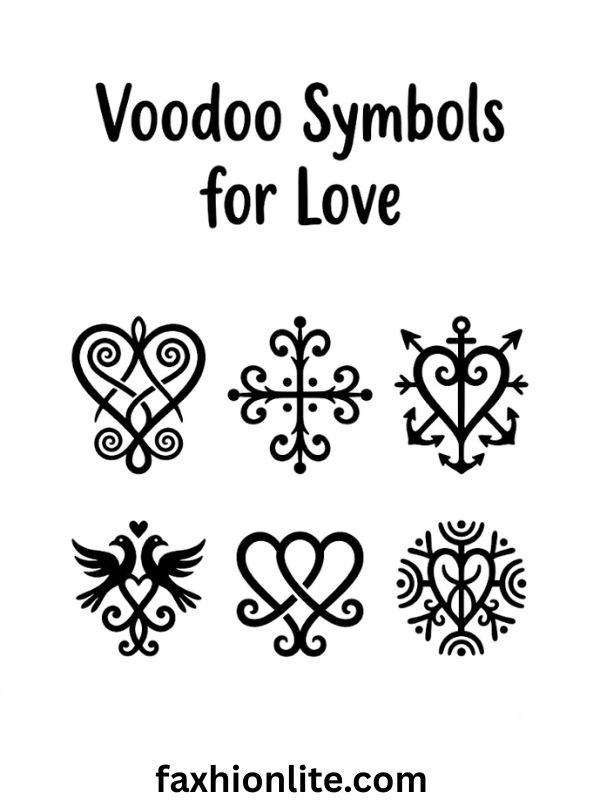
Erzulie Freda, a spirit associated with love, beauty, and luxury, is the go-to figure for love-related symbolism. Her veve often includes a heart shape, sometimes pierced or surrounded by decorative flourishes, and pink or pastel colors are traditionally offered to her during ceremonies.
Voodoo Symbols for Protection
Protection symbols are among the most commonly requested and used in daily Vodou practice, not just formal ceremony. They range from simple crosses drawn near doorways to elaborate veve created before major rituals, and we’ll cover these in much more depth further down.
Understanding Voodoo Symbols and Their Meanings
Understanding these symbols requires knowing that Vodou treats drawing itself as a spiritual act, not decoration. The physical act of creating a veve is considered part of the ritual, not preparation for it.
Voodoo Symbols and Meanings
Every symbol in this religion connects to a specific spirit, element, or intention. Unlike a lot of folk magic traditions where symbols can be freely mixed and matched, Vodou symbolism follows fairly strict rules about which marks belong to which spirits.
Vodou Symbols
You’ll notice spelling varies: Vodou, Voodoo, and Vodun all refer to related but distinct branches of the same broader tradition. Scholars and practitioners generally use “Vodou” for the Haitian religion specifically, “Vodun” for the West African origin practice, and “Voodoo” as the more casual, Americanized spelling that’s become common in Louisiana and pop culture.
Symbols of Voodoo
Taken together, these symbols form a complete spiritual vocabulary. A trained practitioner can look at a veve and immediately know which spirit is being called, what the ceremony’s purpose is, and sometimes even which region’s tradition is being followed.
Voodoo Religion Symbols
Vodou is officially recognized as a religion in Haiti, with its own clergy, ceremonies, and theological structure. This matters because so much online content treats Voodoo as superstition rather than an organized faith with millions of practitioners across Haiti, Benin, Togo, Louisiana, and diaspora communities worldwide.
Voodoo Religion Symbol
If you had to point to one single symbol that represents the religion as a whole, most scholars would point to Papa Legba’s veve. He’s the spirit who stands at the crossroads between the human world and the spirit world, and no ceremony can properly begin without saluting him first.
Voodoo Symbolism Religion Symbols
A huge part of what makes Vodou symbolism unique is syncretism, the blending of African spiritual traditions with Catholic imagery, a result of colonization and forced conversion during the transatlantic slave trade. Many lwa became associated with specific Catholic saints as a form of protective disguise, and that overlap still shows up in symbol design today.
Voodoo Symbols and Their Meanings
| Symbol | Associated Spirit | Core Meaning |
| Crossroads veve | Papa Legba | Communication, opportunity |
| Heart veve | Erzulie Freda | Love, beauty |
| Cross and coffin | Baron Samedi | Death, ancestors |
| Serpent veve | Damballa | Wisdom, creation |
| Sword and flag | Ogou | Strength, war |
Voodoo Symbols and Meaning
The table above only scratches the surface. With 73 named symbols across regional traditions, the full picture includes weather spirits, water spirits, agricultural spirits, and dozens of localized variations that differ from one hounfour to the next.
Types of Voodoo Symbols Around the World
Voodoo symbols vary significantly depending on region, with Haitian, West African, and Louisiana traditions each developing distinct visual styles. Geography and history shaped every branch differently.
Haitian Voodoo Symbols
Haitian Vodou developed among enslaved Africans brought to the island of Hispaniola, who blended traditions from the Fon, Ewe, Yoruba, and Kongo peoples with the Catholicism forced on them by French colonizers. The result is a symbol system that’s incredibly layered, drawing on multiple African ethnic traditions at once.
Haitian Voodoo Symbols and Meanings
Specific Haitian veve tend to be more elaborate and decorative than their West African counterparts, often incorporating stars, hearts, and geometric borders around a central design. Ceremonies in Haiti frequently involve multiple veve drawn in sequence as different spirits are invited to attend.
African Voodoo Symbols
The roots of it all trace back to Vodun practice in Benin and Togo, where symbols tend to be simpler and more directly tied to nature: earth, water, thunder, and iron. Benin’s government has even worked to preserve and promote Vodun as official cultural heritage in recent years.
Louisiana Voodoo Symbols
Louisiana Voodoo emerged from a mix of enslaved Africans, Haitian refugees who fled the Haitian Revolution in the 1790s, and existing Catholic and Native American spiritual practices in the region. It developed its own flavor, somewhat separate from Haitian Vodou, with a heavier emphasis on herbalism and charm work.
New Orleans Voodoo Symbols
New Orleans became the epicenter of American Voodoo largely because of Marie Laveau, a 19th century practitioner often called the Voodoo Queen of New Orleans. Her legacy shaped how the city presents Voodoo today, including the symbols sold in shops throughout the French Quarter, though tourists should know a lot of what’s marketed there is stylized rather than strictly authentic.
Veve Voodoo Symbols
A veve is a ritual drawing, traditionally made with cornmeal, wheat flour, brick dust, or gunpowder, laid directly onto the ground of a temple floor before a ceremony. Once drawn, it’s believed to open a spiritual gateway that allows the invoked lwa to descend and interact with participants.
Voodoo Veve Symbols and Meanings
Veve design isn’t improvised. Each one follows a template passed down through oral and practical tradition, and a skilled houngan can draw an intricate veve freehand in just a few minutes, working from memory built over years of training.
Protection, Signs and Special Voodoo Symbols
Protection is one of the most practical, everyday uses of Voodoo symbolism, showing up in homes, on bodies, and in personal charms. This section covers how that protection actually works.
Voodoo Protection Symbols
Common protective symbols include crosses, X shapes, and specific veve tied to guardian spirits. These are often placed at thresholds, windows, and doorways, since spirits are believed to travel through liminal spaces, the same logic behind why Papa Legba guards the crossroads.
Voodoo Symbols of Protection
Historically, protection symbolism carried enormous weight for enslaved communities, who faced very real physical danger daily. Spiritual protection wasn’t a metaphor for them, it was a survival tool, and that history still shapes how seriously these symbols are treated today.
Voodoo Symbol for Death
As covered earlier, death symbolism centers on the Gede spirits and Baron Samedi specifically. It’s worth repeating because so many people search this exact phrase expecting something sinister, when in reality it’s rooted in ancestor reverence.
Voodoo Hand Signs
Hand gestures accompany many rituals, used to direct spiritual energy or signal specific spirits during possession trance states. These gestures are rarely documented publicly since they’re taught directly within initiated communities rather than written down for outsiders.
Voodoo Signs
“Signs” in this context often refers to omens rather than drawn symbols: dreams, animal behavior, or unusual natural events that practitioners interpret as messages from the spirit world. This is a distinct concept from the physical symbols we’ve covered so far.
Voodoo Signs and Symbols
Put simply, signs are things you notice, while symbols are things you create. Both play a role in how practitioners interpret spiritual communication, but they operate through different mechanisms entirely.
Unique and Modern Voodoo Symbol Uses
Modern usage of Voodoo symbolism spans everything from digital art to fashion, often stripped of its original religious context. That shift brings both visibility and controversy.
Voodoovoodoo Symbols
This search term likely reflects a typo or repeated query, but it points to genuine curiosity about how these symbols show up repeatedly across different platforms and media. General modern usage tends to blend authentic and invented imagery together, which makes it harder for casual searchers to tell the difference.
Voodoo Symbols PNG
People searching for PNG files usually want transparent images for design projects, tattoos, or digital art. Before using sacred veve designs this way, it’s worth pausing. Many practitioners consider casual commercial use of ceremonial symbols disrespectful, similar to how some religious communities feel about their sacred imagery being printed on novelty products.
Alastor Voodoo Symbols
This connects directly back to the Hazbin Hotel search interest mentioned earlier. The character’s design has introduced a huge new audience to Voodoo aesthetics, which is a genuinely interesting case study in how pop culture reshapes public perception of a real religious tradition, for better and sometimes for worse.
Deep Symbolic Meaning
Voodoo symbols operate on three distinct levels at once: spiritual, psychological, and cultural. Each layer adds depth that a purely visual reading misses.
On a Spiritual Level
Symbols function as literal communication tools, believed to open direct channels between the physical and spiritual worlds. This isn’t metaphorical within the religion, practitioners describe the veve as functionally similar to dialing a specific phone number to reach a specific spirit.
On a Psychological Level
Even setting aside belief systems, there’s something worth noting here: ritual drawing and repetitive sacred imagery have documented effects on focus and emotional regulation, similar to mandala work in other traditions. The physical act of creating a symbol slows the mind and centers attention, which practitioners describe as preparation for trance states during ceremony.
On a Cultural Level
For the African diaspora, these symbols represent something bigger than any single ceremony: they’re a preserved thread of identity that survived slavery, colonization, and centuries of suppression. That’s a remarkable fact, given how much cultural erasure the transatlantic slave trade caused across nearly every other tradition brought from West Africa.
Types and Variations of Voodoo Symbols
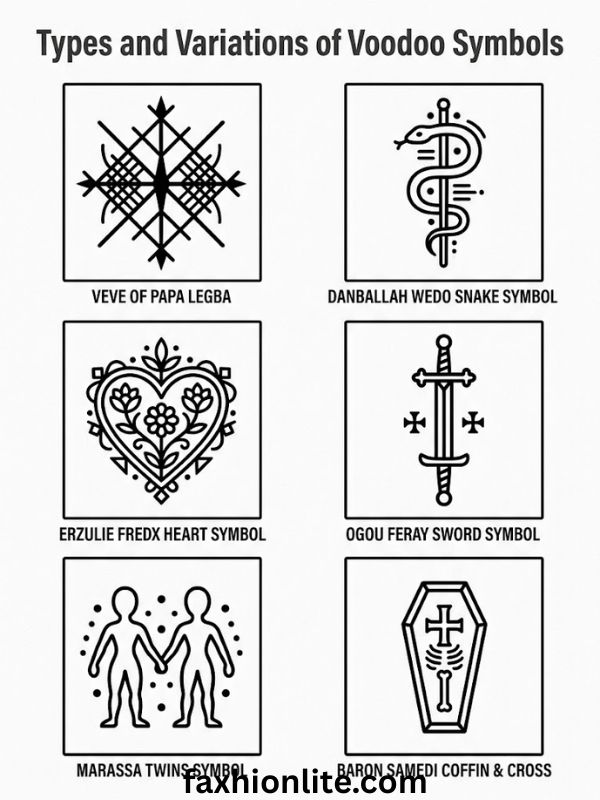
The five veve below represent the core spirits most commonly invoked across Haitian Vodou ceremonies.
1. Papa Legba Veve
Papa Legba guards the crossroads between worlds and must be honored first in nearly every ceremony. His veve typically shows a staff, a gate, or crossed paths, symbolizing his role as the gatekeeper who decides which spirits get through.
2. Erzulie Freda Veve
Associated with love, luxury, and femininity, Erzulie Freda’s veve centers on a heart shape, often decorated with additional flourishes representing jewelry and beauty, since she’s known to enjoy fine perfume and sweet offerings.
3. Baron Samedi Veve
The leader of the Gede spirits, Baron Samedi rules over death and the afterlife. His veve usually combines a cross and coffin imagery, reflecting his role as the one who stands at the graveyard gates.
4. Damballa Veve
Damballa, depicted as a great serpent, represents wisdom, purity, and creation itself. His veve features flowing, wave-like lines meant to evoke movement, and he’s considered one of the oldest and most respected spirits in the entire Vodou pantheon.
5. Ogou Veve
Ogou governs war, iron, fire, and political power, and his veve often includes a sword or machete shape. Soldiers and workers in trades involving metal traditionally seek his protection.
Voodoo Symbols Across Cultures
The same core spiritual framework produced different symbol traditions once it spread across the Atlantic through forced migration.
West Africa
This is where it all began, among the Fon and Ewe peoples in what’s now Benin and Togo, with Vodun as the original framework predating the transatlantic slave trade by centuries.
Haiti
Enslaved Africans transformed and preserved these traditions under horrific conditions, and Vodou eventually played a documented role in inspiring the Haitian Revolution, the only successful slave revolt in history to create an independent nation.
Louisiana
American Voodoo developed its own regional identity, shaped by Spanish and French colonial rule, Catholic influence, and the arrival of Haitian refugees in the early 1800s following the revolution.
Caribbean and Brazil
Related but distinct traditions developed in parallel: Santería in Cuba and Candomblé in Brazil both share West African roots with Vodou while developing their own separate symbol systems and spirit names.
Modern Global Spirituality
Interest in Vodou has grown among modern spiritual seekers across the United States, often as part of a broader movement reconnecting with folk magic and ancestral traditions outside mainstream organized religion.
Voodoo Symbols in Art, Movies and Pop Culture
Hollywood has spent nearly a century misrepresenting Voodoo, mostly through zombie films, curse plots, and pin-covered dolls that have almost no basis in actual practice. This distorted image, cemented by early 20th century films, still shapes public perception today more than accurate scholarship does.
More recent portrayals have started shifting that pattern. Shows and films that consult actual practitioners or scholars tend to present a far more respectful and accurate picture, showing ceremony, community, and reverence rather than horror tropes. Alastor’s design in Hazbin Hotel sits somewhere in between, stylized and fictional, but clearly drawing inspiration from real aesthetic elements rather than the old curse-doll cliché.
Music has played a role too, particularly in New Orleans, where Voodoo imagery threads through everything from jazz age album art to modern hip hop and pop visuals. This crossover keeps the symbolism visible, even when the deeper religious meaning gets lost along the way.
Spiritual and Dream Meaning of Voodoo Symbols
Dreaming about Voodoo symbols is generally interpreted within the tradition as a message from a spirit trying to make contact, not as a warning or curse. Dream interpretation plays a real role in Vodou practice, separate from waking ritual.
If someone dreams repeatedly about a specific veve or spirit, practitioners often encourage them to seek guidance from a houngan or mambo rather than interpreting it alone, since dream symbolism in this tradition is considered too significant to guess at casually. This differs sharply from the popular Western assumption that dreaming about Voodoo imagery signals something sinister.
Dreams involving snakes, for instance, are frequently connected to Damballa and interpreted as a call toward wisdom or a need for spiritual cleansing, not danger. Context matters enormously here, including who appears in the dream, what emotions surface, and what happens right before waking.
Positive vs Negative Meaning
Voodoo symbols carry overwhelmingly positive intent within the religion itself, though outside perception often skews negative due to decades of media distortion.
Positive Meaning
Within actual practice, these symbols represent healing, protection, community bonding, and connection to ancestors. Ceremonies built around them tend to focus on gratitude, celebration, and mutual support rather than harm.
Negative Interpretation
The “curse” stereotype comes almost entirely from American pop culture rather than religious practice itself. This misrepresentation has real consequences, contributing to discrimination against Haitian immigrants and practitioners in the United States who’ve had to defend a legitimate faith against decades of horror movie baggage.
Why Humans Are Attracted to Voodoo Symbols
People are drawn to Voodoo symbols because they combine mystery, visual beauty, and a genuine promise of protection or connection that mainstream culture often lacks. That pull isn’t unique to Voodoo, but this tradition delivers it with unusual visual richness.
There’s also a psychological piece worth naming directly: humans are wired to find meaning in pattern and ritual, and sacred geometry across nearly every world religion taps into that same instinct. Vodou’s symbols just happen to be less familiar to Western audiences, which amplifies the sense of mystery and, honestly, the appeal.
Growing interest in ancestral and folk spirituality across the US plays a role too. As more people search for spiritual practices with deep historical roots outside mainstream organized religion, traditions like Vodou offer something that feels authentic, lineage-based, and far older than most alternatives on the market.
Frequently Asked Questions
What is the most powerful Voodoo symbol?
Papa Legba’s veve is widely considered the most important, since he’s saluted first in nearly every ceremony as the gatekeeper between worlds.
Are Voodoo symbols dangerous to have in your home?
No. Within the religion, most symbols are protective rather than harmful. Concerns usually come from misinformation rather than actual practice.
What’s the difference between a veve and a Voodoo symbol?
A veve is a specific type of ritual ground drawing used to invite a particular spirit. “Voodoo symbol” is a broader term covering veve, charms, hand signs, and other visual elements.
Can non practitioners use Voodoo symbols respectfully?
It’s worth approaching with caution and research. Many practitioners view casual or commercial use of sacred veve as disrespectful, so context and intent matter.
What does the Voodoo doll actually mean, versus the myth?
Traditional dolls in related folk practices were often used for healing or protection, not harm. The pin-sticking curse trope is largely a Hollywood invention.
Conclusion
Voodoo symbols are far more than the curse-and-doll stereotype most people grew up with. They’re a living spiritual language, built over centuries across West Africa, Haiti, and Louisiana, carrying real weight for the millions who practice Vodou today. From Papa Legba at the crossroads to Erzulie Freda’s heart, each veve tells a story about survival, faith, and connection that deserves far more respect than pop culture has historically given it.
If you take one thing away from this guide, let it be this: these symbols were never designed to scare anyone. They were designed to connect people, generation after generation, to something larger than themselves.